


Pakistan’s competitive edge in the European Union (EU) textile market has been significantly reduced following the conclusion of the EU-India Free Trade Agreement (FTA), posing challenges for the country’s largest foreign-exchange earning sector, textiles and apparel.
The EU remains Pakistan’s top export destination, absorbing $8.8 billion of its goods in FY2025, with textiles alone accounting for nearly $7 billion. Until recently, Pakistan enjoyed duty-free access on 66% of EU tariff lines under the GSP+ scheme, giving it a meaningful cost advantage over India, which faced duties up to 12% on comparable products.
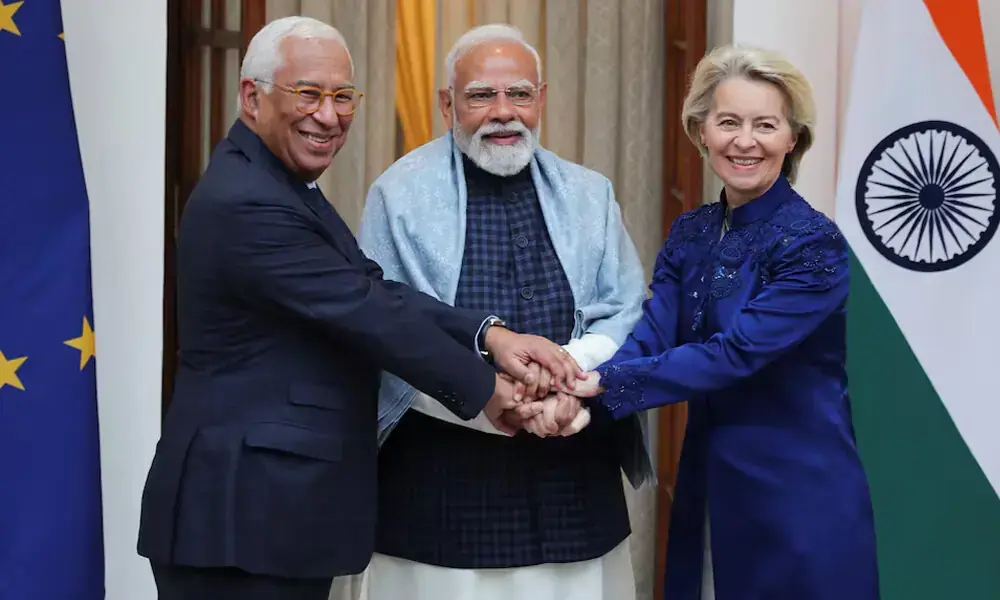
The EU-India FTA, concluded in January 2026, grants India immediate duty-free access for 100% of its textile and apparel tariff lines, covering yarn, cotton-based fabrics, ready-made garments, home textiles, and value-added apparel. The agreement also provides Indian exporters near-zero tariffs across a wide range of sectors including leather, footwear, electronics, gems, chemicals, seafood, and engineering goods.
With the FTA in effect, Pakistan and India now compete on equal tariff footing in Europe. Analysts caution that India’s scale, vertically integrated supply chains, policy-backed financing, and regulatory compliance further amplify its competitiveness, while Pakistan continues to rely on cost arbitrage, fragmented compliance, and low-to-mid value exports.
Trade experts warn that Pakistan must undertake structural reforms, reduce energy costs, improve regulatory alignment, and move toward higher-value products to retain its relevance in the EU. The EU has granted a transition for GSP+ until 2027, giving Pakistan time to apply for a new scheme and lobby for inclusion under stringent environmental, human, and governance standards.
While the FTA does not immediately disrupt Pakistan’s exports, it reshapes long-term competitive dynamics, underscoring the urgent need for cost correction, enhanced supply-chain credibility, and regulatory modernization to maintain market share in Europe’s lucrative textile and apparel sector.
