

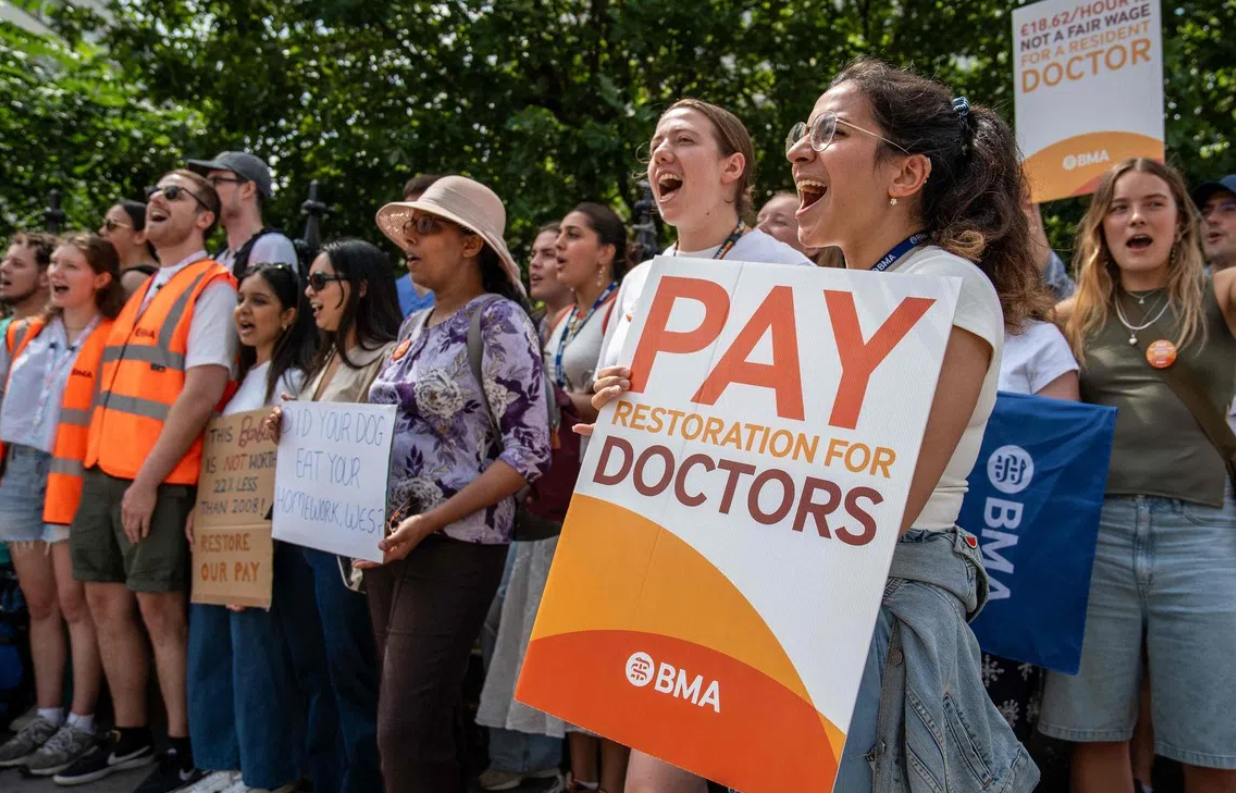

Doctors in England have confirmed a fresh strike after rejecting the government’s latest offer. The decision followed a vote by members of the British Medical Association. The walkout will begin on Wednesday and last for five days.
The strike involves resident doctors, previously known as junior doctors. They make up nearly half of England’s medical workforce. The action continues a long-running dispute over pay and working conditions.
Union leaders said doctors felt the offer came too late. They also said it failed to address core concerns.
Strong Rejection From Medical Workforce
According to the BMA, 83 percent of participating doctors rejected the government’s proposal. The online ballot recorded a turnout of 65 percent. More than 50,000 members were eligible to vote.
Union leadership said the result showed clear frustration. Tens of thousands of frontline doctors voted against the deal. They argued the proposal did not reflect years of pay erosion.
Despite this, the union said it remains open to dialogue. Leaders stressed they still want a negotiated solution.
Government Criticism Amid Health Pressures
The health minister criticized the strike decision strongly. He said doctors could still postpone action until January. He urged them to reconsider due to rising flu cases.
He warned that the strike risks patient safety. He described the move as irresponsible and dangerous. The government insists hospitals cannot afford further disruption.
Officials said the healthcare system already faces extreme strain. Any large-scale absence may worsen the situation.
Flu Surge Adds Urgency to Dispute
Hospitals across England are grappling with a sharp rise in flu cases. Early December saw flu hospitalizations surge by over 50 percent. The average reached about 2,660 patients daily.
Health leaders said the system has not yet reached a peak. They warned conditions could deteriorate further. England is also part of a wider European flu surge.
Authorities described the season as unusually early and severe. This context has intensified concerns around industrial action.
Roots of the Pay Dispute
The dispute centers on pay and long-term earnings erosion. Earlier this year, doctors received a 5.4 percent pay increase. The BMA said this did not offset years of real-terms decline.
After taking office, the government agreed to a 22 percent pay rise. However, the union had sought a 29 percent increase. Doctors said the gap remains significant.
The latest offer did not include new pay terms. That omission proved decisive in the rejection vote.
What Comes Next for the NHS
The confirmed strike will add pressure on hospitals already under strain. Emergency planning measures are expected to activate. Patients may face delays in routine care.
Meanwhile, both sides remain publicly entrenched. However, the union has not closed the door on talks. Government officials continue to urge restraint.
As flu cases climb, the standoff carries higher stakes. The coming days may determine whether compromise or confrontation prevails.
