

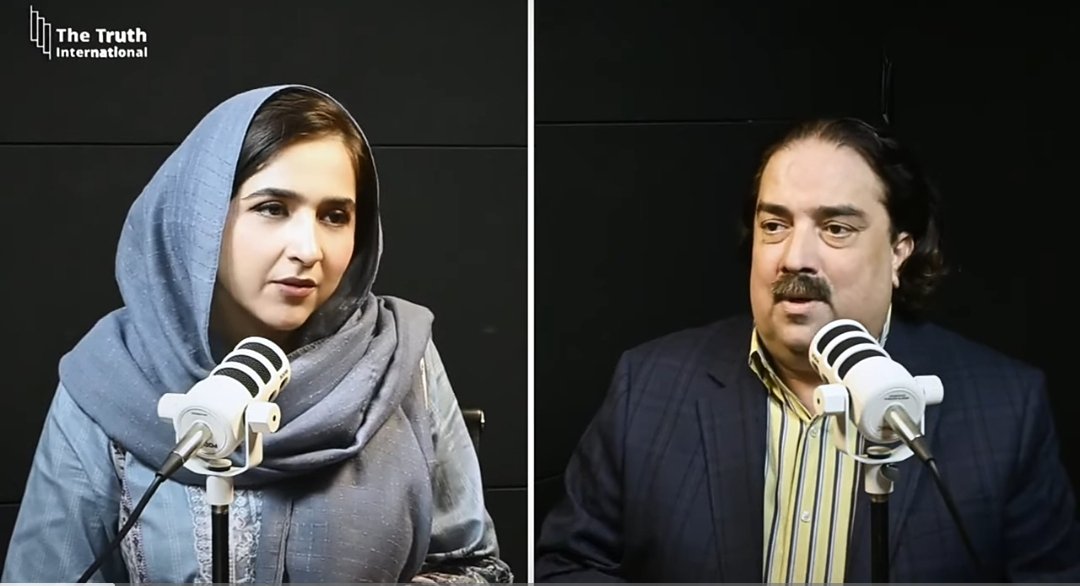

When the short but intense 12-day war erupted between Iran and Israel, the world braced for what many feared could spiral into a larger regional confrontation. Headlines told a familiar story — missile exchanges, rising casualty counts, and images of destruction.But beyond the noise of war lay a more intricate narrative. Veteran journalist and analyst Ishtiaq Ali Mekhri is an expert on US–Iran relations and was the first to work on Normalizing US–Iran Ties when it was still considered taboo. He says the conflict cannot be understood without examining egos, timing, and the cold calculations of power.
“In my humble opinion,” Mekhri told Rabia Ali on The Truth International, “this 12-day war was unnecessary. It was a showdown — a showdown of arrogance, a showdown of egos, and a showdown of realpolitik.”
A Year in the Making
Mekhri rejects the notion that the confrontation was a sudden outburst of violence. He argues that Israel had been preparing for this moment for over a year, emboldened by shifts in U.S. foreign policy under Donald Trump. In his view, the war’s roots ran deep in the political landscape that emerged after Trump’s withdrawal from the Iran nuclear deal in 2018.
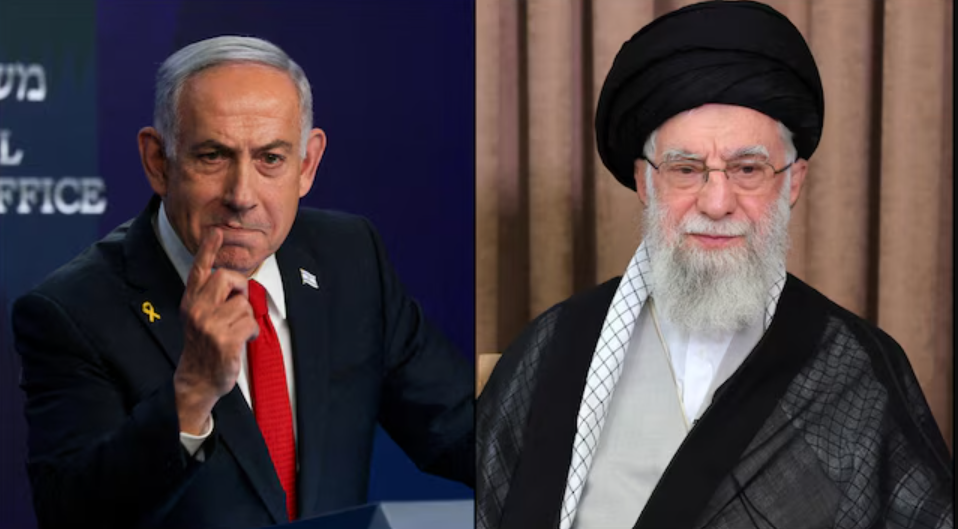
Under President Obama, Iran and the West had signed the Joint Comprehensive Plan of Action (JCPOA) in 2015 — a landmark agreement that limited Tehran’s nuclear program in exchange for sanctions relief. The deal was negotiated by then–Foreign Minister Javad Zarif and celebrated as a rare diplomatic breakthrough. But Trump’s decision to abandon it not only revived sanctions but also emboldened Israel to take a harder line against Iran.
According to Mekhri, the Trump administration’s posture, coupled with the influence of American neoconservatives, encouraged Israel to push its strategic advantage. Yet the flashpoint, he says, was not a military provocation but a diplomatic opening.
The Nuclear Negotiations Factor
As Mekhri recounts, Iran had returned to the negotiating table with the United States, a move many experts considered improbable after years of hostility. The first round of nuclear talks in Oman ended positively, with a second session scheduled in Rome. “Expectations were very low that Tehran would return to the table for formal negotiations with the U.S.,” Mekhri explained. “But when it happened — Israel’s power dynamics in the region began to weaken.”
The stakes were high. For Washington, the primary objective was preventing Iran from acquiring nuclear weapons. “Trump’s only real concern was that Iran should not go nuclear — that was his single-point agenda,” Mekhri said. For Israel, however, the calculus was far broader, involving deterrence, influence over U.S. policy, and its longstanding regional rivalry with Tehran.
A Spoiler Strike
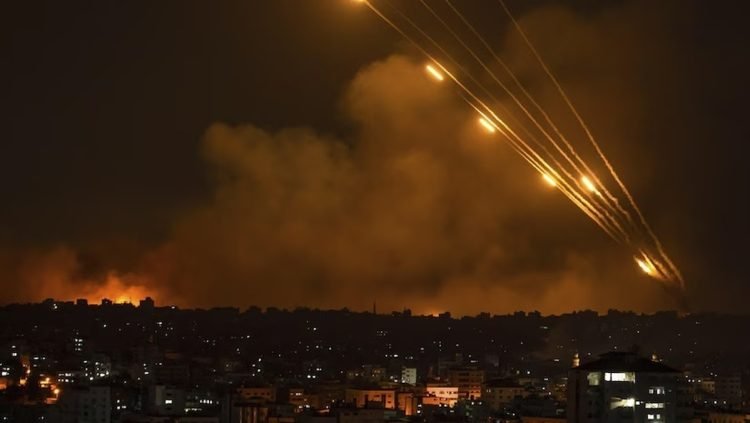
It was against this backdrop of fragile diplomacy that Israel launched its strikes on Iran. Mekhri describes it as “a spoiler attack” — timed to derail nuclear talks that appeared to be gaining traction. “In my limited reading, the United States was not on board when Israel directly struck Iran,” he added, suggesting Washington may have been caught off-guard.
The attack forced Iran into a military confrontation it had not sought, collapsing the diplomatic process before the Rome talks could begin. Mekhri argues that the move was less about responding to immediate threats than about ensuring that negotiations did not shift the regional balance in Iran’s favor.
The War Unfolds
While the war lasted less than two weeks, its pace was brutal. Israel suffered a reported $6 billion in economic losses, and — for the first time in decades — experienced sustained bombardment on its own territory. “Israel faced the music,” Mekhri said. “They learned what bombardment feels like, what casualties mean, what it’s like when hospitals are destroyed, and what an existential threat feels like.”
Iran’s military response was forceful but delayed, something Mekhri views as a critical misstep. “This was a major security and intelligence failure for Iran,” he said. In the opening hours, Israeli strikes eliminated much of Iran’s top-tier military leadership — a feat Mekhri attributes to “deep penetration” by Israeli intelligence. This, he warns, raises “big question marks for the Islamic Revolutionary Guard Corps.”
Calculated Restraint
Despite the loss of its senior commanders, Iran did not launch an immediate counteroffensive. Instead, it waited more than two days before responding. To some, this signaled weakness. To Mekhri, it reflected calculated restraint.
“Iran knocked at the door of the United Nations,” he noted — a move that bought time, shaped international perception, and avoided provoking a wider war. As Mekhri explained, “Attacking Israel is attacking the United States,” and Tehran appeared determined not to trigger a direct clash with Washington unless absolutely necessary.
This caution was not new. Mekhri pointed out that despite decades of anti-Israel rhetoric, Iran has often avoided full-scale retaliation for attacks on its allies and proxies in Lebanon, Syria, and Iraq. He cites the assassination of senior Hezbollah and Shia militia figures as moments when Tehran’s response was more restrained than its rhetoric suggested.
Trump’s Role and the U.S. Factor
Initially, Mekhri believes the United States was not a party to Israel’s opening strikes. But as the conflict unfolded, Trump committed U.S. military assets, including B-52 bombers, to target Iranian installations. This underscored what Mekhri calls the “strategic equation” — that any Iranian strike on Israel risks inviting American intervention.
The war, he argues, exposed the limits of Iran’s deterrence while reaffirming Israel’s confidence in U.S. backing. It also reinforced the degree to which Washington’s political mood swings can shape the Middle East’s security landscape. “This pendulum swinging in America will greatly impact Israel,” Mekhri warned. “It might embolden Israel to take on Iran once again.”
Unlikely Allies?
Perhaps Mekhri’s most provocative observation is his suggestion that Iran and Israel are, in a certain light, “the only logical allies in the region.” The idea may seem absurd given decades of enmity, but Mekhri frames it through the lens of history and identity.
“Iran is a civilization. Iran is a great civilization,” he said, emphasizing its Persian heritage. He argues that Iran’s historical conflicts have been primarily with Arab states, not with Jewish or non-Arab powers. Similarly, Israel — though culturally and politically distinct — is also a non-Arab state in a predominantly Arab region. In this sense, Mekhri suggests, their geopolitical interests could align under different circumstances.
This is not to deny the ideological chasm between the two nations, but rather to point out that alliances in the Middle East are often driven by pragmatism, not sentiment.
After the Guns Fell Silent
The cessation of hostilities did not mark the end of confrontation. Mekhri stresses that the war has merely shifted into other arenas: proxy battles in Lebanon, Syria, and Iraq; cyber operations targeting infrastructure; and psychological warfare aimed at undermining morale and public opinion.
The outcome, he says, is a fragile and temporary pause, vulnerable to the smallest political shock. The unresolved tensions that fueled the 12-day war remain in place, ready to ignite under the right conditions — particularly if U.S. policy once again tilts in Israel’s favor.
Lessons and Vulnerabilities
For Iran, Mekhri sees the war as a wake-up call. The elimination of senior commanders in the opening hours revealed dangerous intelligence gaps. Air defense systems proved insufficient against Israeli precision strikes. And while restraint may have prevented escalation, it also risked undermining Iran’s deterrence credibility.
“Iran has a long way to go if it wants to assert itself again,” he concluded. This means not just improving military readiness, but also recalibrating the balance between its political messaging and its actual capabilities.
For Israel, the war demonstrated both its military reach and its vulnerability to sustained attack. Experiencing bombardment on its own cities for the first time in decades could influence future decision-making — though Mekhri doubts it will dampen the instinct for preemption.
A War of Egos — and Strategy
In the end, Mekhri insists the 12-day war was avoidable. It was not a spontaneous eruption of violence, but the product of deliberate choices made in Jerusalem and influenced by Washington’s shifting politics. It was as much a contest of perceptions as it was a clash of arms.
The key lesson, he suggests, is that in the Middle East, wars are rarely just about territory or security. They are about shaping narratives, managing alliances, and — sometimes — asserting ego.
“In this war,” Mekhri said, “there were no real winners. Just calculations made, opportunities seized, and risks taken — all in a dangerous game where the stakes remain as high as ever.”
