


Constructive Diplomacy
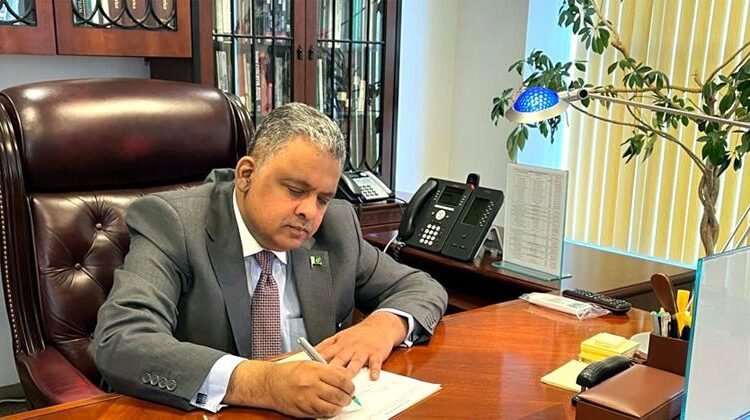
Following the imposition of new trade tariffs on Pakistan by the United States, Pakistani Ambassador to the U.S., Rizwan Saeed Sheikh, has reaffirmed Islamabad’s commitment to addressing the issue through “constructive diplomacy.”
Speaking during an interview on primetime program Aaj Shahzeb Khanzada Kay Sath, the envoy emphasized that Pakistan would engage diplomatically with U.S. authorities to seek a mutually beneficial resolution.
The remarks came shortly after the Trump administration announced a 29% reciprocal tariff on Pakistani imports, citing that Pakistan already imposes a 58% tariff on U.S. goods.
The decision, presented with a visual aid by President Trump during a press briefing, was described by Sheikh as part of a broader U.S. strategy affecting several trade partners, not just Pakistan. He added that such a development had been anticipated in advance.
Ambassador Sheikh revealed that he was scheduled to meet with the U.S. Trade Representative to formally begin discussions on the tariff matter. The talks, he said, would be held under the framework of the Trade and Investment Framework Agreements (TIFAs), providing a structured platform to address trade concerns and explore opportunities for strengthening economic ties.
Highlighting the importance of the U.S. as Pakistan’s largest trading partner, Sheikh noted that bilateral trade has remained a consistent pillar of the relationship between the two nations, regardless of changing political climates.
He reiterated that Pakistan aims to enhance trade volumes with the U.S., particularly in sectors such as technology, where Pakistani youth rank second globally in freelancing, just behind their American counterparts.
The ambassador also touched on domestic economic reforms, citing Prime Minister Shehbaz Sharif’s decision to reduce electricity rates as a crucial step towards increasing Pakistan’s competitiveness in international markets by lowering production costs.
In addition to trade, both countries are expected to hold talks on expanding cooperation in diverse fields, with particular focus on the IT sector. Sheikh affirmed that Pakistan would take a proactive approach during negotiations by understanding and addressing American concerns, thus ensuring that diplomatic efforts yield positive outcomes.
When asked about possible U.S. visa and travel restrictions targeting Pakistani citizens, Sheikh acknowledged that the American government was reviewing its visa policies. However, he confirmed that no final decisions had been made.
On the topic of the Pakistani diaspora, he emphasized that Pakistan has always cooperated with the U.S. on matters of international law and would continue to do so.
Ambassador Sheikh concluded by stating that Islamabad remains in constant contact with key American institutions, including the State Department and Homeland Security, and will continue working collaboratively to maintain strong bilateral relations.
