

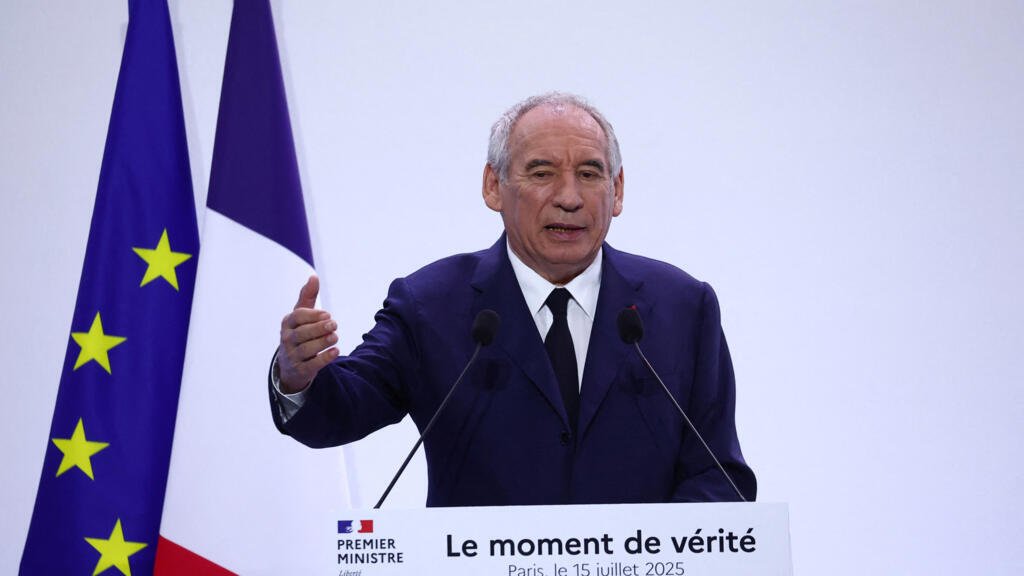

France’s prime minister François Bayrou has unveiled a controversial proposal to cancel two national public holidays, Easter Monday and Victory in Europe (VE) Day, as part of an ambitious plan to cut the country’s soaring public deficit and avoid what he warned could be a devastating debt crisis.
Presenting the draft 2026 budget on Tuesday, Bayrou argued that France, burdened by a 5.8% public deficit and €3.3 trillion in public debt, must urgently “work more” to boost economic output and stabilise public finances. Annual interest payments on this debt have already reached €60 billion and risk becoming the largest single item in the national budget.
“The entire nation has to work more so that the activity of the country as a whole increases, and so that France’s situation improves,” Bayrou insisted. He added that he was open to discussing alternative options, but insisted every citizen must help shoulder the responsibility.
The centrist prime minister’s plan aims to cut €43.8 billion from state spending, reducing the deficit to 4.6% of GDP next year and finally meeting the EU’s 3% target by 2029. Among other key measures are a blanket freeze on government spending outside defence and debt servicing, a cap on welfare payments, and holding pensions at their current level. Civil service salaries would be frozen, public sector jobs reduced, and healthcare spending cut by €5 billion.
President Emmanuel Macron, meanwhile, has demanded an increase in the defence budget by €3.5 billion next year, with further rises in 2027.
Bayrou warned that France’s dependence on borrowing represents a “mortal danger” for a country “standing at the cliff edge” yet still addicted to public spending.
However, the suggestion to scrap Easter Monday and 8 May as holidays sparked immediate backlash from across the political spectrum. Jordan Bardella of the far-right National Rally condemned it as “a direct attack on our history, our roots and on working France,” vowing that no RN MP would back what he called “provocation.”
Other political figures were equally critical. Fabien Roussel from the French Communist Party labelled the proposals “an organised hold-up,” while Jean-Luc Mélenchon of La France Insoumise demanded Bayrou’s removal, denouncing “destruction and injustice.” Socialist MP Boris Vallaud called it “a brutal and unacceptable budget,” arguing it unfairly targets ordinary citizens rather than the wealthy.
France has previously debated merging VE Day with Armistice Day on 11 November to create a single memorial day, but the idea has never passed due to fierce opposition.
Adding to Bayrou’s challenge, last year’s snap election left parliament divided, forcing him to rely on support from either the left or the right to pass the budget. With both sides opposing his plans, Bayrou could soon face a no-confidence vote, similar to the one that removed former prime minister Michel Barnier. Analysts warn this could happen as early as October, when the detailed budget proposal is tabled in parliament.
Despite the fierce political resistance, Bayrou maintains that these austerity measures, including potentially ending two public holidays, are essential for safeguarding France’s financial future and averting an even deeper crisis.
