

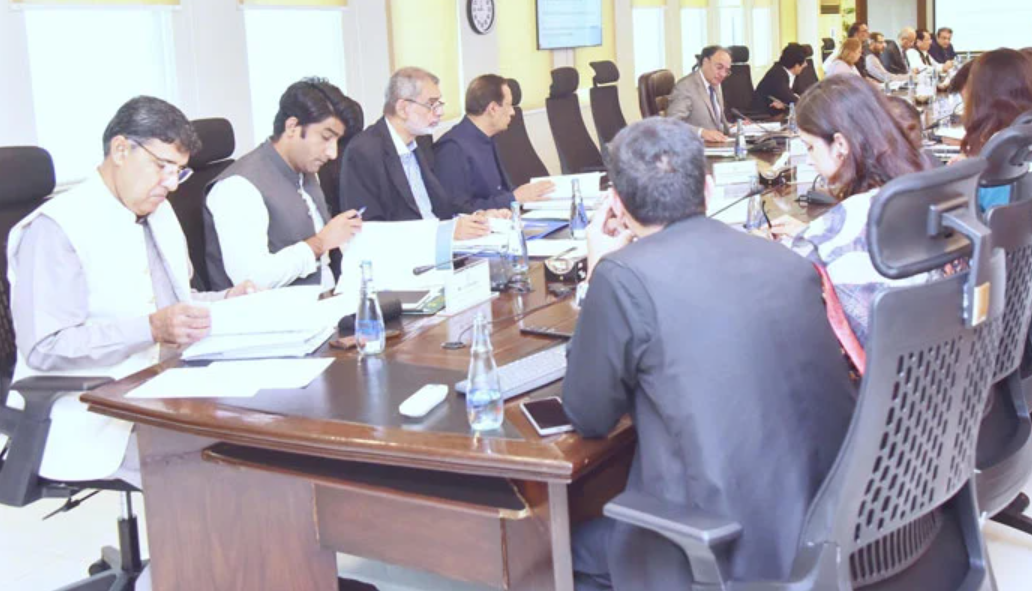

The Economic Coordination Committee (ECC) of the Cabinet has greenlit a significant housing finance initiative, approving a Rs72 billion subsidy to support the construction or purchase of 50,000 homes across Pakistan. This decision, finalized during an ECC meeting chaired by Finance Minister Senator Muhammad Aurangzeb on July 25, 2025, aims to boost affordable housing access for first-time homeowners.
The new scheme is a collaborative effort between the Ministry of Finance, the State Bank of Pakistan (SBP), and the Ministry of Planning, Development and Special Initiatives. It targets individuals with valid CNICs who do not currently own residential property, offering them long-term financing of up to 20 years.
Eligible applicants can receive subsidised loans of up to Rs3.5 million with fixed markup rates, 5% for loans up to Rs2 million and 8% for those between Rs2 and Rs3.5 million, applicable for the first 10 years. After that, market-based rates will apply. The initiative also removes barriers by waiving processing fees and prepayment penalties.
The financing covers houses up to 5 marla or flats not exceeding 1,360 square feet. The scheme offers a 90:10 loan-to-value ratio. To encourage banks’ participation, the government has introduced a 10% first-loss risk-sharing mechanism for commercial banks, Islamic banks, microfinance banks (MFBs), and the House Building Finance Corporation (HBFC).
The total projected cost of the scheme is Rs71.98 billion, spread over two decades. This includes Rs61.98 billion allocated for markup subsidies and Rs10 billion for risk coverage, with Rs3.927 billion earmarked for fiscal year 2025–26.
The Pakistan Housing Authority Foundation (PHAF) will manage the scheme’s implementation. The government will also allocate funds for public awareness and operational management, in consultation with PHAF and the Ministry of Information. Three proposed titles for the scheme include “Apna Ghar-Roshan Mustaqbil,” “Mera Khaub=Mera Aashiyana,” and “Mera Ghar-Meri Jannat.”
The SBP has endorsed the scheme’s design and compliance strategy. It aligns with the government’s broader goal of promoting affordable housing and stimulating the private sector through financial risk-sharing and regulatory support.
During the same ECC session, other key decisions were also made. The committee approved a proposal by the Ministry of Commerce to appeal a Lahore High Court ruling regarding RLNG tariff concessions for M/s Ghani Glass Ltd. The ECC argued the appeal is valid since concessionary energy tariffs for export-oriented sectors have already been revoked.
In another major step, the ECC adopted Pakistan’s Green Taxonomy, a framework presented by the Ministry of Climate Change to guide sustainable investments and financing of green projects.
Additionally, the ECC endorsed a Rs1 billion government guarantee for the issuance of the Pakistan Skill Impact Bond (PSIB), aimed at financing skills training through outcomes-based models. The committee encouraged the Ministry of Federal Education to shift towards public-private partnerships and reduce reliance on state guarantees.
The ECC also called for a comprehensive, centralised housing sector database to streamline targeting and implementation of future housing initiatives.
Meanwhile, the Ministry of Industries and Production updated the committee on domestic pricing and supply trends for vegetable ghee and edible oil. The ECC noted that while international prices have declined, the benefits have not fully reached consumers. The committee advised close monitoring to avoid price distortions and possible cartelisation, urging stronger coordination with the Competition Commission and provincial price monitoring bodies.
On the technology front, the ECC approved revised charges for Radio-Based Services (RBS) and called for periodic reviews in line with economic trends and tech advancements. The advisory committee overseeing IMT spectrum releases was also restructured to better manage next-generation mobile broadband services.
Finally, the ECC declared ship-breaking and recycling a formally recognised industry, as recommended by the Ministry of Maritime Affairs. However, the committee asked for detailed energy consumption data to assess the potential shift to industrial power tariffs.
With this expansive set of approvals, the ECC continues to steer critical reforms aimed at affordable housing, environmental sustainability, skill development, and digital infrastructure, all part of Pakistan’s broader economic recovery strategy.
