

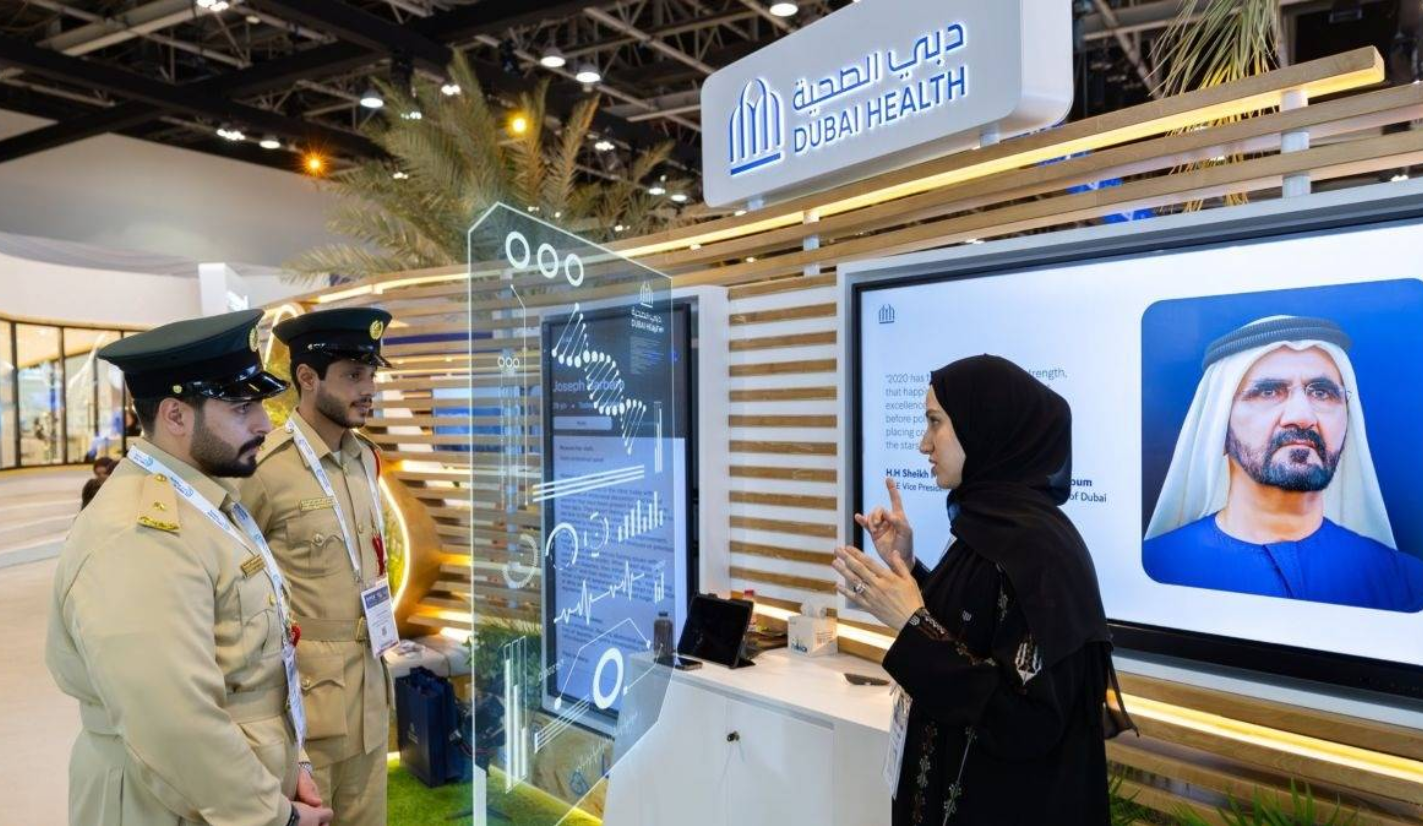

Dubai Health has launched an innovative AI-powered Virtual Intensive Care Unit (ICU) aimed at transforming critical care delivery through continuous monitoring and data-driven insights. The pilot system, introduced ahead of GITEX Global 2025, represents a major leap forward in Dubai’s efforts to build a smart, tech-enabled healthcare ecosystem.
The Virtual ICU is currently being tested at Al Jalila Children’s Hospital, where advanced cameras and artificial intelligence algorithms are being used to detect early signs of patient distress. When abnormalities are identified, the system instantly alerts medical staff, enabling faster intervention and improved patient safety.
This pioneering initiative aligns with Dubai’s vision to integrate AI across all sectors, particularly healthcare, under the Dubai Digital Strategy and Dubai Social Agenda 33.
How Dubai’s Virtual ICU Works
According to Hend Majed Al Abbar, Director of the AI Enablement Department at Dubai Health, the Virtual ICU merges AI-powered cameras with the health authority’s unified electronic medical record system, Salama. The system continuously monitors patients’ movements, facial expressions, and skin tone, using AI to detect distress signals in real time.
The ten-bed pilot program is being monitored remotely by specialists at the National Children’s Hospital in Washington, D.C., creating a bridge for knowledge sharing and 24/7 expert supervision.
The technology is expected to go live in December 2025, after which Dubai Health will review its performance to decide on expansion to other ICUs across the emirate.
Benefits of the Virtual ICU
The AI-powered Virtual ICU enhances patient safety and clinical efficiency by merging visual analytics with medical data. The system continuously records vital signs—such as heart rate, oxygen levels, and blood pressure—allowing for instant detection of even minor physiological changes.
By ensuring early intervention, this technology can significantly reduce hospital stays, improve recovery rates, and increase survival outcomes for critically ill patients.
Al Abbar emphasized that AI is designed to support, not replace, medical professionals. “Our goal is to empower healthcare teams by helping them identify distress early and respond quickly,” she explained. Similar AI-assisted care models are already improving outcomes in major hospitals across the United States.
Expanding AI Integration Across Dubai’s Healthcare
In addition to the Virtual ICU, Dubai Health is leading several other AI-driven healthcare projects that aim to enhance diagnosis, care delivery, and patient interaction.
One such initiative is Virufy, an AI-powered smartphone application that analyzes breathing and cough patterns to predict respiratory illnesses. Currently being tested at Nad Al Hamar and Al Barsha Clinics, the app uses data analytics to assess respiratory health with the goal of early detection and prevention.
Another innovation showcased at GITEX 2025 is Agentic AI for MBRU Admissions, a generative AI assistant developed for the Mohammed Bin Rashid University of Medicine and Health Sciences (MBRU). The system provides 24/7 support to applicants, handling queries about registration, scholarships, and requirements through both chat and phone interactions.
Building the Future of AI-Driven Healthcare in Dubai
Dubai Health’s AI initiatives underline its strategic commitment to developing a future-ready healthcare system that prioritizes precision, accessibility, and sustainability. By introducing the Virtual ICU and other intelligent systems, the authority is not only advancing local healthcare but also setting a global benchmark for AI-enabled patient care.
As these projects mature, Dubai’s healthcare sector is poised to become a global model of technological innovation—where human expertise and artificial intelligence work together to save lives and deliver superior patient outcomes.
