


CPEC Development
The China-Pakistan Economic Corridor (CPEC), widely recognized for its monumental infrastructure projects — including ports, highways, and power plants — is now entering a transformative new phase centered on people, particularly women.
As CPEC transitions into its second stage, it is increasingly becoming a vehicle for social change, especially through the empowerment and inclusion of women across Pakistan’s economic landscape.
In regions once marked by limited opportunities and conservative traditions, women are stepping forward to become active agents of progress. In Tharparkar, Sindh, for instance, a remarkable initiative under the Thar Block II Project by the Sindh Engro Coal Mining Company (SECMC) has trained 70 local women as heavy dump truck drivers. This groundbreaking development marks a historic milestone for the region, challenging longstanding gender norms and providing women with skills that were once inaccessible to them.
A similar story of transformation is unfolding in Gwadar, Balochistan. Within the Gwadar Port Free Zone, over 20 women have been trained in garment production at a tailoring center established by the China Overseas Ports Holding Company (COPHC) and supported by the Chinese Consulate. These women now produce uniforms for port workers and receive stipends during their training, offering them both financial stability and professional growth.
Speaking to the Associated Press of Pakistan (APP), Umair Pervez Khan, Secretary of the Consortium of Asia Pacific Studies (CAPS), highlighted that CPEC is evolving beyond its original infrastructure-centric vision into a platform for inclusive and sustainable development.
He emphasized that women are at the heart of this transformation. “CPEC is not just about roads and trade,” he stated. “It’s a platform of opportunity, and women are becoming key contributors to its success.”
Khan noted that the second phase of CPEC places a strong emphasis on Special Economic Zones (SEZs), vocational training, and grassroots empowerment. With the operationalization of SEZs in provinces such as Punjab, Khyber Pakhtunkhwa, and Sindh, efforts are underway to integrate women into traditionally male-dominated sectors, including manufacturing, logistics, and technical services.
He stressed that creating inclusive infrastructure from the beginning is vital to ensuring women’s long-term participation. This includes vocational centers, daycare facilities, safe transport, and women-friendly workplaces.
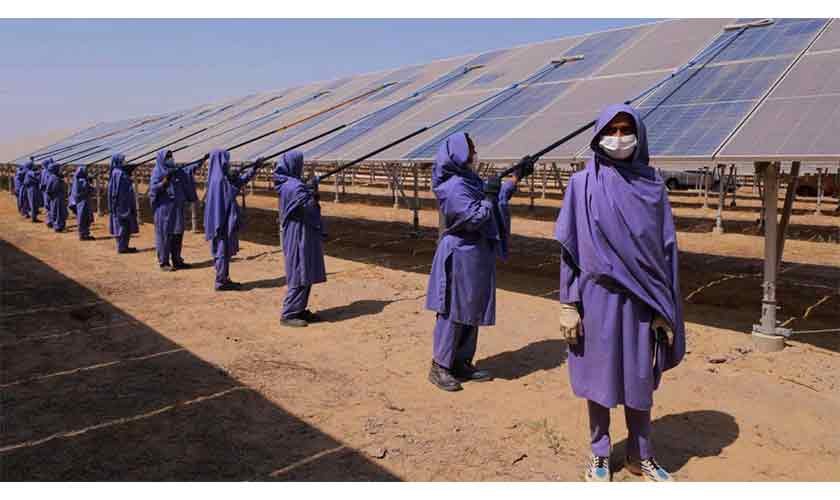
Beyond economic empowerment, CPEC is also influencing cultural norms. In areas where women once had limited visibility in public life, success stories are encouraging families to support female education and employment. The ripple effects of these early wins are already apparent. In Sindh alone, beyond the 70 dump truck drivers, 21 women have been trained in solar maintenance.
In Balochistan, women continue to thrive in the garment sector. Punjab has seen a rise in female employment in the textile industry due to improved access to energy, while in Khyber Pakhtunkhwa, enhanced transport networks have opened new employment and training avenues for women. Moreover, 191 female police officers have joined Sindh’s CPEC security force, signaling a broader acceptance of women in high-responsibility roles.
Khan believes that with sustained commitment and the implementation of gender-inclusive policies, Pakistan could emerge as a regional leader in women-focused development. “With inclusive policies, Pakistan can use infrastructure and trade not just to grow GDP, but to uplift human lives,” he said.
As the Pak-China collaboration under the Belt and Road Initiative continues to unfold, the CPEC is proving to be more than a trade route — it is becoming a bridge to social transformation.
By investing in the skills and potential of women in some of the country’s most marginalized areas, Pakistan is not only reshaping its workforce but also redefining its future. Women are no longer confined to the margins of development; they are now at the center of Pakistan’s journey toward inclusive and sustainable progress.
