

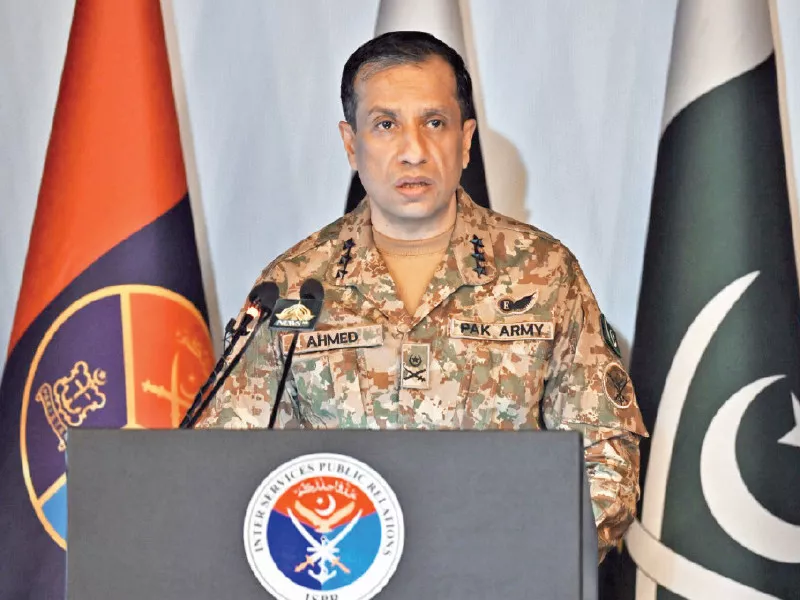

Director General of Inter-Services Public Relations (DG ISPR), Lieutenant General Ahmed Sharif Chaudhry, received a warm welcome during his recent visit to King Edward Medical University (KEMU) in Lahore. The university administration and students expressed admiration and appreciation for his presence.
In his address, DG Sharif delivered a strong message to the adversaries of Pakistan, stating that a small number of terrorists cannot derail the nation’s journey toward peace and prosperity, particularly in Balochistan. He reaffirmed that the people of Balochistan share an unbreakable bond with Pakistan—one grounded not just in geography, but also in shared history, religion, culture, and traditions—bonds that no force can sever.
The DG ISPR also reiterated Pakistan’s unwavering commitment to Kashmir. He emphasized that “Kashmir was, is, and will remain Pakistan’s jugular vein,” underscoring the nation’s enduring support. Pakistan, he added, will continue to offer moral, political, and diplomatic backing to the Kashmiri people in their legitimate struggle for freedom.
Highlighting the achievements of the Pakistan Armed Forces, Lieutenant General Sharif discussed the strategy, determination, and accomplishments during “Operation Bunyan un Marsoos.” He noted that the victory in this crucial campaign was not solely due to military efforts but was made possible through the steadfast support of the Pakistani nation—especially its youth.
He commended young people for their patriotic spirit and their essential role in maintaining the country’s security, stability, and sovereignty.
The event concluded with an emotional show of solidarity from the university students, who expressed their deep support for the Pakistan Armed Forces and pledged their readiness to sacrifice for the defense and dignity of the motherland.
Exclusive
Impact of Social Media on Political Polarisation in Pakistan
Before the advent of social media, it was print media—newspapers and magazines—that shaped public opinion. The book Impact of Social Media on Political Polarisation in Pakistan launched by Islamabad Policy Research Institute(IPRI) is a thorough study of how platforms like Twitter (now X), Instagram, and Facebook have become forces that shape political narratives, allegiances, and divides in the country. The researchers used both qualitative interviews and quantitative data (Spearman’s Rank Correlation Coefficient) to gauge agreement with the claim that “Social media has made the political sphere in Pakistan more polarized.”
