


ISLAMABAD: In anticipation of Iranian President Ibrahim Raisi’s forthcoming visit this month, Defence Minister Khawaja Asif has asserted Pakistan’s readiness to advance the gas pipeline project with Iran and make necessary decisions regarding it.
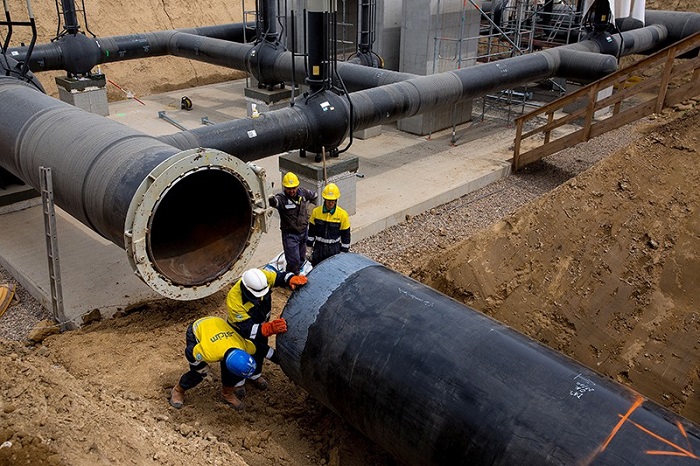
“We are currently in the process of constructing the gas pipeline on our side, from Gwadar to the Iranian border,” Asif stated during an appearance on Geo News’ Capital Talk program on Monday.
Earlier this month, media reported Pakistan’s initiation of construction on an 80km stretch of the Pakistan-Iran gas pipeline, connecting Gwadar to a point where it can link up with the Iranian segment of the project.
This development comes against the backdrop of explicit opposition from the United States to the bilateral project, coupled with warnings of potential sanctions. The project has faced nearly a decade-long delay, originally slated for completion in December 2014 followed by operationalization in January 2015.
Iranian President Ibrahim Raisi’s scheduled visit to Pakistan on April 22, as indicated by sources to Geo News, occurs amidst heightened tensions in the Middle East following Iran’s unprecedented drone and missile attack on Israel.
Sources reveal that Islamabad and Tehran have reached agreements concerning President Raisi’s visit. He will be accompanied by a high-level delegation and is expected to hold meetings with Prime Minister Shehbaz Sharif, President Asif Ali Zardari, and military leadership.
This visit underscores ongoing efforts by both nations to deepen their cooperation, which experienced a temporary setback earlier this year.
Addressing border tensions between the two neighboring countries in January, the defense minister assured Capital Talk host Hamid Mir that Pakistan-Iran ties remain stable despite past incidents.
“Progress on the gas pipeline project has further strengthened bilateral relations.”
Relations between Pakistan and Iran had soured after Pakistan, in response to Tehran’s cross-border strikes, conducted precision strikes targeting terrorists within Iranian territory using killer drones, rockets, loitering munitions, and stand-off weapons.
Discussing other matters, the senior leader of the Pakistan Muslim League-Nawaz (PML-N) emphasized economic stability as a top priority for the coalition government. Regarding the political situation, he expressed confidence that the government would not face significant political threats if his party managed to stabilize the economy within a few months.
In response to a query, Asif affirmed Pakistan’s positive relations with Saudi Arabia and the United Arab Emirates (UAE).
