

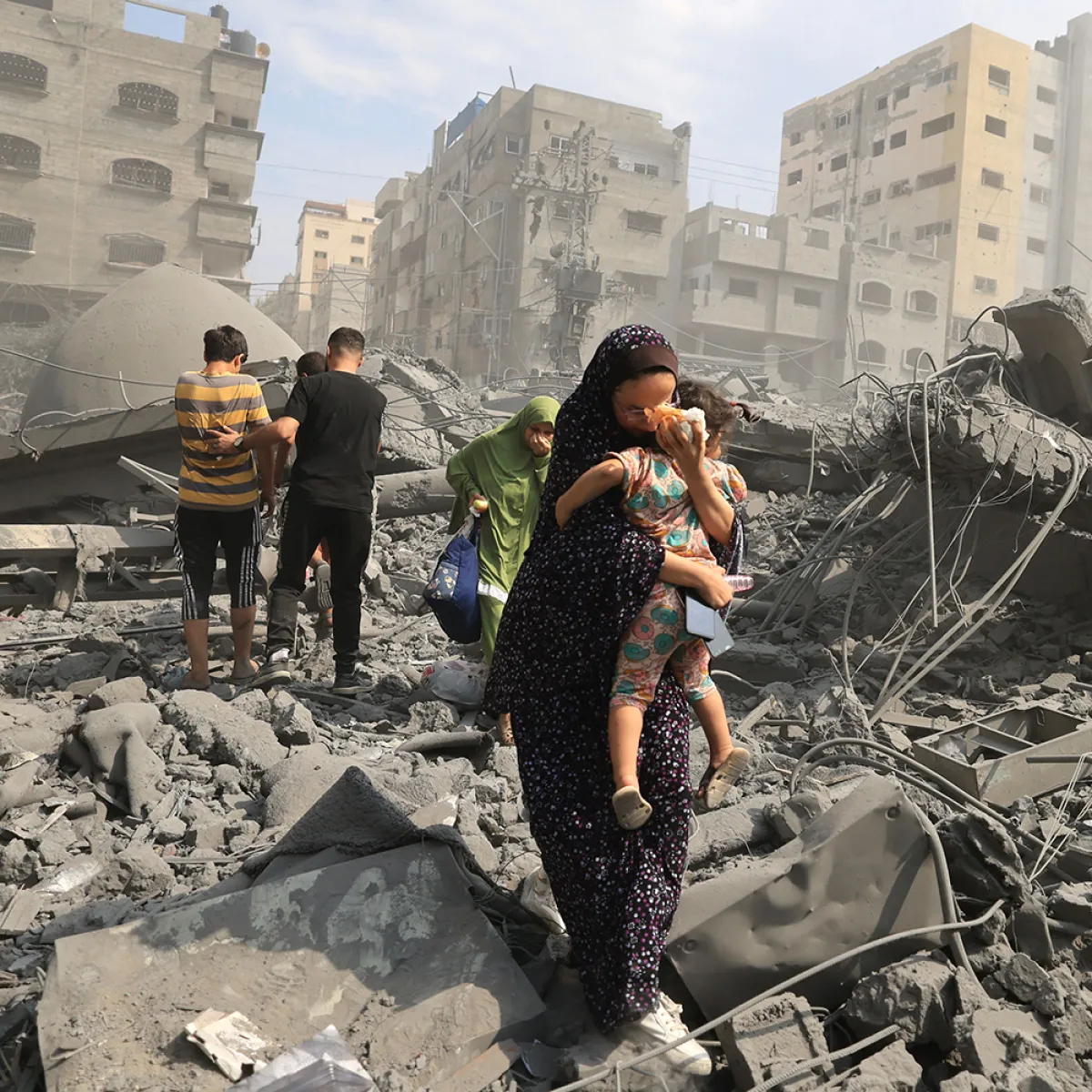

In one of the deadliest escalations in recent weeks, Israeli airstrikes across the Gaza Strip on Monday claimed the lives of at least 95 Palestinians, striking a cafe, a school, a hospital, and multiple food distribution points. The widespread bombardment has sparked global outrage and intensified calls for a ceasefire—even as diplomatic efforts remain in a state of uncertainty.
Among the hardest-hit areas was Gaza City and its northern outskirts, where 62 people were killed, including 39 civilians at the Al-Baqa seaside cafe. Witnesses described scenes of horror as Israeli fighter jets launched missiles without warning.
“This place wasn’t political or military—it was just a birthday party,” said eyewitness Yahya Sharif. “We found people torn apart.”
The cafe, known as a rare escape for displaced residents seeking relief from Gaza’s suffocating heat, was reduced to rubble. The blast left a gaping crater and a trail of blood and body parts scattered in its wake. Among the victims was journalist Ismail Abu Hatab, alongside women and children.
Elsewhere in Gaza City, an Israeli strike targeted a food distribution warehouse in the Zeitoun neighborhood, killing at least 13 people trying to collect rations. Another air raid flattened the Yafa School, which had been sheltering hundreds of displaced families. Survivors reported receiving only five minutes’ notice before the attack.
“We don’t know where to go anymore,” said Hamada Abu Jaradeh, who fled just in time. “The world has abandoned us. For over 630 days, death surrounds us.”
Adding to the devastation, the courtyard of Al-Aqsa Hospital in Deir el-Balah—a sanctuary for thousands—was bombed. Footage verified by Al Jazeera showed panic and destruction as tents were torn apart and civilians fled in terror.
“This is the tenth time this hospital has been targeted,” said Al Jazeera correspondent Tareq Abu Azzoum. “No warnings were given. The strike landed just 10 meters from our broadcast point.”
Gaza’s Government Media Office condemned the hospital attack as a “systematic crime” and part of a broader campaign to dismantle the enclave’s already-crippled healthcare system—a claim echoed by human rights organizations and UN investigators.
In southern Gaza, 15 more Palestinians were killed at aid hubs run by the controversial Gaza Humanitarian Foundation (GHF) in Khan Younis, according to sources at Nasser Medical Complex. The Israeli military acknowledged civilian harm and promised reviews of the incidents, though a Haaretz report alleged that soldiers were ordered to shoot civilians at aid centers even when they posed no threat.
Simultaneously, Israeli tanks re-entered eastern Zeitoun, shelling residential areas and demolishing homes in Khan Younis. More evacuation orders were issued across northern Gaza, sparking fears of another mass displacement.
“Explosions never stopped. It felt like earthquakes,” said Salah, a 60-year-old father from Gaza City. “They say a ceasefire is close—but we only see death.”
According to the UN, more than 80% of Gaza is now either militarized or under displacement orders.
The fresh wave of violence comes as top Israeli officials, including Strategic Affairs Minister Ron Dermer, arrive in Washington, DC, for new ceasefire talks with the Biden administration. Key mediator Qatar confirmed that the U.S. is showing serious intent to restart negotiations, although challenges remain.
“The momentum is there, but neither side is ready to return to the table yet,” said Qatari foreign ministry spokesperson Majed Al Ansari. “We’re not expecting a breakthrough today or tomorrow.”
Topics at the White House are expected to include the ceasefire, the fate of Israeli captives, and broader regional diplomacy involving Iran. Back in Israel, Prime Minister Benjamin Netanyahu’s Security Cabinet is scheduled to meet to discuss the next phase of military operations.
Netanyahu, speaking over the weekend, suggested “new opportunities” had emerged for recovering captives, though only 20 are believed to be still alive.
Meanwhile, Hamas official Osama Hamdan declared that Israel has been silent on ceasefire progress for four weeks. “We are working with mediators to reach a truce that can end the suffering of our people,” he said.
As the war grinds into its 22nd month, the people of Gaza are left to endure relentless bombardment, growing hunger, and near-total collapse of basic services—while peace remains trapped in the crossfire of diplomacy and destruction.
