

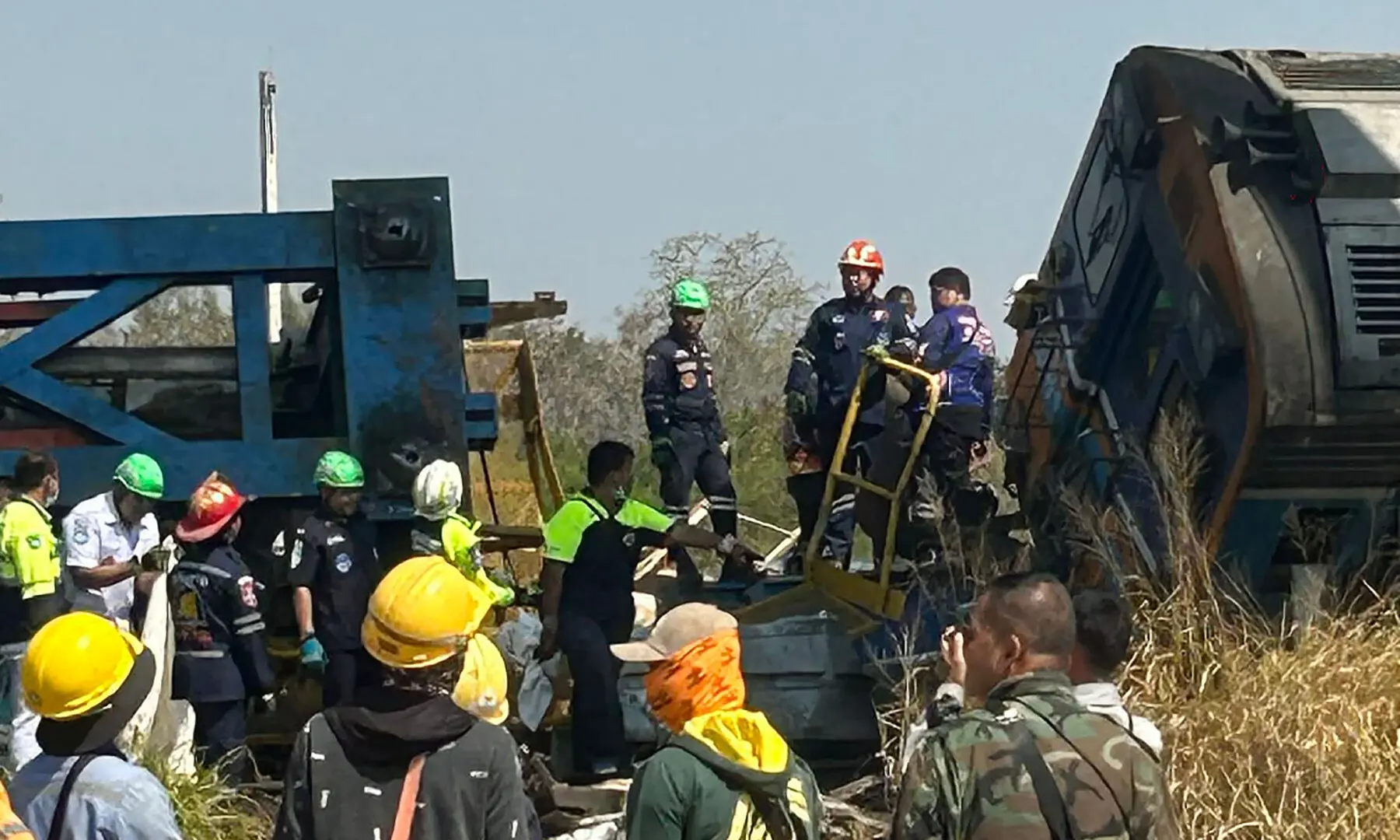

At least 22 people were killed and dozens injured on Wednesday after a crane at a China-backed high-speed rail construction site in Thailand collapsed onto a moving passenger train, causing it to derail and catch fire, local authorities said.
The deadly accident occurred in Nakhon Ratchasima province, northeast of Bangkok, at a site linked to a $5.4 billion high-speed rail project funded with Chinese support under Beijing’s Belt and Road Initiative (BRI). The project aims to connect Bangkok with Kunming in China via Laos by 2028.
According to district police chief Thatchapon Chinnawong, 22 fatalities have been confirmed so far, while at least 80 passengers sustained injuries. Authorities are still assessing how many of the injured are in critical condition. The train was carrying 195 passengers and was travelling from Bangkok to Ubon Ratchathani province at the time of the crash.
Verified footage from the scene showed the collapsed crane resting on large concrete pillars, with smoke rising from the derailed train below. Eyewitnesses described hearing loud noises followed by explosions as the crane fell onto the train’s carriages. One local resident said the metal structure sliced through the middle of a carriage, splitting it in half.
Rescue teams rushed to the scene to extract passengers from the damaged and tilted carriages. However, operations were temporarily suspended after authorities reported a chemical leak at the site, raising safety concerns for rescue workers.
Thailand’s Transport Minister Phiphat Ratchakitprakarn ordered an immediate investigation into the cause of the accident and instructed officials to identify the victims. He also directed relevant agencies to review safety measures at major infrastructure projects.
Industrial and construction-related accidents are a recurring issue in Thailand, often blamed on weak enforcement of safety regulations.
While the high-speed rail project is expected to modernise the country’s ageing rail network and reduce reliance on road transport, Wednesday’s tragedy has once again raised serious questions about construction safety standards and oversight at large-scale infrastructure sites.
