

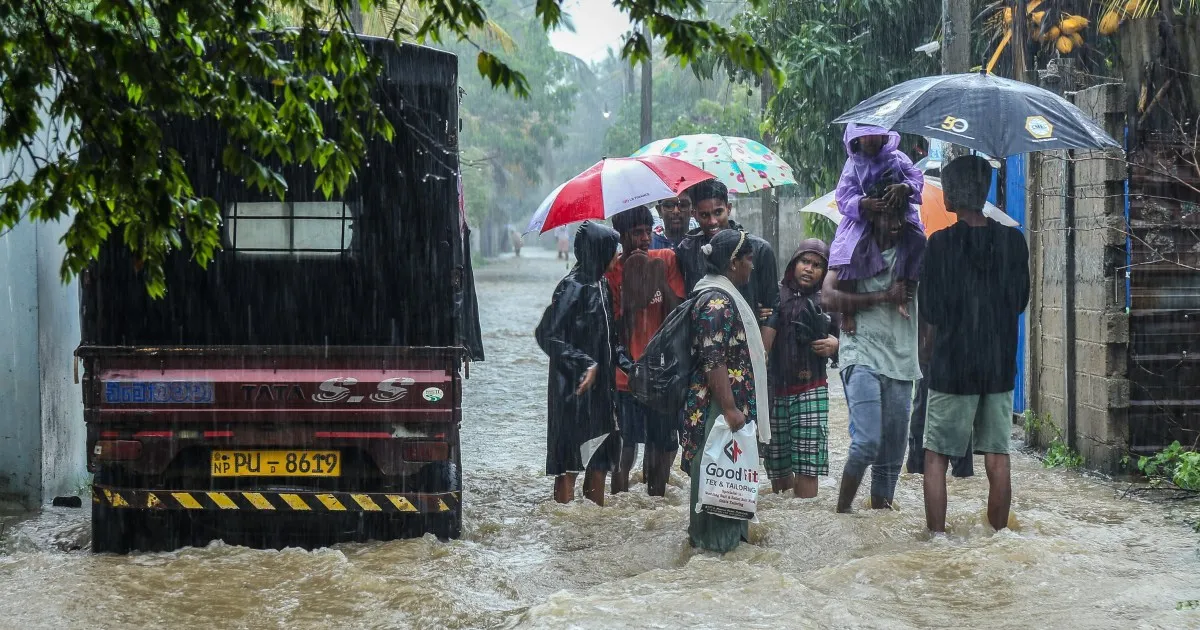

Cyclone Ditwah struck Sri Lanka with intense force on Friday. The powerful storm caused widespread destruction across multiple regions. Officials confirmed that 46 people lost their lives and 23 remain missing. The disaster has triggered an urgent nationwide emergency response as weather authorities warn that the cyclone may intensify within the next 12 hours.
Severe Rainfall Triggers Deadly Landslides Across Sri Lanka
Most casualties occurred due to massive landslides. These landslides were triggered by torrential rainfall exceeding 300mm in just 24 hours. Eastern and central regions faced the worst damage. Homes, roads, and farmland were swept away as heavy rains continued without pause.
The Disaster Management Centre (DMC) reported that 43,991 people have been evacuated. Many families were rescued from rooftops after floodwaters suddenly surged. Schools across several districts were closed for safety. Train services were suspended. The Colombo Stock Exchange also ended trading early due to the extreme weather.
Rescue teams are still struggling to reach remote villages. Landslides have blocked major roads, making access extremely difficult. Brigadier S. Dharmawickrema, Emergency Operations Director at the DMC, said that teams are working tirelessly. He assured that efforts are ongoing to get every stranded person to safety.
Flight Diversions, Transport Disruptions, and Rising Safety Concerns
The cyclone has also affected air travel. Sri Lanka may divert incoming flights from its main airport if weather conditions worsen. Ports and Civil Aviation Minister Anura Karunathilake stated that flights could be redirected to Trivandrum or Cochin airports in India.
Local media reported several flight diversions already. Six flights from Muscat, Dubai, New Delhi, and Bangkok were rerouted away from Bandaranaike International Airport (BIA) due to poor visibility and dangerous wind conditions.
Authorities continue to monitor Cyclone Ditwah closely. Emergency teams remain on high alert as Sri Lanka braces for further rainfall, potential flooding, and more landslides.
