

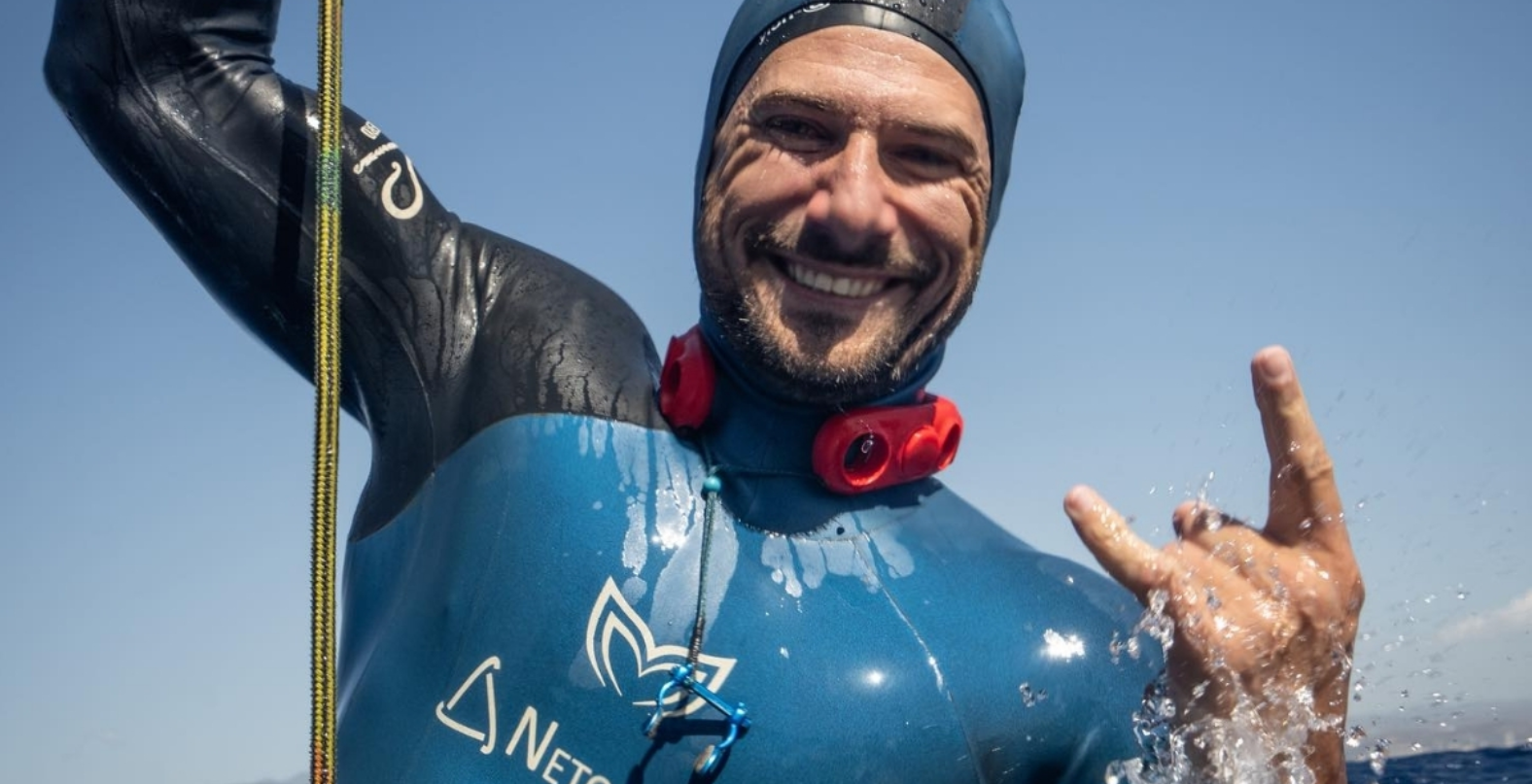

A Croatian freediver has set a remarkable new world record by holding his breath underwater for an astonishing 29 minutes and 3 seconds. This achievement stunned sports enthusiasts worldwide and pushed the boundaries of human endurance.
Vitomir Maričić, an experienced freediver, carried out the attempt in a pool measuring three meters deep. His performance exceeded the previous record by five minutes, a difference considered extraordinary in the freediving community.
The Science of Freediving
Freediving is not simply about holding one’s breath. It is a practice that combines physical conditioning, mental discipline, and specialized breathing techniques. While the average person can only hold their breath for 30 seconds to two minutes, professional freedivers extend this duration dramatically.
Athletes in this sport undergo rigorous training. They practice diaphragmatic breathing to maximize lung capacity, strengthen their cardiovascular systems, and rely on meditation to maintain calm under pressure. This unique combination enables freedivers to push beyond what most people believe possible.
Preparation Behind the Record
Maričić’s record-breaking performance was achieved after he inhaled oxygen beforehand, a standard method in static apnea world record attempts. This technique allows divers to saturate their bodies with oxygen, giving them the ability to remain underwater much longer.
Despite using oxygen preparation, the attempt still required immense stamina, discipline, and mental focus. The 29-minute milestone not only demonstrated Maričić’s skill but also highlighted the incredible potential of human endurance when paired with science and training.
Freediving as a Growing Sport
Freediving has gained global popularity in recent years. Competitions are now organized worldwide, and the sport attracts athletes from diverse backgrounds. Fans admire the blend of serenity and intensity that defines the discipline.
Records like Maričić’s often draw mainstream attention to freediving, sparking public interest in breath-holding techniques, relaxation methods, and underwater exploration. Moreover, freediving has also contributed to research in human physiology, helping scientists understand how the body adapts to extreme conditions.
Human Limits and Inspiration
Maričić’s achievement goes beyond setting a number. It serves as a testament to human resilience and the power of training. His success inspires aspiring freedivers and reminds the world that human limits can be extended with focus and perseverance.
As more athletes challenge existing boundaries, freediving is expected to see even greater milestones. Each new record not only redefines endurance but also reinforces the connection between mind, body, and the natural environment.
