

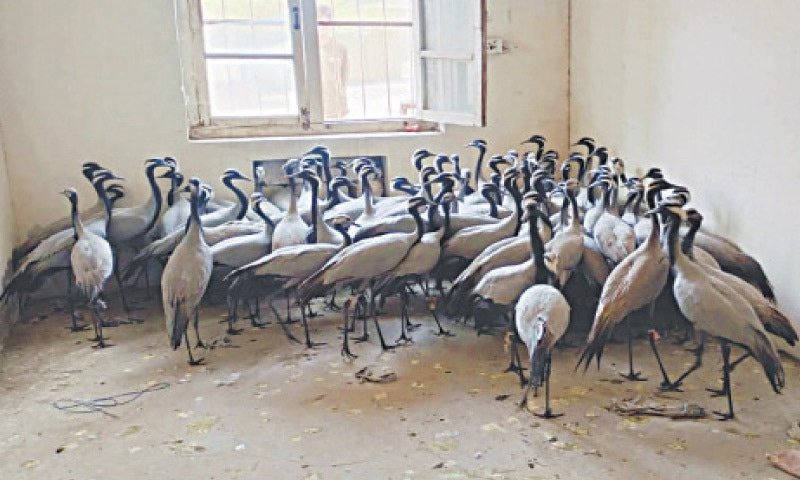

Crane hunting in Pakistan is a centuries-old cultural practice, closely tied to the biannual migration of cranes along the Indus Flyway. While deeply rooted in local tradition, authorities are increasingly monitoring the practice to protect vulnerable crane populations.
Target Species and Migration Patterns
The main species involved in crane hunting are:
Demoiselle Crane (Anthropoides virgo)
Common Crane (Grus grus)
Critically endangered species, like the Siberian Crane, are strictly protected, and hunting them is illegal. Hunting activity peaks during migration seasons:
Autumn: September–October
Spring: March–April
During these periods, cranes travel from Siberia to India, passing over key regions in Pakistan.
Key Hunting Regions
Crane hunting is concentrated in specific provinces:
Khyber Pakhtunkhwa (K-P): Districts including Bannu, Lakki Marwat, and Dera Ismail Khan are traditional hotspots.
Balochistan: The Zhob Valley serves as a major stopover for migratory cranes and a focal point for hunting.
Traditional and Modern Hunting Methods
Hunters use a combination of age-old and contemporary techniques:
Live Trapping (Soai): A string with a weighted ball is thrown to entangle cranes mid-flight.
Decoys: Trained captive cranes are used to lure wild flocks to nearby hunting camps.
Firearms: Shotguns are sometimes used, especially where enforcement is weak, though trapping remains more common.
Legal Status and Regulations (2025–2026)
Crane hunting is heavily regulated to prevent overexploitation:
Permit Requirements: Hunters in K-P and other provinces must obtain licenses. Seasonal fees are around Rs. 5,000 per camp, with additional fees per bird.
Possession Limits: Rules often cap the number of cranes a camp can capture (e.g., 15 per season) and the number of decoy pairs.
Illegal Activity: Poaching and smuggling remain major concerns, particularly in remote tribal areas. Authorities have recently intercepted dozens of illegally captured cranes destined for the pet trade.
Conservation Challenges
Despite legal frameworks, declining crane populations face pressure from:
Habitat loss along the Indus Flyway
Unregulated hunting and poaching
Illegal trade of live birds
Conservationists stress the importance of strict enforcement, public awareness campaigns, and alternative livelihood options for communities dependent on traditional hunting.
