

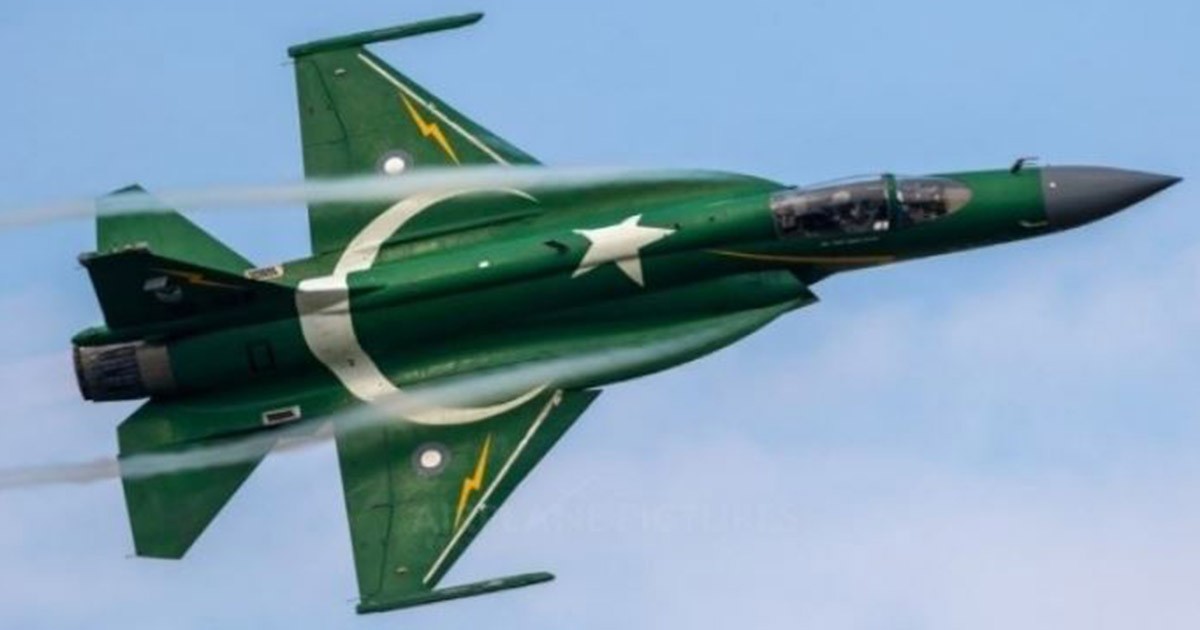

ISLAMABAD: Several countries have placed orders to buy Pakistani JF-17 Thunder fighter jets, missiles, and other military weapons in 2025, while many are holding meetings this year with top brass of Pakistani armed forces, including the chief of defence forces, Asim Munir, to finalize deals to buy fighter jets. Here are details of countries seeking Pakistani JF-17 Thunder and other military weapons.
Saudi Arabia
Saudi Arabia is negotiating a deal with Pakistan to buy JF-17 Thunder jets and other defence weapons. Saudi Arabia, however, has asked Pakistan to consider this deal under the loan program. Saudi Arabia has deposited $3 billion into the State Bank of Pakistan (SBP) account to support the foreign exchange reserves. Now, the Kingdom of Saudi Arabia wants this loan to be adjusted against the price of the fighter jets and other weapons. Saudi Arabia has already signed a Defence Agreement with Pakistan. Details of the agreement have not been shared yet; however, officials are claiming privately that the deal involved $20 billion, which Saudi Arabia would give to Pakistan.
United Arab Emirates
The UAE is also close to striking a deal with Pakistan. UAE too wants its $2 billion loan deposited into the SBP account, to be adjusted against the price of the fighter jets and other weapons.
Libya
Libya has signed a big deal with Pakistan worth $4 billion to purchase JF-17 Thunder jets, missiles, and other weapons. So far, it is the largest-ever defence deal between Libya and Pakistan.
Azerbaijan
Azerbaijan has also signed a contract with Pakistan to purchase 40 JF-17 Thunder Block-III jets. The deal involves a huge amount of $4.6 billion, being the largest defence deal between the two countries.
Sudan and Iraq
Sudan and Iraq are also negotiating defence deals with Pakistani authorities to finalize deals to acquire modern fighter jets and other weapons. Sudanese and Iraqi officials have held initial meetings with top-level military officials in Pakistan to discuss defence deals.
Indonesia
Indonesia is close to striking a defence deal with Pakistan to buy modern fighter jets and drones. For this purpose, the Indonesian defence minister met the chief of defence forces General Syed Asim Munir in Islamabad on Monday to explore a potential defence deal. The deal could include the sale of combat aircraft and advanced drones, according to security officials.
The discussions highlighted expanding military cooperation between the two countries. Moreover, the talks reflected Pakistan’s broader push to strengthen its defence exports and deepen strategic ties across Asia.
Officials said the meeting focused on platforms that could enhance Indonesia’s airpower and surveillance capabilities. Consequently, both sides reviewed technical options, operational requirements, and possible frameworks for future collaboration. However, the sources did not disclose proposed delivery schedules or the duration of any potential agreement.
First Buyers of JF-17 Thunder
Myanmar was the first country to acquire the JF-17 from Pakistan in 2015. Myanmar ordered 16 JF-17 Thunder Block 2 aircraft in 2015, and seven have been delivered so far.
Nigeria was the second buyer, inducting three JF-17s into its air force in 2021.
The third main buyer was Azerbaijan. The country initially ordered 16 fighter jets. Later on, Azerbaijan increased its order to 40 fighter jets worth over $4.6 billion and signed a contract in 2025.
How did the demand for Pakistani fighter jets increase suddenly?
Lynching of India by Pakistan in May 2025 has emerged as a key factor for an increase in demand of Pakistani fighter jets, including JF-17 Thunder and missiles, etc. In May 2025, India launched attacks on Pakistan, targeting airbases and other military installations.
Nonetheless, Pakistan retaliated with adequate preparations and within four hours, India has been left with no choice but to seek Trump’s help for a ceasefire with Pakistan. Consequently, US Foreign Secretary Rubio contacted his Pakistani counterpart, Senator Muhammad Ishaq Dar, and suggested an immediate ceasefire. Dar replied, “We did not initiate war; India initiated it, and if they are ready for a ceasefire, we can discuss it.” Rubio replied that India has requested a ceasefire.
The World’s largest dogfight of fighter jets
During May 2025, Pakistan and India engaged in the world’s largest air combat involving more than 300 fighter planes at the same time. During this war, Pakistan shot down seven Indian fighter jets, including French Rafales. The war established the superiority of the Pakistani armed forces over the Indian military forces. Pakistani fighter jets _ JF-17 Thunder and JC-10, played a key role in destroying targets in India, including Rafale jets. This four-day war has changed the destiny of Pakistan, leading to rapid deals for the sale of fighter jets.
Key Advantages of JF-17 Thunder jets
The JF-17 Thunder continues to attract attention from air forces seeking a balance between affordability and performance, as analysts highlight the fighter’s expanding capabilities and competitive pricing. Defence experts say the aircraft’s relatively low procurement and operating costs make it accessible to countries that cannot afford more expensive Western platforms. As a result, the jet has emerged as a practical option for nations looking to modernise their fleets without exceeding defence budgets.
Later variants of the aircraft, particularly the Block 3, now offer features associated with advanced 4.5-generation fighters. Observers note that these upgrades significantly improve combat effectiveness while maintaining cost efficiency. Consequently, the JF-17 has strengthened its position in an increasingly competitive global fighter market.
Advanced upgrades and operational flexibility boost appeal
The Block 3 variant integrates an Active Electronically Scanned Array radar, improved avionics, electronic warfare systems, and enhanced sensor fusion. These additions allow pilots to detect and engage targets at longer ranges, while beyond-visual-range missile capability further enhances air combat effectiveness. Moreover, engineers designed the aircraft with an open-architecture system, which allows operators to integrate new technologies and upgrades more easily over time.
Experts also point to the aircraft’s maneuverability as a key strength. The improved thrust-to-weight ratio in the Block 3 supports strong agility and vertical acceleration during close-range engagements. In addition, the JF-17 offers genuine multi-role capability, enabling air forces to deploy it for air-to-air combat, ground attack, and maritime strike missions using a wide range of weapons, including guided bombs, anti-ship missiles, and air-to-air missiles.
The aircraft’s digital cockpit, helmet-mounted display, fly-by-wire controls, and network-centric warfare capabilities further enhance situational awareness and coordination with airborne and ground assets. Analysts add that fewer political restrictions on sales also make the platform attractive to buyers. Through continuous development across successive blocks, the JF-17 has evolved into a reliable and increasingly capable fighter for emerging air forces.
