

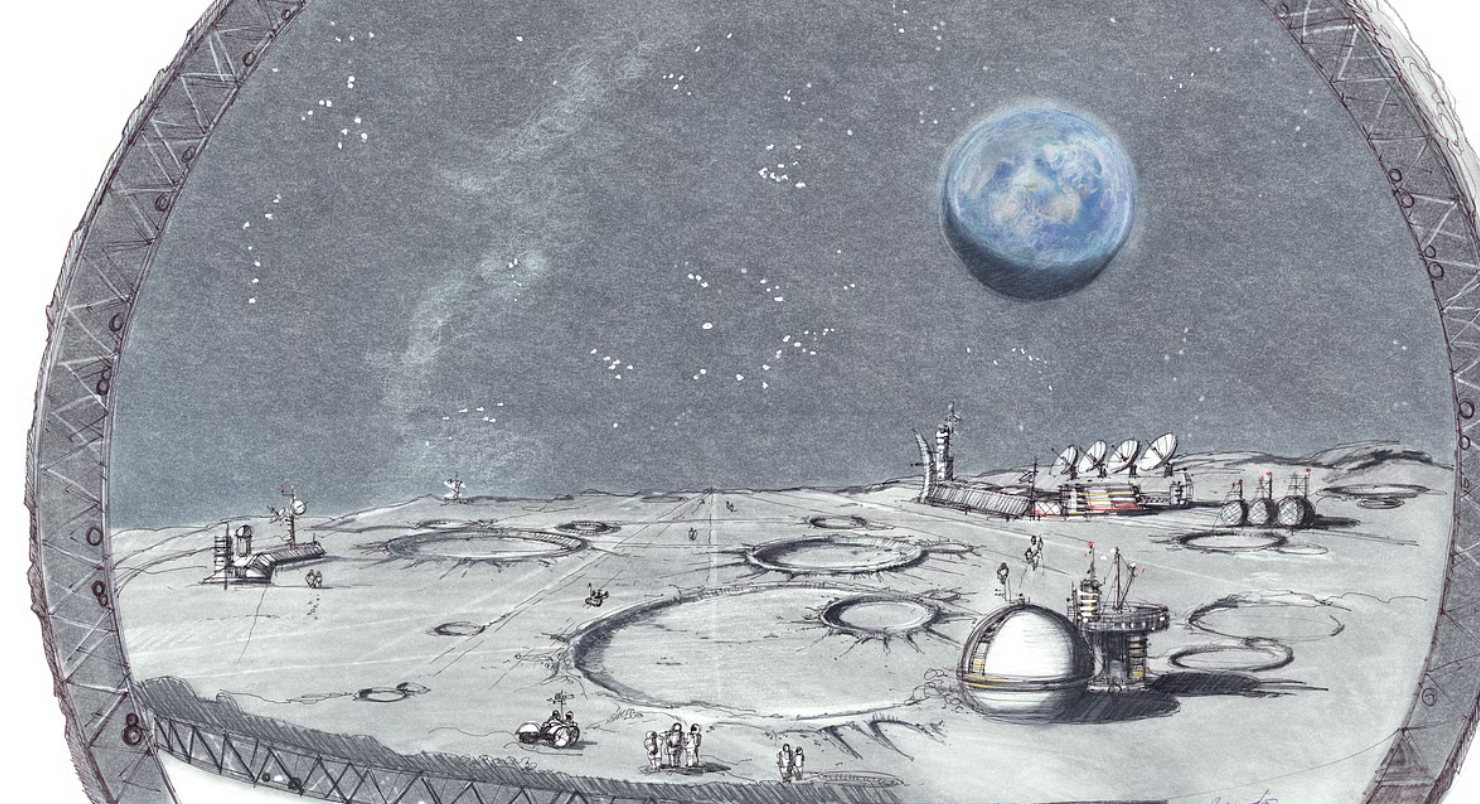

A bold tourism concept designed to recreate the Moon on Earth is gaining global momentum. Developers plan to launch the Moon megaproject across ten countries.
The large-scale destination resort aims to attract nearly 10 million visitors annually. Moreover, it combines hospitality, residential living, entertainment, and education within one integrated masterplan.
At the center of each development, planners propose the world’s largest true spherical structure. The sphere would rise more than 300 meters tall. Inside, guests would experience a full-scale lunar simulation environment.
Therefore, the project seeks to create a new category of immersive tourism.
Ten Countries Identified for Development
Developers have identified ten potential host countries. These include the UAE, China, Thailand, Brazil, Poland, Spain, India, Australia, Egypt, and the United States.
Each resort would operate under regional ownership. However, the parent company would provide design expertise and intellectual property licensing.
Some markets may advance faster due to regulatory frameworks and investment climates. In particular, China and the UAE could potentially move quickly if approvals align.
Consequently, 2026 may become a decisive year for formal announcements.
Funding Strategy Built on Private Capital
Despite its ambitious scope, the Moon megaproject relies heavily on private investment. The central resort component alone carries an estimated cost of $5 billion, excluding land expenses.
However, developers believe financing will not pose a major obstacle. The funding model emphasizes real estate sales and private capital participation.
Residential units will follow an off-plan sales structure. As a result, early buyers could partially finance construction through advance purchases.
Nevertheless, government approval remains essential before funding can proceed. Investors typically require regulatory clarity and confirmed land allocation before committing capital.
Therefore, official backing represents the first critical milestone.
Inside the Lunar Experience
The masterplan spans approximately 500 acres. At its core stands a giant sphere measuring about 271 meters in diameter.
Inside, a 4,000-room luxury hotel would anchor the complex. Above it, a lunar-themed attraction would simulate the Moon’s surface.
Developers expect the lunar experience alone to attract around 2.5 million visitors each year. Additionally, it could serve as a training environment for space agencies.
Surrounding facilities would include convention centers, wellness hubs, retail outlets, entertainment venues, and educational institutions.
Thus, the project blends tourism with business and learning opportunities.
Residential Component Ensures Long-Term Value
Beyond the resort core, the development includes about 10,000 luxury residential units. These units would spread across multiple towers and sphere-shaped buildings.
The residential zone would feature landscaped parks, waterfront areas, and panoramic skywalks. Consequently, it aims to create a live-work-play ecosystem.
Developers argue that this integrated model ensures year-round activity. Instead of seasonal tourism, the project would generate sustained economic value.
Timeline and Future Outlook
If approvals move forward smoothly, the first Moon resort could open around 2032. However, final site selections remain pending.
Investor interest appears strong, and global inquiries continue to rise. Yet, official confirmations will depend on regulatory alignment and land allocation.
Overall, the Moon megaproject represents one of the most ambitious tourism ventures ever proposed. By combining large-scale real estate with immersive entertainment, it could reshape how global destinations attract visitors in the future.
