

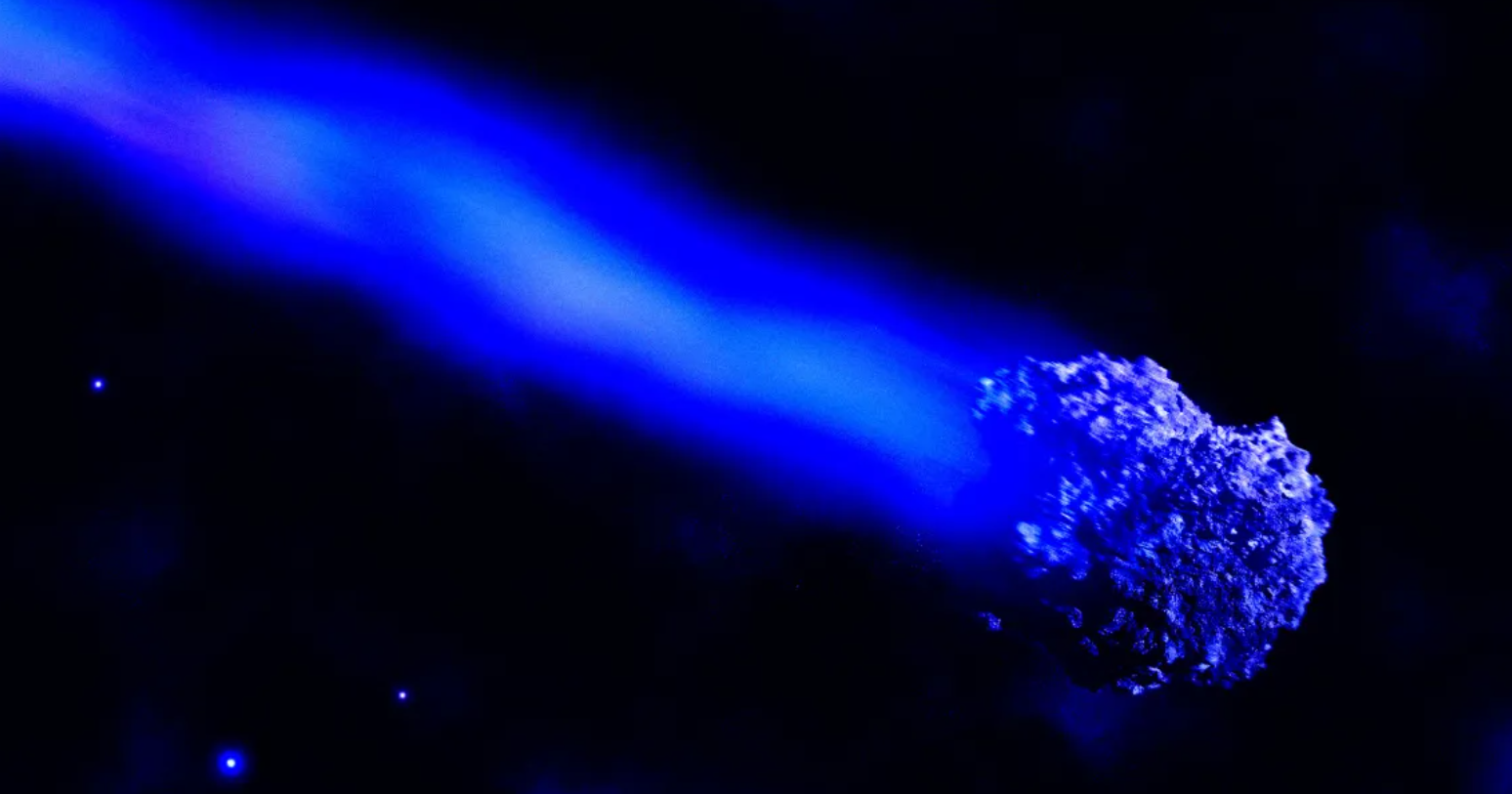

The interstellar comet 3I/ATLAS has captured global scientific attention after releasing significant amounts of methanol and hydrogen cyanide, chemicals essential for life. Discovered in 2019, this cosmic traveler is providing valuable insights into the universe’s chemical makeup. The findings, confirmed through advanced spectroscopy, offer clues about the building blocks of life beyond Earth.
Significance of Methanol and Hydrogen Cyanide
Methanol and hydrogen cyanide play crucial roles in prebiotic chemistry. Methanol, a simple alcohol, contributes to the formation of complex organic molecules. Hydrogen cyanide aids in synthesizing amino acids and nucleotides, which are fundamental components of life. The detection of these compounds in 3I/ATLAS indicates that interstellar objects may carry the raw materials necessary to support life.
Understanding how these chemicals form and exist in space helps scientists unravel the mysteries of life’s origins. Moreover, it supports the theory that such compounds could be distributed across the cosmos, potentially seeding planets with life-essential elements.
The Interstellar Comet 3I/ATLAS
3I/ATLAS is the third confirmed interstellar object, following ‘Oumuamua and Borisov. Its journey through our solar system provides a rare opportunity for scientists to study the chemical composition of objects originating beyond the Sun’s influence.
Spectroscopic analysis has revealed emissions of methanol and hydrogen cyanide, highlighting that complex, life-supporting molecules are not confined to our solar system. These discoveries suggest that interstellar comets may act as carriers of organic material, enriching planets during collisions.
Impact on Science and Exploration
The discovery of life-friendly chemicals in 3I/ATLAS has significant implications for astronomy, astrobiology, and space exploration. It demonstrates that the universe harbors chemical processes capable of producing life-essential molecules. Consequently, these findings could reshape our understanding of how life emerges in the cosmos.
Additionally, such discoveries emphasize the importance of investing in space research and technology. Advanced observational tools allow scientists to detect and analyze chemical compositions of distant celestial objects, providing breakthroughs that enhance both scientific knowledge and technological innovation.
Future Prospects
The 3I/ATLAS findings encourage further exploration of interstellar comets and other cosmic bodies. Scientists aim to study more objects to determine how common life-friendly chemicals are in the universe. These studies could eventually inform future space missions and astrobiological research, possibly identifying locations with the potential to support life.
Conclusion
The interstellar comet 3I/ATLAS has revealed methanol and hydrogen cyanide, offering new perspectives on the universe’s potential to harbor life. These findings affirm that life-essential chemicals may exist widely in space, opening doors for research into the origins of life beyond Earth. Continued investment in space technology and scientific exploration is crucial for advancing our understanding of these cosmic phenomena.
