

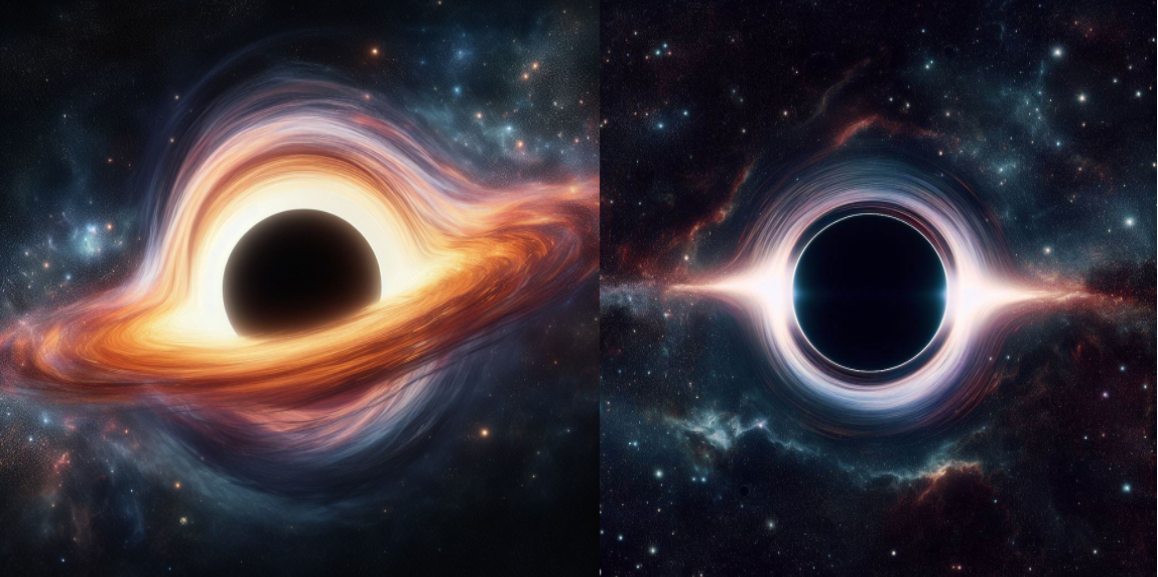

In a discovery shedding new light on the early universe, astronomers have detected colossal X-ray jets shooting out from two ancient supermassive black holes—each stretching a staggering 300,000 light-years, nearly three times the diameter of our Milky Way galaxy.
Unveiled on June 9 at the 246th meeting of the American Astronomical Society in Anchorage, Alaska, the findings mark a significant leap in understanding how the universe evolved during its formative years. The research, led by Dr. Jaya Maithil, a postdoctoral fellow at the Harvard-Smithsonian Centre for Astrophysics, relied on data from NASA’s Chandra X-ray Observatory and the Karl G. Jansky Very Large Array (VLA).
“These quasars are like cosmic time capsules,” said Dr. Maithil. “By studying them, we gain insight into how black holes influenced the growth of their galaxies and the cosmic environments they lived in.”
The black holes are located approximately 11.6 and 11.7 billion light-years from Earth, allowing astronomers to observe the jets as they appeared when the universe was just three billion years old—a time of rapid galactic evolution.
One of the jets, emerging from a quasar designated J1610+1811, was captured in a stunning Chandra image. A faint purple beam extends from the quasar’s bright core, hinting at the power and scale of the event. A second, dimmer jet appears to shoot in the opposite direction.
Observing these faint structures over vast cosmic distances is no easy task. “It’s like spotting candlelight beside a blazing flashlight,” explained Maithil, highlighting the difficulty in detecting such elusive features.
What makes the discovery even more remarkable is the visibility of these jets across billions of light-years. The jets’ brightness, according to a study soon to appear in The Astrophysical Journal, likely comes from their interaction with the cosmic microwave background (CMB)—the faint afterglow left behind by the Big Bang.
As the jets plow through space, high-energy electrons within them collide with CMB photons, boosting the photons into the X-ray range through a process called inverse Compton scattering. This phenomenon enables the ancient jets to be seen even today.
“These black holes are turning the universe’s first light into high-energy beams,” said Maithil, underscoring how such phenomena may have helped shape the galaxies and cosmic structures around them.
This discovery not only opens a new window into black hole physics but also adds a dynamic piece to the puzzle of how the early universe evolved into what we observe today.
