

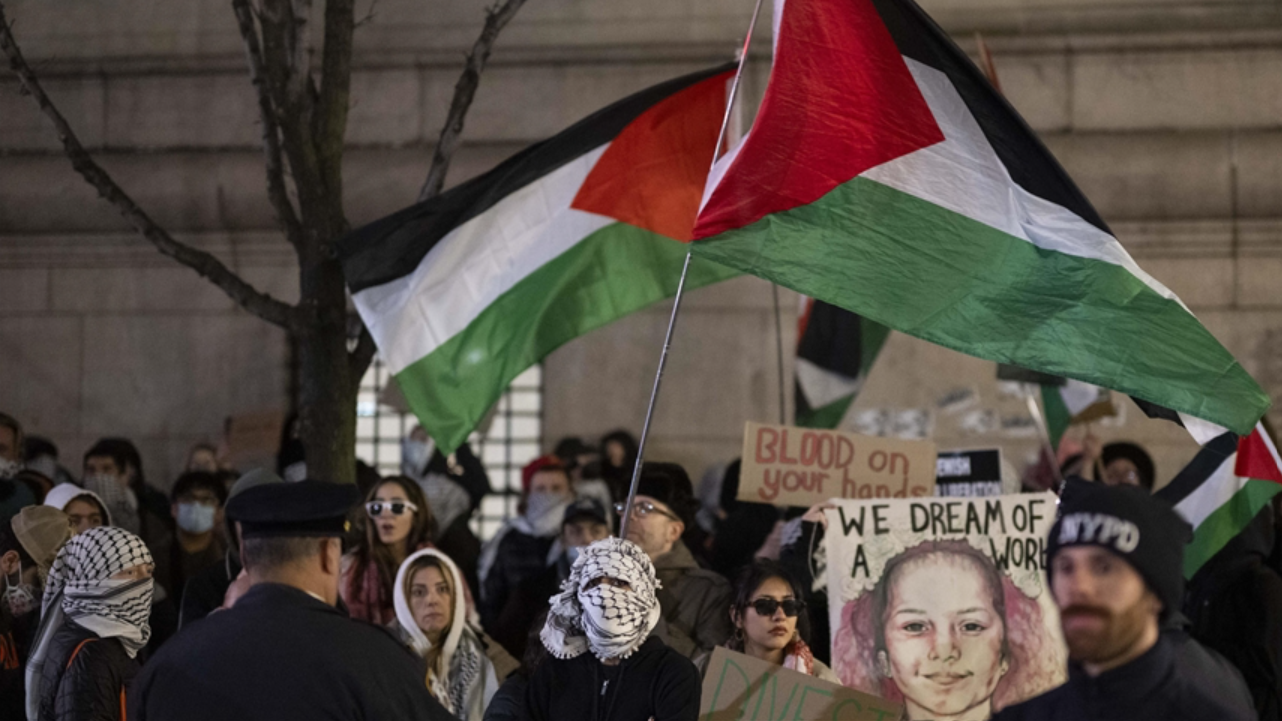

Columbia University disciplines students over pro-Palestinian protest, escalating tensions that have gripped the prestigious institution for months. Nearly 80 students face suspension or expulsion following protests on campus, with punishments ranging from one to three years. Columbia University disciplines students over pro-Palestinian protest for organizing an encampment during alumni weekend and a disruptive sit-in inside the main library before final exams in May.
The disciplinary actions come at a sensitive time as Columbia University disciplines students over pro-Palestinian protest while negotiating with the Trump administration to restore $400 million in federal funding. This funding was revoked in March after the administration accused the university of failing to prevent antisemitic incidents during antiwar demonstrations. In response to pressure, Columbia University disciplines students over pro-Palestinian protest and simultaneously agreed to revise its internal judicial process and formally adopt a new definition of antisemitism.
The university emphasized its commitment to academic integrity, stating, “Columbia University disciplines students over pro-Palestinian protest because disruptions to academic activities violate institutional policies and will result in consequences.” The institution did not reveal the names of affected students. Sanctions also included probation, forced apology letters, and even degree revocations in some cases.
Columbia University disciplines students over pro-Palestinian protest at a time when it is also dealing with serious internal cost-cutting measures. In May, the university announced it would lay off around 180 staff members and reduce research expenditures due to the funding loss. These layoffs account for roughly 20% of those whose jobs were supported by the revoked grants.
Student groups have called the punishment disproportionate. Columbia University disciplines students over pro-Palestinian protest in a way that activists say diverges from how previous protests were handled. They argue that requiring apology letters as a condition for reinstatement is unreasonable and infringes on free expression. “We will not be deterred. We are committed to the struggle for Palestinian liberation,” stated Columbia University Apartheid Divest.
Columbia University disciplines students over pro-Palestinian protest in what has become part of a broader national trend under the Trump administration, which has taken a hard line on university campuses it views as lenient toward student activism. Since resuming office, President Trump has cut funding to multiple institutions and pursued legal and administrative actions against those involved in pro-Palestinian demonstrations.
One such case involves Columbia graduate student Mahmoud Khalil, a legal U.S. resident with no prior criminal record, who was detained in March for participating in demonstrations. Columbia University disciplines students over pro-Palestinian protest in the same context where Khalil is now suing the Trump administration for false imprisonment, malicious prosecution, and wrongful accusations of antisemitism.
By taking a firm stance, Columbia University disciplines students over pro-Palestinian protest while balancing political pressure, financial uncertainty, and campus unrest, a situation that continues to fuel national debate over free speech, academic freedom, and the right to protest.
