

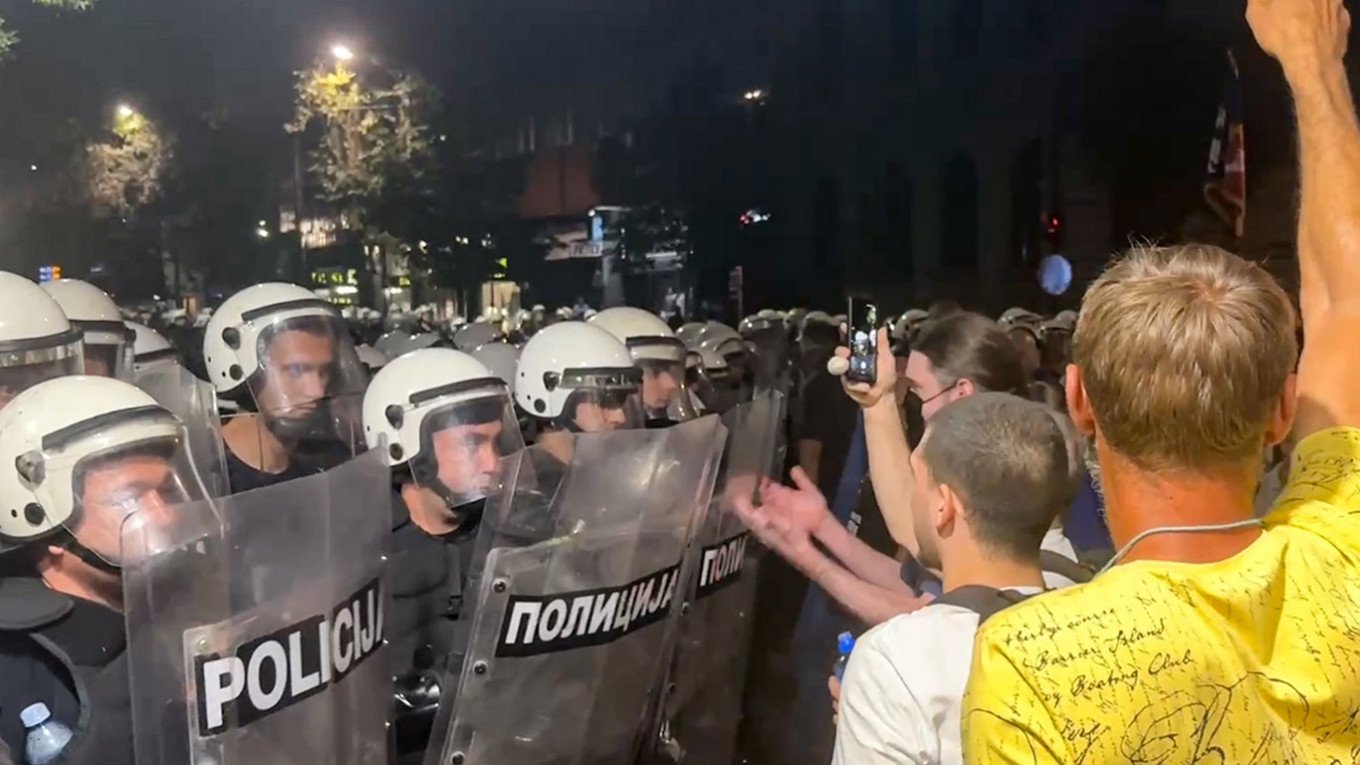

As anti-government protests intensify in Serbia, Russian officials have issued stern warnings to Western nations, urging them not to meddle in the Balkan country’s internal affairs. Speaking on Monday, Russian Foreign Minister Sergei Lavrov said Moscow is closely watching the unrest and hopes foreign powers will avoid fueling what he called another potential “color revolution.”
“We hope Western countries, which often exploit domestic affairs to serve their interests, will refrain from such actions this time,” Lavrov told the state-run TASS news agency. He added that Russia supports efforts to calm tensions in Serbia “in accordance with the constitution and laws,” echoing sentiments voiced by Serbian President Aleksandar Vučić.
On Saturday, an estimated 140,000 protesters filled central Belgrade, demanding early elections and an end to Vučić’s 12-year grip on power. Police, however, placed the number at 36,000 and responded with tear gas and batons as clashes erupted. Demonstrators reportedly hurled flares and bottles, prompting a heavy-handed crackdown.
According to Serbian authorities, 48 police officers were injured, 77 individuals were arrested, and at least 22 people sought medical attention. Eight of the detainees now face charges related to plotting road blockades and attacks on government buildings. The unrest carried into Sunday, with demonstrators blocking major roads in Belgrade and other cities.
The current wave of protests is the culmination of over six months of public outrage, which began after the fatal collapse of a train station roof in Novi Sad last November. The tragedy, widely blamed on corruption and government negligence, triggered a national uproar that has already forced the prime minister to resign and led to a cabinet reshuffle.
The Kremlin weighed in later Monday, saying it had “no doubt” Serbian authorities would restore order but suggested that the West might be playing a covert role in the growing dissent.
“We cannot rule out the use of familiar tactics designed to ignite color revolutions,” Kremlin spokesperson Dmitry Peskov said.
Serbia remains a close ally of Russia and relies heavily on Russian gas, positioning itself delicately between its European aspirations and longstanding ties with Moscow. President Vučić, who has often accused foreign actors of plotting to destabilize his government, now faces mounting pressure from both domestic opposition and an international community watching closely.
