

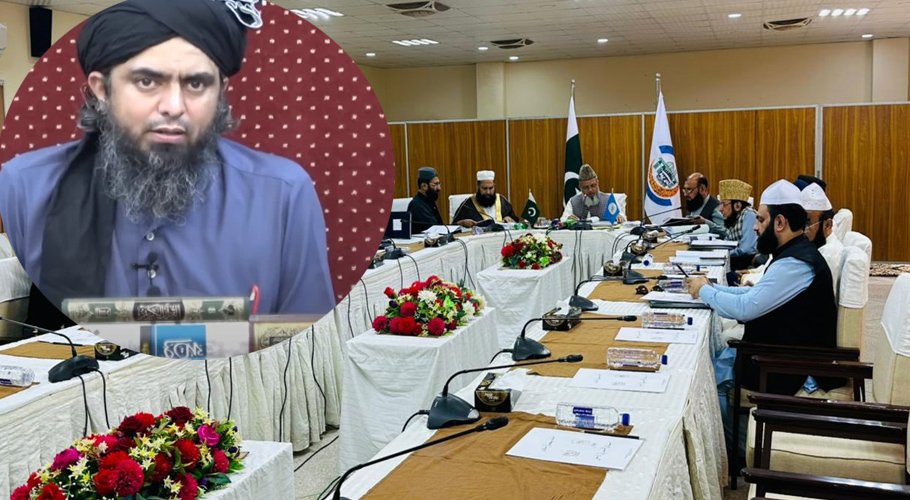

ISLAMABAD: The Council of Islamic Ideology (CII) has declared Engineer Muhammad Ali Mirza a blasphemer. This decision followed a review of an FIR registered under Section 295-C of the Pakistan Penal Code and a letter from the National Cyber Crime Investigation Agency (NCCIA) in Rawalpindi.
Arrest and FIR Details
Police in Jhelum arrested Engineer Mirza, a controversial scholar, last month under Section 3 of the Maintenance of Public Order. Authorities later moved him to jail and handed him to the Federal Investigation Agency (FIA) after a formal complaint.
The FIR, lodged at Jhelum City Police Station, alleges that a video on Mirza’s YouTube channel contained blasphemous remarks about the Holy Prophet (PBUH). It also accused him of misinterpreting Surah al-Nisa, which sparked outrage and triggered legal action under Pakistan’s strict blasphemy laws.
CII’s Observations:
CII Declares Engineer Muhammad Ali Mirza a Blasphemer
During its 243rd meeting, the CII thoroughly examined the FIR and supporting evidence. The Council concluded that quoting blasphemous or heretical words is permissible only when refuting them. However, repeating such phrases without purpose is impermissible and punishable.
The Council found that Mirza’s statements contained phrases without valid religious justification. Therefore, it recommended strict punitive measures. It also cited a video clip where his remarks appeared as distortions of Qur’anic interpretation and accusations against the Holy Qur’an. As a result, the Council suggested applying an additional blasphemy charge.
Religious and Interfaith Angle
The Council reviewed the NCCIA’s letter and described it as biased for excluding the complainant’s arguments. It warned that such statements could cause “fasād fil-arḍ” (corruption on earth).
During the meeting, Christian leader Father J.M. Channan denied that Mirza’s controversial views reflected Christian beliefs. The CII announced that more decisions would follow after receiving a formal community response.
Legal ImplicationsSection 295-C of the Pakistan Penal Code prescribes the death penalty for defiling the Prophet’s (PBUH) name. Additionally, Section 11 of the Prevention of Electronic Crimes Act (PECA) 2016 prohibits online content that incites sectarian or interfaith hatred.
The Council’s declaration has now placed Engineer Muhammad Ali Mirza at the center of a sensitive legal and religious controversy. Consequently, the ruling could have far-reaching implications for both Pakistan’s legal framework and interfaith relations.
About The Truth International
The Truth International (TTI), based in Islamabad, is a private organization doing research work/projects and running its print and digital media wing _ a website, a fortnightly magazine, a YouTube Channel, and social media pages on all platforms. Stay up to date by staying connected to The Truth International.
