BEIJING/ISLAMABAD: Just days after a ceasefire was reached between Pakistan and India, Pakistan’s foreign minister has arrived in China — the country’s largest arms supplier — amid heightened international interest in how Chinese-made weapons performed during the recent hostilities.
The four-day conflict earlier this month, triggered by Indian strikes and a major Pakistani military response, offered a rare glimpse into the battlefield capabilities of Chinese military hardware — including jets, drones, and air defence systems — used extensively by Pakistan.
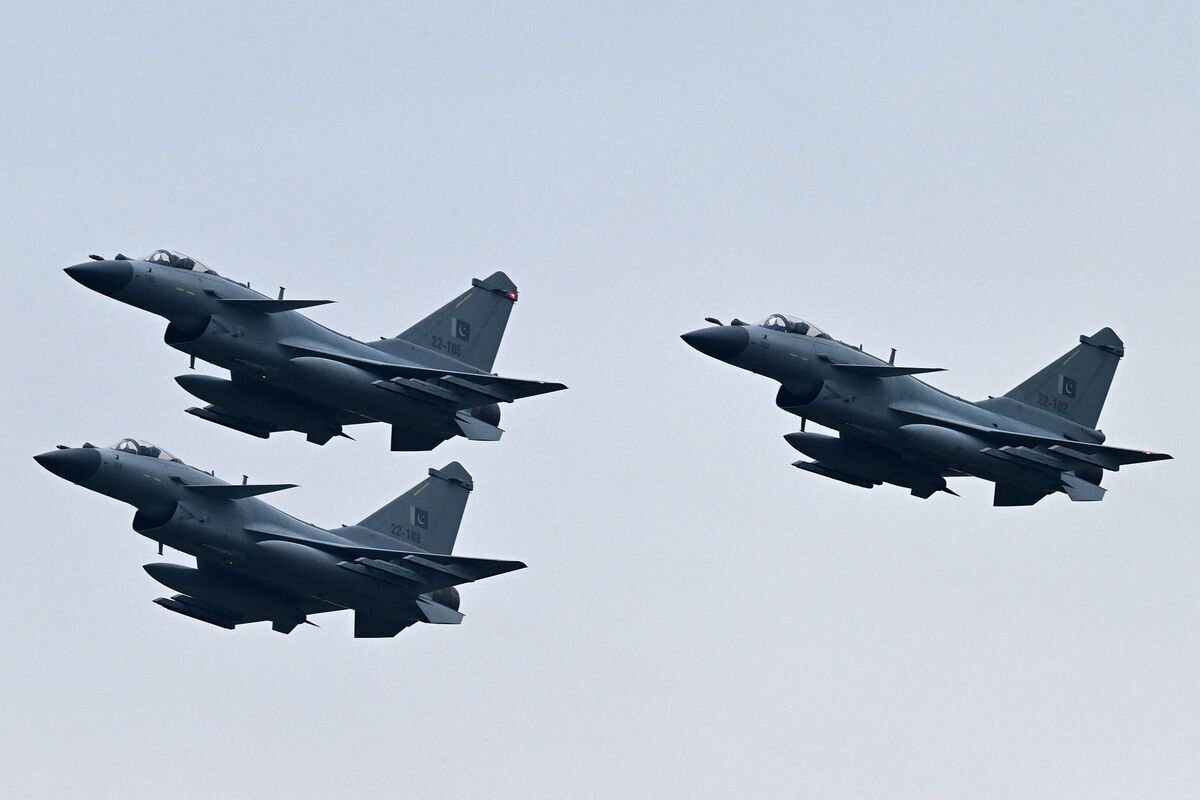
The most notable claim from Islamabad was the downing of six Indian aircraft, including three French-made Rafale fighters, allegedly by Chinese-supplied J-10C Vigorous Dragon jets. While India has not officially acknowledged these losses, the incident has sparked intense scrutiny among analysts and defence observers.
“This was a rare opportunity for the international community to evaluate Chinese military equipment in real combat, especially against Western-supplied platforms,” said Lyle Morris of the Asia Society Policy Institute.
A First for J-10C in Combat
The conflict marked the first-ever combat deployment of the J-10C, a multirole fighter developed by China’s Chengdu Aircraft Corporation, whose stock surged by over 40% in the days following the reports of its battlefield success.
Pakistan also deployed JF-17 Thunder jets, a joint Pakistani-Chinese fighter, and relied heavily on Chinese air defence systems such as the HQ-9P long-range surface-to-air missile system, as well as advanced radar systems and armed drones.
“This was the first sustained engagement where the Pakistan military leaned primarily on Chinese weapons across multiple domains,” said Bilal Khan, founder of the Quwa Defence News & Analysis Group.
Limitations and Lack of Verification
Despite Pakistan’s bold claims, defence experts urge caution. The limited duration of the conflict, absence of verifiable evidence, and silence from Indian authorities — and French Rafale manufacturer Dassault Aviation — make it difficult to draw firm conclusions about the performance of Chinese equipment.
“Since the number of data points is small and we lack detailed information about training, strategy, and situational context, any conclusions are tentative at best,” noted Brian Hart of the Center for Strategic and International Studies (CSIS).
Some reports suggest India neutralized at least one Chinese-made air defence unit near Lahore, raising questions about the effectiveness of those systems.
“If true, that would be a notable success for India and could potentially offset the loss of aircraft,” said Siemon Wezeman, senior researcher at the Stockholm International Peace Research Institute (SIPRI).
Symbolic Shift in Regional Arms Dynamics
Pakistan is currently the largest buyer of Chinese arms, accounting for roughly 63% of China’s total weapons exports, according to SIPRI. The recent conflict has highlighted how Pakistan has increasingly turned to Chinese platforms as its “primary option” in defense procurement.
“The J-10C is not even China’s most advanced fighter, yet its radar and combat capabilities make it a serious platform for air superiority,” said James Char of Singapore’s Nanyang Technological University.
In contrast, the Rafale is widely regarded as one of Europe’s most capable multirole fighters, underscoring the symbolic importance of any successful engagement between the two.
Industry Implications and Global Impact
Following Pakistan’s reported success with the J-10C, analysts anticipate increased interest in Chinese military hardware, especially from countries looking for cost-effective alternatives to Western systems.
“We’re likely to see more international orders for Chinese defense contractors,” predicted Yun Sun from the Stimson Center.
However, major hurdles remain. Experts point out that China still struggles with mass production of critical components, particularly aircraft engines, which limits its ability to scale exports quickly.
“It will take a significant strategic shift by Chinese arms manufacturers for China to become a dominant global arms exporter,” said Jennifer Kavanagh of Defense Priorities.
Wezeman added that the stock market reaction may have been premature.
“We still don’t know how well the systems actually performed. This conflict offered a snapshot, not a full picture,” he said.
Ultimately, while Chinese weapons may have gained battlefield exposure, analysts stress that combat effectiveness depends as much on training, strategy, and human factors as on hardware quality.
“Having advanced systems is one thing,” Kavanagh noted, “but how those systems are employed in complex combat environments matters even more.”
As a student of journalism and content creator, I combine strategic insight with impactful storytelling to explore culture, lifestyle, and pressing social issues. Dedicated to truth, integrity, and justice, my work aims to amplify marginalised voices, foster empathy, and inspire meaningful, positive change.
The Truth International is a fortnightly magazine and news platform offering in-depth articles, editorials, and the latest breaking news across Pakistan and the globe. Its coverage spans diverse categories—including politics, economy, science & tech, health & education, entertainment, sports, art & culture, and opinion pieces.