

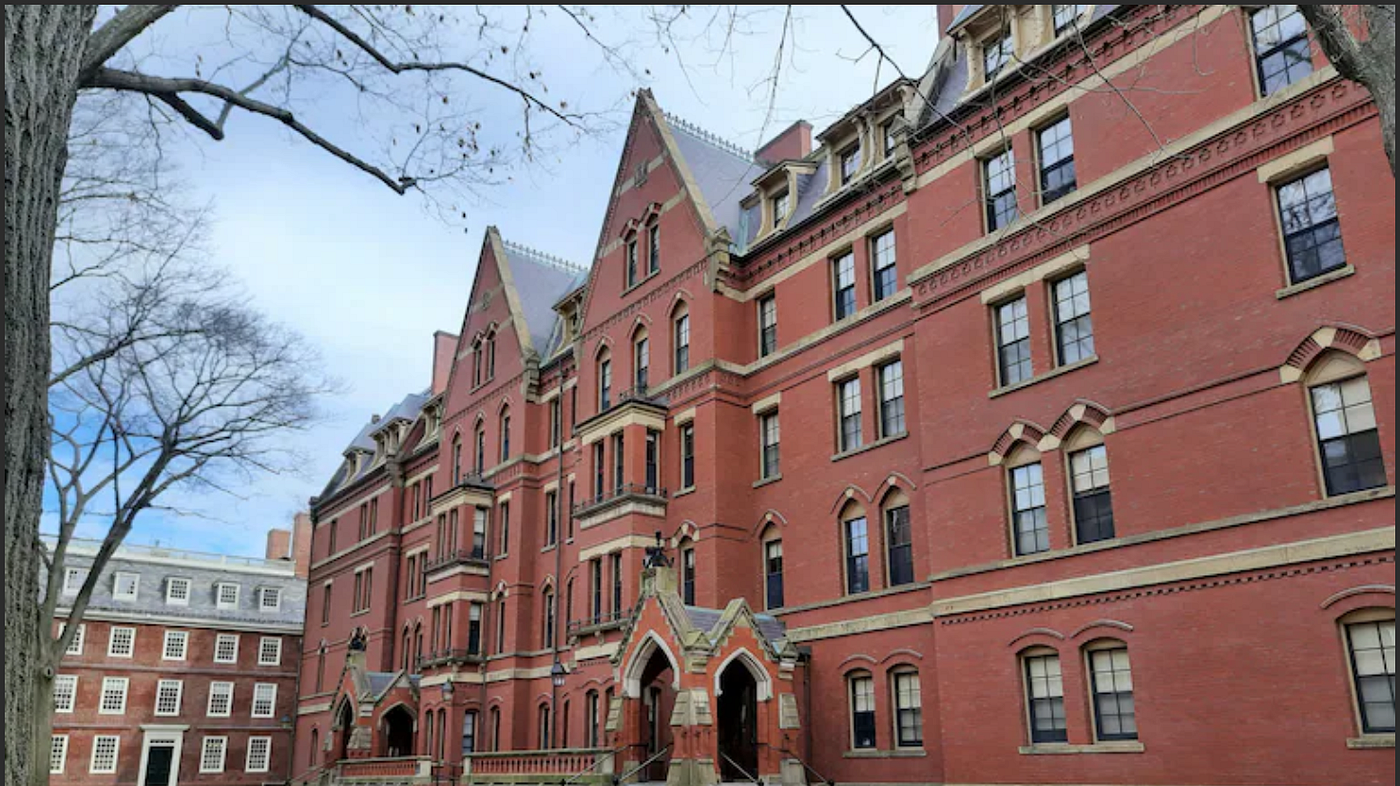

Chinese universities have surpassed Harvard University in the CWTS Leiden Ranking 2025, marking a significant shift in global academic leadership in scientific research. Harvard, which once dominated the rankings for more than a decade, has slipped to third place in the Science category.
The top two positions in the latest ranking are now held by China’s Zhejiang University and Shanghai Jiao Tong University. Apart from Harvard’s third-place ranking, the remaining top nine spots are largely occupied by Chinese institutions, highlighting China’s growing influence in global scientific output and research impact.
The CWTS Leiden Ranking is a respected global assessment produced by the Centre for Science and Technology Studies (CWTS) at Leiden University in the Netherlands. It evaluates the scientific performance of over 1,500 major universities worldwide, using data from the Web of Science database. Unlike reputation-based rankings, the Leiden Ranking focuses on bibliometric indicators, including research output, citation impact, and scientific collaboration.
When the first Leiden rankings were published for the 2006–2009 period, universities from the United States dominated the top positions. Harvard University ranked first, followed by the University of Toronto and the University of Michigan. During that era, U.S. institutions filled most of the top ten slots.
Over time, however, the global academic landscape has shifted. Six U.S. universities that previously featured in the top ten—University of Michigan, UCLA, Johns Hopkins University, University of Washington–Seattle, University of Pennsylvania and Stanford University—are no longer ranked among the top fifteen.
Harvard was first overtaken by Zhejiang University during the 2019–2022 ranking period and slipped further in subsequent editions. Despite this decline, Harvard maintained the number one position for more than a decade, remaining at the top until the 2018–2021 period.
The latest rankings underscore China’s sustained investment in research and higher education, reflecting its rising prominence in global science and innovation.
