

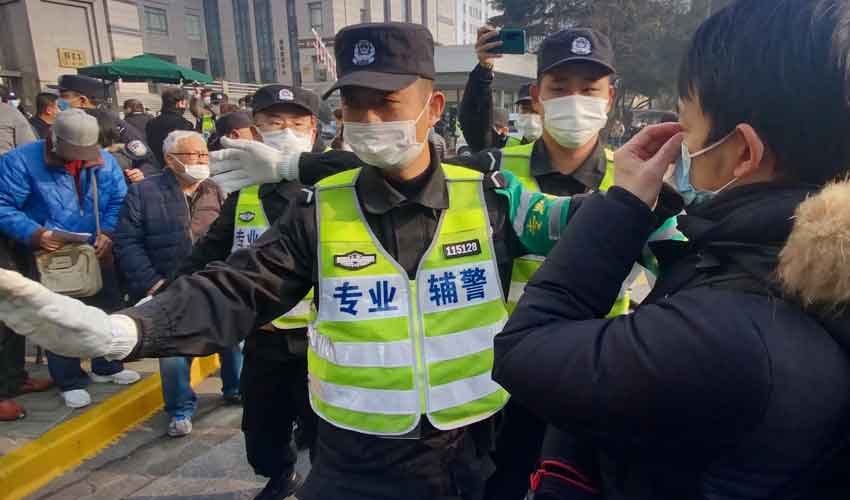

In a controversial move drawing international condemnation, Chinese citizen-journalist Zhang Zhan has been sentenced to another four years in prison. The 42-year-old was previously jailed in December 2020 after documenting the early stages of the COVID-19 outbreak from Wuhan—the initial epicentre of the global pandemic. Zhang was again convicted under the vague charge of “picking quarrels and provoking trouble”, the same accusation used in her first sentencing. According to Reporters Without Borders (RSF), this recent conviction followed her continued commentary on human rights abuses in China, published on overseas websites.
Zhang’s initial arrest came after she released a series of videos and written reports describing the chaotic and grim reality on the ground in Wuhan, including overcrowded hospitals and eerily deserted streets. These first-hand accounts sharply contradicted the Chinese government’s official narrative at the time. Her reports went viral, raising global awareness of the situation and prompting backlash from Chinese authorities. Her lawyer, Ren Quanniu, previously stated that Zhang believed she was being persecuted for exercising her freedom of speech.
Ongoing Persecution and International Outcry
Following her 2020 arrest, Zhang undertook a hunger strike that led authorities to forcibly feed her through a tube—an act condemned by rights groups as a violation of her dignity and bodily autonomy. Although she was released in May 2024 after serving her sentence, she was detained again just three months later. She was then formally arrested and held in Shanghai’s Pudong Detention Center before receiving her latest sentence on Friday.
Reporters Without Borders and other international organizations, including the Committee to Protect Journalists (CPJ), have decried her continued persecution. “She should be celebrated globally as an ‘information hero,’ not trapped in brutal prison conditions,” said RSF Asia-Pacific advocacy manager Aleksandra Bielakowska. The CPJ called on Chinese authorities to drop all charges and release her immediately, labeling the legal actions against her as “blatant persecution.”
China’s Media Crackdown Amid New Legislation
The case of Zhang Zhan reflects the broader climate of media suppression in China, which currently holds the dubious distinction of being the world’s largest jailer of journalists. According to RSF, at least 124 media workers remain behind bars in the country. China ranked 178th out of 180 in the 2025 RSF World Press Freedom Index, highlighting the extreme restrictions placed on journalistic freedom.
Ironically, Zhang’s latest sentencing came just one week after Chinese lawmakers passed new legislation aimed at improving the country’s emergency public health response. The law allows individuals to report emergencies directly, bypassing traditional bureaucratic channels—an apparent contradiction to Zhang’s treatment, whose early reports on the pandemic could be seen as precisely such an action.
