

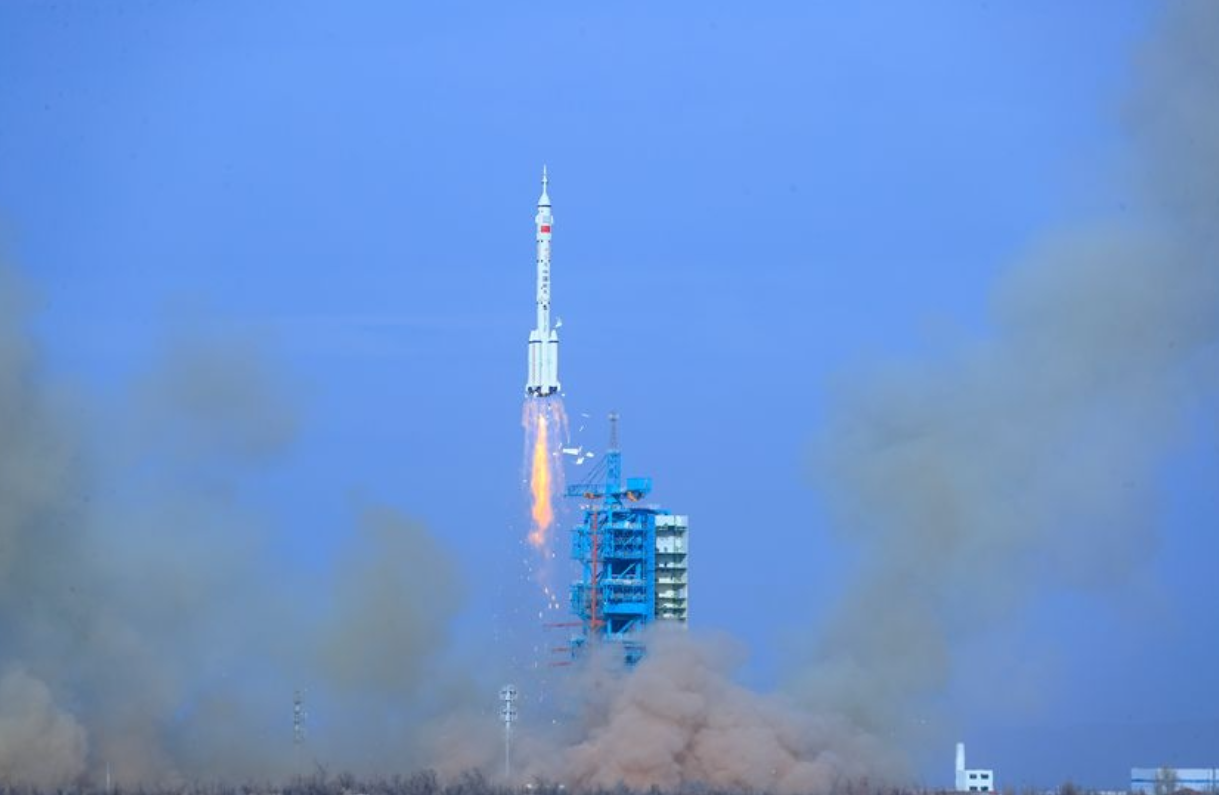

China has completed its first emergency mission to the Tiangong space station, marking a significant moment in the country’s evolving space strategy. The launch followed an unexpected safety concern earlier this month when one of its crewed spacecraft suffered damage in orbit. This rapid response demonstrated China’s increasing capabilities in safeguarding its astronauts and ensuring uninterrupted station operations.
The unmanned Shenzhou-22 spacecraft lifted off from the Jiuquan Satellite Launch Centre at midday. It entered its planned orbit soon after separation. The launch proceeded smoothly and reinforced confidence in China’s emergency protocols. Moreover, the new mission aimed to replace the gap left by a damaged vessel and to restore essential safety margins for the current station crew.
Shenzhou-22 docked with the Tiangong station within hours. This swift arrival ensured that the crew regained access to a flightworthy spacecraft. As a result, the risk created by the earlier incident is now fully resolved.
A Sudden Safety Threat Triggered the Mission
The emergency launch followed a rare incident involving the Shenzhou-20 return capsule. Its window was cracked by suspected space debris, which made the vehicle unsafe for reentry. Shenzhou-20 had been scheduled to bring three astronauts back to Earth on November 5. However, the damage required immediate action.
Therefore, space authorities activated the only available spare craft, Shenzhou-21, on November 14. That vessel had arrived at Tiangong in late October with a fresh crew. Its early deployment left the station without any backup spacecraft for eleven days. This situation created a significant safety gap because Chinese protocols require at least one ready escape vehicle at all times.
With Shenzhou-22 already prepared at the launch site, the emergency process moved quickly. The rapid response restored the mandatory escape and rescue capacity for the astronauts living aboard Tiangong.
Shenzhou-22 Delivered Critical Supplies and Repair Equipment
The Shenzhou-22 mission was not only a safety measure. It also carried important supplies for the station. These included medical kits, spare components, and tools required to fix the damaged window on Shenzhou-20, which remains docked at Tiangong.
Additionally, the spacecraft delivered fresh fruit, vegetables, and several comfort foods for the astronauts. These items included chicken wings, steak, and cake. The crew can prepare these meals using a compact “space oven” installed inside the station. Although these details may seem small, they help maintain crew morale during long-term missions.
The spacecraft will stay docked until April 2026. At that point, it will return the current Shenzhou-21 crew to Earth. This timeline keeps China’s rotation schedule on track despite recent disruptions.
A Remarkably Fast Emergency Response
China’s space program has maintained strict safety requirements since the start of its Shenzhou missions in 2021. Each mission includes a standby carrier rocket and a fully assembled spacecraft. This policy ensures rapid deployment during unexpected events.
For this mission, the entire emergency sequence took only sixteen days. This pace is far quicker than the usual Shenzhou preparation cycle, which often extends to forty-five days. The fast turnaround highlighted China’s growing operational discipline and high readiness levels.
Space agencies worldwide monitor each other’s protocols, especially during emergencies. In recent years, other programs have also faced critical challenges. For instance, two astronauts remained at the International Space Station for much longer than planned due to spacecraft issues. These incidents show that emergency scenarios are becoming a shared global concern as human spaceflight expands.
China and the U.S. Continue Their Quiet Space Rivalry
Both China and the United States aim to land astronauts on the Moon before or around 2030. Their programs have grown more advanced, and each watches the other’s progress closely. While the two nations do not collaborate in space, they influence each other’s planning and strategies.
China’s ability to perform a clean, rapid emergency launch may shape future international discussions on safety standards. It also highlights Beijing’s commitment to maintaining continuous human presence in low Earth orbit through Tiangong.
As the global space landscape becomes more competitive, reliable crisis response systems will play an increasingly important role. China’s first emergency launch has now set a precedent for its future operations.
Conclusion
China’s first emergency mission to the Tiangong space station has reinforced its position as a rapidly advancing space power. The incident that triggered the launch exposed the challenges of operating a crewed outpost in orbit. However, the swift response restored safety, delivered fresh supplies, and ensured mission continuity.
The event also offered a clear glimpse into the future of human spaceflight. As nations expand their ambitions, the ability to react quickly and effectively to unexpected risks will determine long-term success. With Shenzhou-22 now docked and fully operational, China has shown that it can manage such challenges with speed and precision.
