

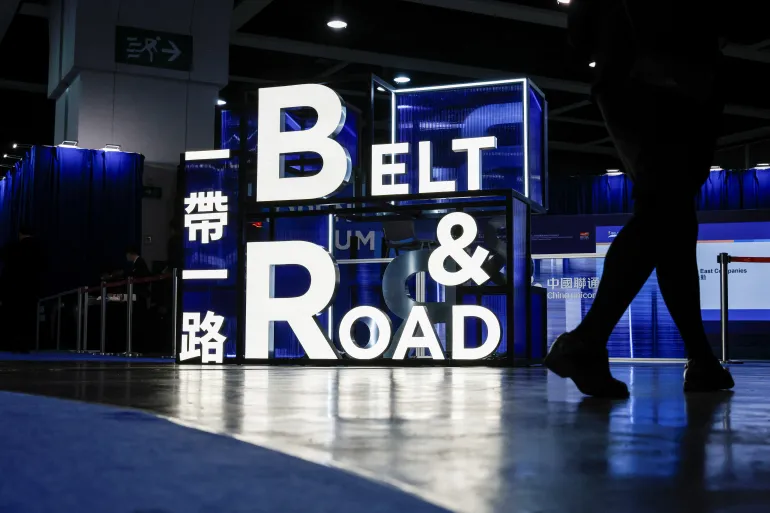

The Chinese government has responded to the withdrawal of Italy, its only major Western partner, from the Belt and Road Initiative (BRI) by criticizing the “smearing” of the project. Italy, the first Group of Seven (G7) nation to participate in China’s global infrastructure plan, informed Beijing of its decision to withdraw in 2024.
China’s Ministry of Foreign Affairs issued a statement opposing the “smearing and undermining of cooperation on the joint construction of the Belt and Road” without directly addressing Italy.
The BRI, a key element of President Xi Jinping’s foreign policy vision, aims at massive investments in infrastructure to revive ancient Silk Road trade routes connecting Europe and Asia.
Critics argue that the initiative serves as a means for China to extend its geopolitical influence and burden poorer nations with unsustainable debts. Italy, initially supportive in 2019, has become a point of controversy, with Prime Minister Giorgia Meloni stating that the pact offers no clear benefits to Italy.
Italy officially notified China of its withdrawal on December 3, expressing the intention to maintain strong ties with Beijing despite exiting the Belt and Road Initiative.
Russia and Saudi Arabia Unite, Urge OPEC+ Members to Join Forces on Oil Output Cuts
In another development, Saudi Arabia and Russia, the two largest oil exporters globally, jointly called for all OPEC+ members to participate in an agreement on output cuts for the benefit of the global economy. This appeal comes shortly after a contentious meeting among the producers’ club.
Russian President Vladimir Putin’s visit to Riyadh for discussions with Saudi Crown Prince Mohammed bin Salman prompted the release of a joint statement emphasizing the successful efforts of OPEC+ in stabilizing global oil markets and stressing the importance of all participating countries adhering to the agreement. The statement suggested a need for cooperation to support the interests of producers, consumers, and the growth of the global economy.
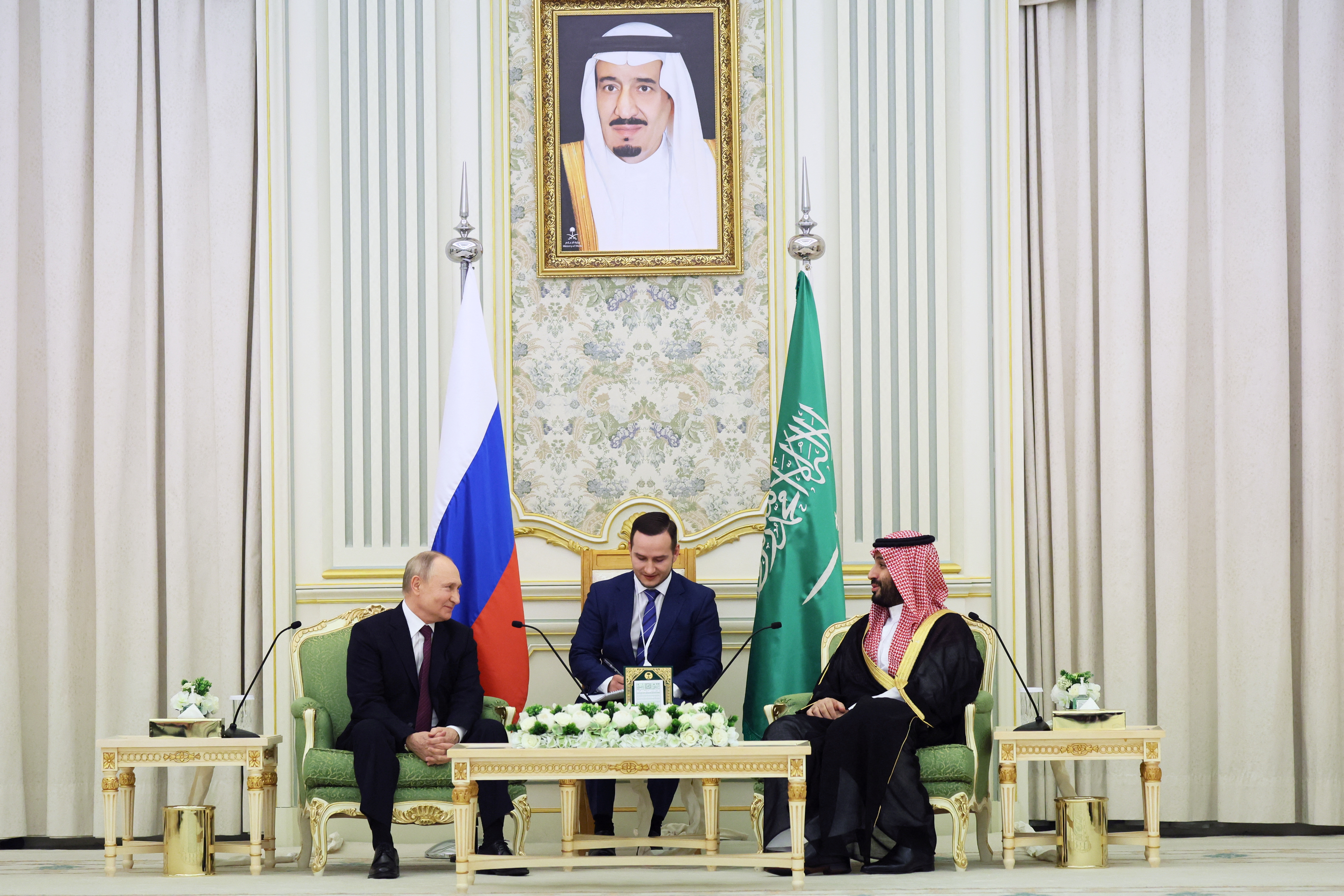
The Kremlin’s version used the word “join,” while the English translation used “adhere” to the OPEC+ agreement. The meeting underscored the commitment of OPEC+ members to the group’s agreement, according to Saudi state news agency SPA. This explicit public remark from both the Kremlin and Saudi Arabia is seen as a hint directed at specific oil-producing nations.
Putin’s overseas trip to Riyadh and Abu Dhabi, accompanied by four Russian fighter jets, remains surrounded by mystery, with the purpose of the visit unclear. The talks between Putin and Crown Prince Mohammed bin Salman covered conflicts in Gaza, Ukraine, and Yemen, the Iranian nuclear program, and deepening defense cooperation.
OPEC+ recently agreed to new voluntary cuts of approximately 2.2 million barrels per day, led by Saudi Arabia and Russia, who extended their voluntary cuts of 1.3 million barrels per day. However, oil prices fell to a five-month low after the decision, indicating market expectations for more decisive action from OPEC+.
