


ISLAMABAD: China has reaffirmed its commitment as Latin America’s “trustworthy” partner, with Foreign Minister Wang Yi assuring Bolivia of Beijing’s continued support amid growing US-China competition in the region.
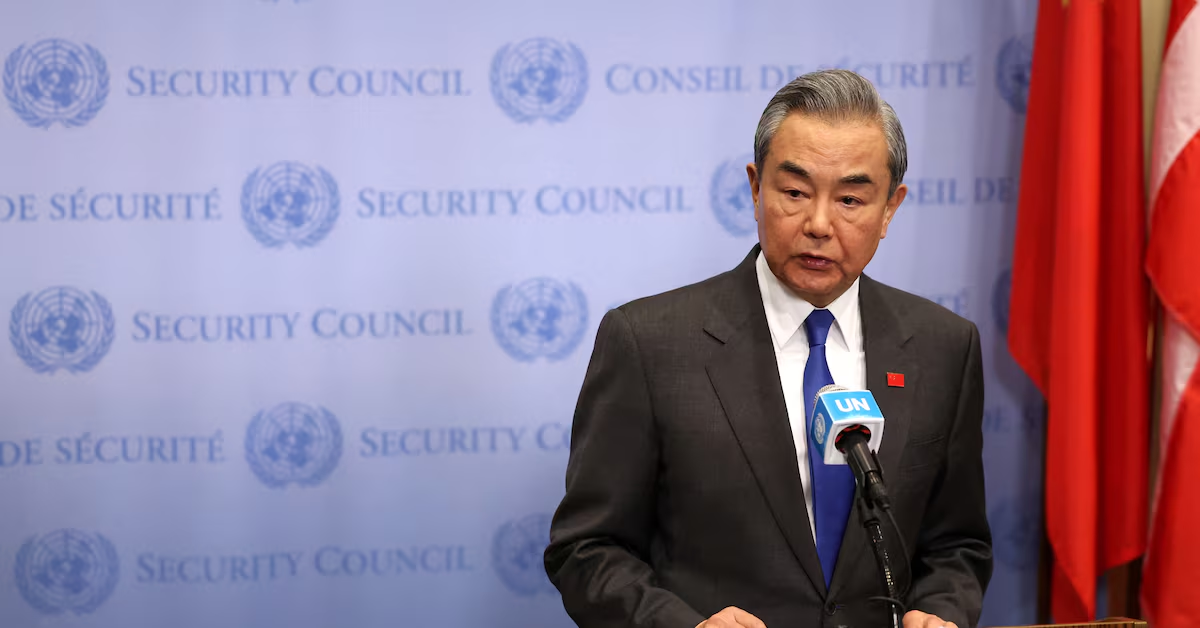
“Latin America belongs to its people and is not any country’s ‘backyard’,” Wang stated during a meeting with Bolivian Foreign Minister Celinda Sosa at the United Nations on Tuesday, according to a statement from China’s Foreign Ministry.
China aims to further strengthen its strategic partnership with Bolivia, a country that has deepened economic ties with Beijing through investments and loans since establishing diplomatic relations in 1985. Bolivia currently owes China over $1.7 billion, while Chinese companies have invested an additional $6 billion in its metals, energy, and transport sectors, according to data from the World Bank and American Enterprise Institute.
In contrast, US foreign direct investment in Bolivia stands at approximately $430 million, largely concentrated in the oil, gas, and manufacturing industries, according to the US State Department.
The US and China appear poised for intensified competition in Latin America, particularly in energy and infrastructure, as former US President Donald Trump embarks on a second term. Trump’s administration had previously pressured Latin American nations to curb Chinese influence, notably warning Panama about its ties with Beijing and threatening military action over control of the Panama Canal.
Panama later announced it would not renew its participation in China’s Belt and Road Initiative, a setback for Beijing’s regional ambitions.
Wang reaffirmed China’s support for Latin American countries in protecting their sovereignty and independence. He also congratulated Bolivia on joining the BRICS bloc—a coalition initially formed by Brazil, Russia, India, and China to counterbalance Western influence, now expanded to include South Africa, Egypt, Ethiopia, Indonesia, Iran, Saudi Arabia, and the UAE.
Meanwhile, Trump has warned BRICS members against challenging the dominance of the US dollar, threatening them with heavy tariffs if they attempt to undermine its global role. Brazil, facing potential economic consequences, recently backed down on advancing a common BRICS currency during its presidency of the group.
While China continues to expand its economic foothold in Latin America, Trump has signaled a more aggressive trade stance, threatening punitive measures against Mexico and Colombia if they fail to curb illegal immigration and drug trafficking. In response, Mexico deployed 10,000 National Guard troops to its northern border, while Colombia reversed its decision to reject US deportation flights, avoiding a potential trade conflict with Washington.
