

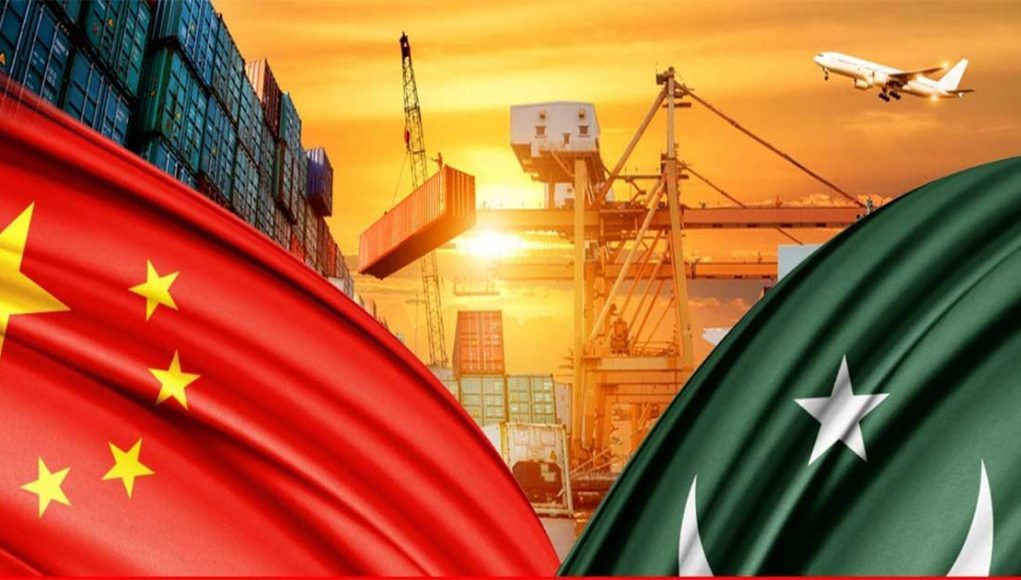

Islamabad welcomed Chinese Foreign Minister Wang Yi on Thursday as he arrived at the Ministry of Foreign Affairs to participate in the sixth round of the China-Pakistan Strategic Dialogue. The event underscores the enduring partnership between the two countries, spanning diverse areas such as trade, energy, defence, and infrastructure.
Wang Yi was received by Deputy Prime Minister and Foreign Minister Ishaq Dar, who earlier expressed delight on social media at welcoming his “dear friend.” Dar emphasized optimism for productive discussions with Wang and his engagements with President Asif Ali Zardari and Prime Minister Shehbaz Sharif. The dialogue is expected to further deepen bilateral ties and pave the way for new avenues of cooperation.
The latest dialogue follows the fifth round held in May 2024 in Beijing, co-chaired by Dar and Wang. This year’s engagements also build on momentum from the Sixth Trilateral Foreign Ministers Dialogue in Kabul, where Wang, Dar, and Afghan Foreign Minister Amir Khan Muttaqi discussed political, economic, and security cooperation. The three sides vowed joint efforts against terrorism, alongside commitments to expand collaboration in health, education, trade, culture, regional development, and combating drug trafficking. A key highlight was their agreement to extend the China-Pakistan Economic Corridor (CPEC) into Afghanistan.
Recent developments have also signaled the advancement of CPEC’s second phase, or CPEC-II. Last month, Pakistan and China announced the launch of joint training programmes in critical fields such as construction engineering, artificial intelligence, agriculture, and hospitality management, aligning with the goal of industrial cooperation.
Adding further weight to this partnership, Prime Minister Shehbaz Sharif is scheduled to travel to Beijing at the end of August to attend the Shanghai Cooperation Organisation (SCO) summit. On the sidelines, he is expected to hold important meetings with Chinese President Xi Jinping and Russian President Vladimir Putin. The visit is set to mark the formal launch of CPEC-II, a long-awaited phase delayed for nearly five years, now focused on driving industrial growth and regional integration.
