
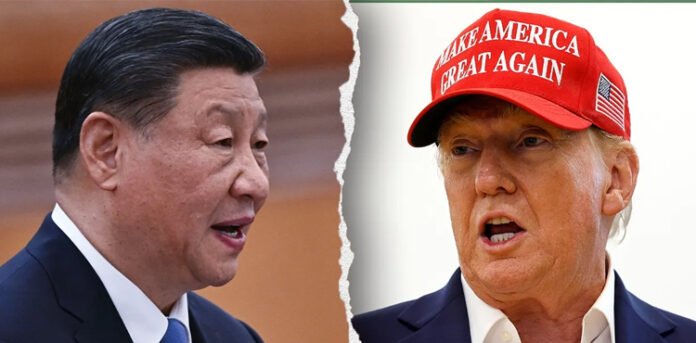

China said Tuesday it has taken note of the United States’ request to postpone President Donald Trump’s planned trip to Beijing. Trump had hoped to meet Chinese leader Xi Jinping at the end of March. However, he asked for a delay of about a month because of the ongoing war in the Middle East.
Trump explained his reasoning clearly on Monday at the White House. He told reporters he needs to stay in Washington during this critical time. “Because of the war I want to be here, I have to be here,” he said. He stressed that he still enjoys a very good relationship with China. Trump added he is not playing any games by pushing back the visit.
No Link to Strait of Hormuz, Beijing Insists
Earlier reports suggested Trump wanted China to help reopen the Strait of Hormuz before he would travel. Iran closed the vital waterway after U.S. and Israeli strikes, sending global oil prices above $100 a barrel. About one-fifth of world oil normally flows through the strait.
Chinese Foreign Ministry spokesman Lin Jian addressed those claims directly. He said the U.S. side has publicly clarified that media reports linking the delay to Hormuz are completely wrong. “The visit has nothing to do with the issue of open navigation in the Strait of Hormuz,” Lin stated during Tuesday’s briefing. He confirmed that both sides continue to communicate about the trip, though he gave no new dates or details.
U.S. Treasury Secretary Scott Bessent also dismissed the Hormuz connection as a “false narrative” on Monday.
Trade Talks Show Signs of Stability
The possible delay comes after recent positive steps in trade relations. Trump’s team had planned the Beijing visit from March 31 to April 2 to reset ties and extend the current trade truce. Beijing never officially confirmed those dates.
Over the weekend, constructive talks took place in Paris between Bessent and Chinese Vice Premier He Lifeng. Both sides described the discussions as helpful. Bessent said they show the relationship remains stable. He added that the exchange brings greater certainty to bilateral trade.
Additionally, the U.S. trade envoy Jamieson Greer and Chinese negotiator Li Chenggang also joined. Officials even floated the idea of a “US-China Board of Trade.” Greer explained it would help identify what each country should import and export, focusing on areas of mutual benefit.
Moreover, the U.S. launched new trade investigations last week into excess industrial capacity and forced labor, targeting China and others. Beijing has protested and urged Washington to correct what it calls erroneous practices.

