

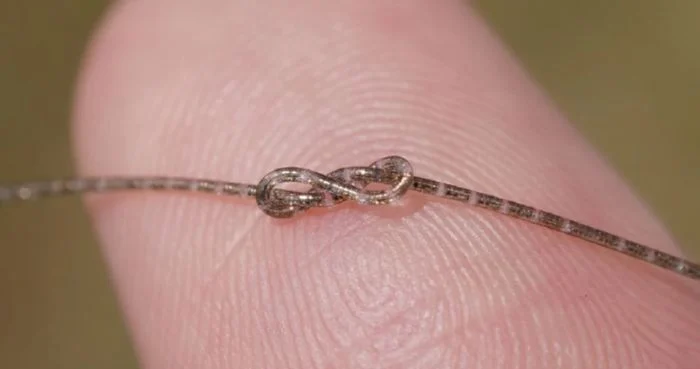

Scientists in China have unveiled a groundbreaking flexible “fiber chip” that can be woven directly into fabric, opening new possibilities for interactive smart garments and advanced medical implants. Researchers from Fudan University successfully built a functioning circuit that combines processing and memory within a single polymer fiber thinner than a human hair. They published the breakthrough in the journal Nature, confirming that the innovation overcomes the rigidity limitations of traditional silicon chips and signals rapid progress in China’s advanced technology sector.
Innovative Technique Enables Flexible Electronics for Human Use
Lead researcher Peng Huisheng stressed the importance of developing electronics that match the softness of the human body, which largely consists of flexible tissue. To achieve this, the research team adopted a novel “sushi-roll” technique. They first patterned high-precision circuits onto a flat, ultra-smooth sheet. Then they tightly rolled the sheet into a multilayer spiral structure embedded within a thin fiber.
Consequently, the method allows complex electronic systems to remain flexible while maintaining strong performance.
Laboratory testing demonstrated the fiber chip’s exceptional durability. The electronic fiber withstood more than 10,000 bending cycles without losing function. It also endured extreme pressure, including the weight of a 15-tonne truck. Moreover, the chip achieved a density of 100,000 transistors per centimeter, meaning that a one-meter length of the fiber delivers computing power comparable to that of a classic computer CPU.
Applications Range From Healthcare to Smart Fashion
The technology offers wide-ranging applications across healthcare and consumer electronics. In brain-computer interfaces, the soft fibers could record neural signals accurately while reducing the risk of tissue damage. In everyday wearables, manufacturers could integrate fibers into clothing that display real-time health data or dynamic visual content.
Additionally, virtual reality developers could use sensor-embedded gloves to deliver realistic touch feedback for remote surgery training and immersive gaming experiences.
Co-author Chen Peining noted that the fabrication process aligns fully with existing lithography production lines, which supports readiness for large-scale manufacturing. The team is already collaborating with hospitals to explore applications in cardiovascular surgery, indicating strong potential for real-world impact.
