

Breakthroughs Accelerate the Global Fusion Race
The global race for nuclear fusion is gaining serious momentum. For decades, experts joked that commercial fusion was always 30 years away. Now, that timeline appears closer than ever. Scientific breakthroughs are arriving faster. Investments are growing. Governments are paying attention.
In Russia, scientists recently tested a high-temperature superconductor wire. The advancement could reshape tokamak reactor design. Smaller and more efficient tokamaks may soon become possible. Lower costs could follow. That would make commercial nuclear fusion more realistic.
In the United States, researchers at Princeton Plasma Physics Laboratory are integrating artificial intelligence into fusion research. AI could reduce complex simulation times. Processes that once took months may happen in real time. Faster simulations mean faster progress. It also means lower development costs.
Fusion energy works by replicating the reaction that powers the sun. It promises nearly limitless clean energy. It produces no carbon emissions. It generates minimal long-term radioactive waste. If commercialized, it could transform the global energy system.
Yet despite global collaboration, the true competition centers on two nations: the United States and China. The world’s two largest economies are leading the push. Their breakthroughs are frequent. Their funding is massive. And the stakes are historic.
US vs China: Funding, Strategy and National Ambition
The United States is home to Commonwealth Fusion Systems, the country’s best-funded private fusion company. The company claims its device will achieve net energy by 2027. Net energy means producing more power than consumed. It is the critical milestone for commercial viability.
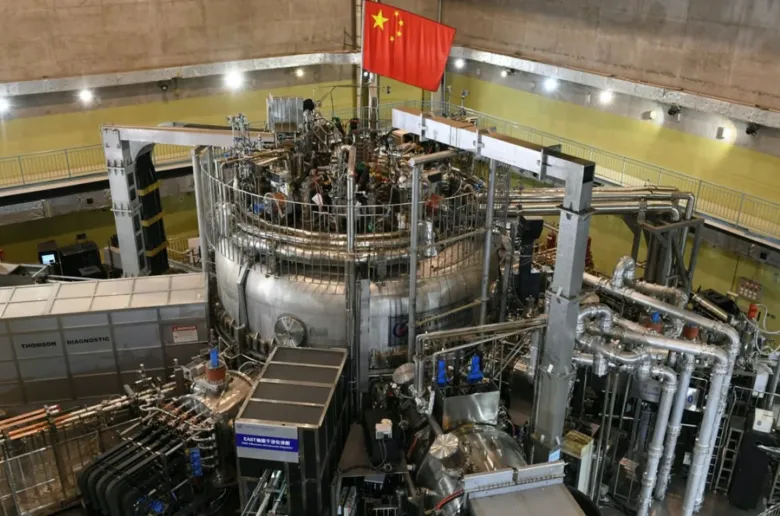
China is moving just as aggressively. Its leading plasma physics laboratory, BEST, also predicts net energy within the next few years. Beijing is investing heavily in state-led fusion programs. Last year alone, China committed $2.1 billion to a new state-owned fusion company. That single investment exceeds the annual fusion budget of the U.S. Department of Energy.
According to The New York Times, fusion could reshape global power structures. The nation that masters fusion may export reactors worldwide. It could build strategic alliances with energy-hungry countries. Energy independence would become energy dominance.
Policy differences also shape the race. China is pursuing an ambitious “electro-state” strategy. It is rapidly expanding clean energy infrastructure. Fusion plays a central role in its long-term planning.
Meanwhile, U.S. energy policy has faced political shifts. Support for fossil fuels remains strong in some administrations. However, private sector innovation continues to push fusion development forward.
Private Sector and Europe Join the Fusion Revolution
Fusion research is expensive. Reactors are massive. Experiments require advanced materials and powerful magnets. Only wealthy nations can fully compete. But private capital is changing the landscape.
Tech leaders are investing in fusion startups. Bill Gates and Sam Altman are backing nuclear fusion ventures. Artificial intelligence growth is increasing electricity demand. Data centers require enormous power. Clean, stable fusion energy could meet that demand.
More than a dozen fusion startups have raised over $100 million each. Competition is intensifying. Europe is also emerging as a strong contender. According to Semafor, Europe hosts more functioning fusion labs and consistent government backing than many realize.
German startup Proxima Fusion is one example of Europe’s ambitions. Its leadership believes the sector will undergo Darwinian competition. Companies that raise billions will gain the advantage. Others may struggle to survive.
The nuclear fusion race is no longer theoretical. It is strategic. It is political. And it is accelerating. The country that unlocks commercial fusion will shape the future of global energy for generations.

