

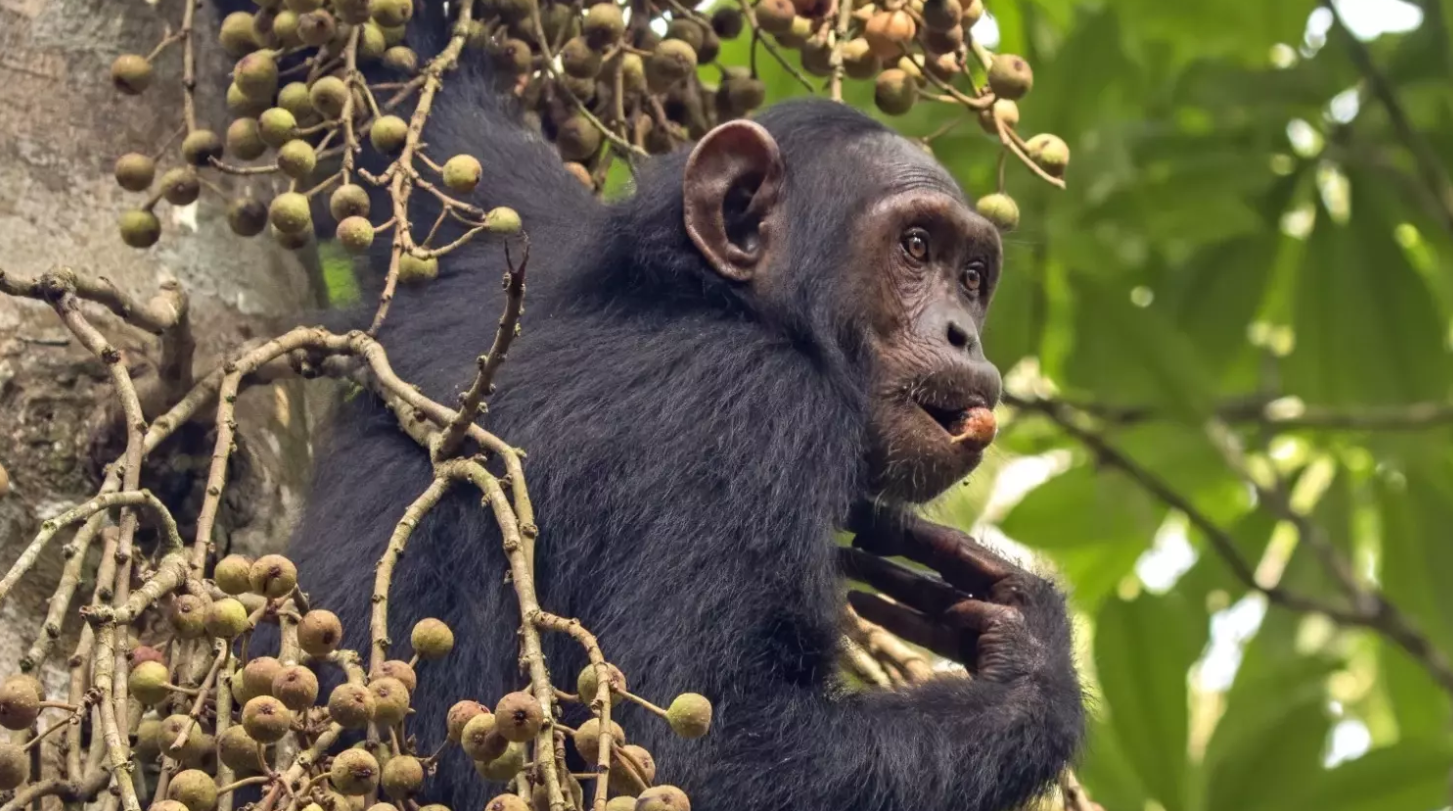

A new scientific study has revealed that chimpanzees regularly consume alcohol through their diet of naturally fermented fruits. Researchers from the University of California, Berkeley, analyzed fruit samples from chimpanzee habitats in Uganda and Ivory Coast. They discovered that the fruit-based diet of chimpanzees provides a daily intake of ethanol comparable to two alcoholic drinks in humans.
The study examined 21 types of fruit commonly eaten by chimpanzees. Alcohol levels were measured in each fruit type to calculate average intake. Male and female chimpanzees across all study sites consumed about 14 grams of pure ethanol every day. This equals roughly one standard alcoholic drink in the United States. However, when adjusted for body weight, the level is equal to two drinks for humans.
Chimpanzees typically weigh around 40 kilograms, while the average human weighs 70 kilograms. Researchers noted that chimpanzees eat about 10 pounds of fruit daily. This large amount accounts for around 75 percent of their overall diet. Even when fruits contain low alcohol content, the sheer volume consumed results in significant ethanol intake.
Professor Robert Dudley, an integrative biology expert, explained that chimpanzees consume between 5 and 10 percent of their body weight in fruit every day. Such consistent consumption leads to measurable alcohol intake from natural sources. However, it remains uncertain if chimpanzees deliberately seek out fruits with higher alcohol content. If so, their actual alcohol intake could be higher than current estimates.
The findings also support Dudley’s earlier work on the “Drunken Monkey Hypothesis.” In his 2014 book The Drunken Monkey: Why We Drink and Abuse Alcohol, Dudley suggested that human and ape ancestors evolved while consuming diets rich in natural alcohol. This could explain why humans developed both attraction to and tolerance for alcohol.
Graduate student Alexey Marov highlighted that chimpanzees’ daily alcohol intake mirrors the amounts humans consume through fermented foods. Such comparisons strengthen the idea of evolutionary links between human and chimpanzee drinking habits.
In related research, scientists from the University of Exeter in the United Kingdom captured footage of chimpanzees in Guinea-Bissau. The cameras recorded chimpanzees gathering to share fermented African breadfruit. Laboratory tests confirmed that the fruit contained ethanol. Researchers suggested that the animals may have been participating in alcohol-sharing as a social activity, similar to how humans often consume alcohol together.
These discoveries highlight a fascinating connection between chimpanzee behavior and human drinking culture. They also suggest that alcohol consumption may not be a purely human trait but instead an ancient evolutionary inheritance. The research opens doors to further studies on how natural exposure to alcohol shaped the biology and social habits of both chimpanzees and humans.
