
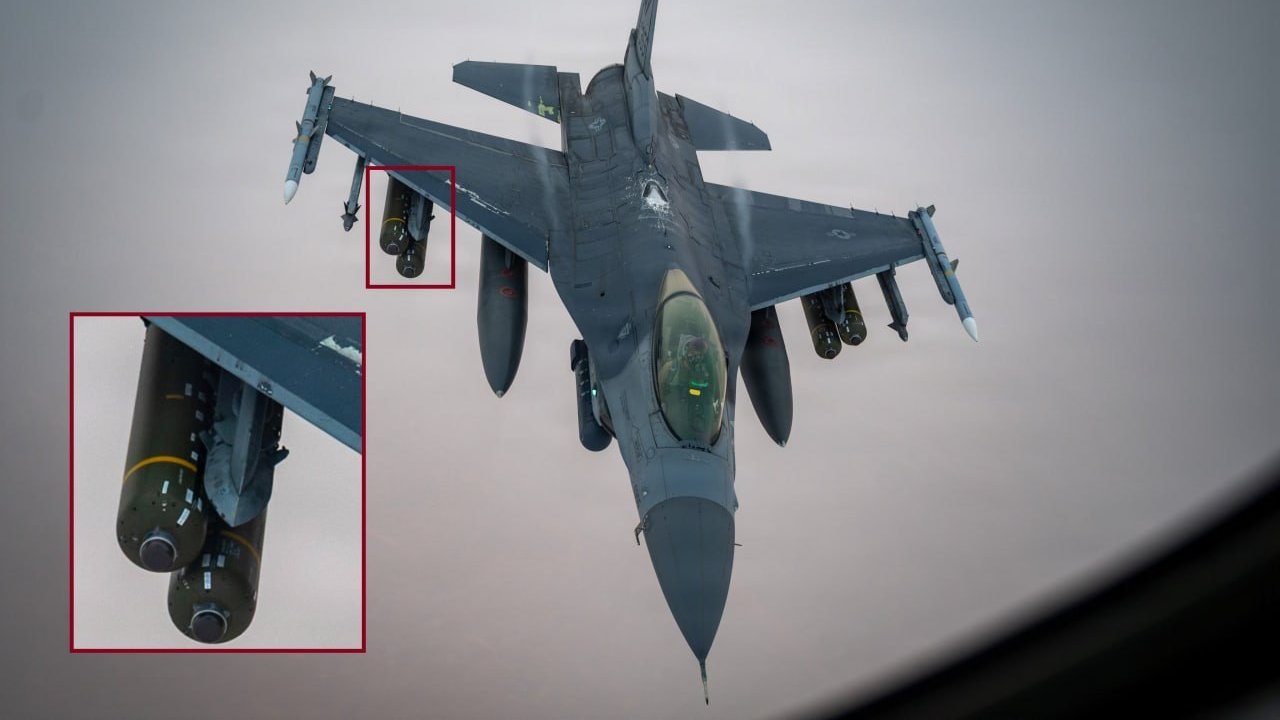

Washington: Newly released photographs attributed to U.S. Central Command appear to show U.S. F-16 fighter jets deploying anti-tank mines over parts of Iran, despite earlier official denials. The images reveal aircraft fitted with Wind Corrected Munitions Dispensers (WCMD), systems commonly used to deploy cluster-based ordnance such as BLU-91/B anti-tank mines.
Analysts reviewing the imagery said the المعدات shown strongly indicates the use of area-denial munitions designed to restrict movement on the ground. As a result, the development points to a potential shift in operational tactics.
Mine deployment indicates evolving battlefield strategy
The BLU-91/B anti-tank mines are designed to scatter across wide areas, creating hazardous zones that hinder the movement of vehicles and military units. Consequently, these deployments can disrupt supply routes and limit the mobility of mobile missile systems.
Moreover, the use of such munitions suggests a focus on long-term battlefield shaping rather than immediate strike effects. Once deployed, these mines remain active even after aircraft exit the area, increasing their tactical impact over time.
Reports of casualties raise humanitarian concerns
Meanwhile, reports from southern Iran indicate that one such deployment may have caused fatalities in the village of Kafari near Shiraz on March 26. Similar incidents have also emerged from nearby regions, although independent verification remains limited.
Furthermore, the continued presence of unexploded ordnance raises concerns about civilian safety and post-strike risks. As scrutiny grows, questions are mounting over the broader implications of deploying persistent denial weapons in populated areas.

