

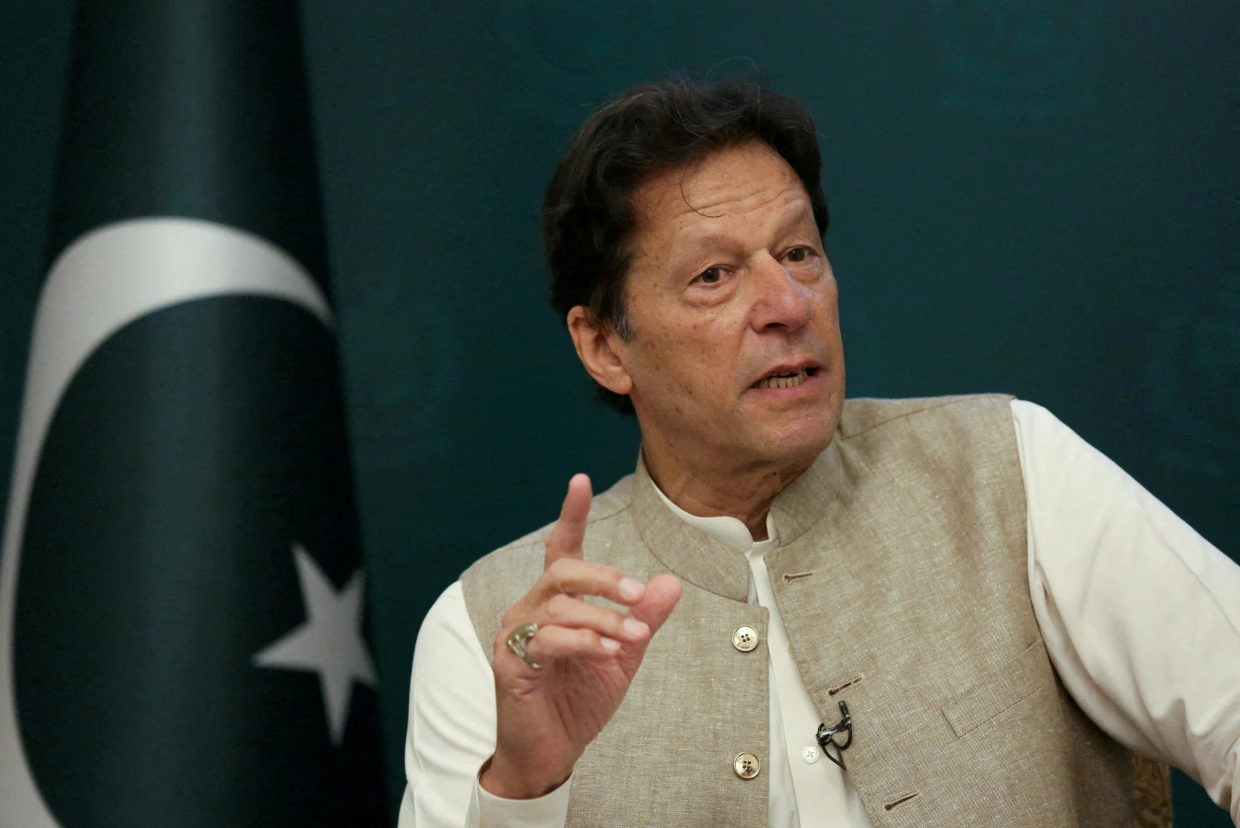

Oxford University is poised to elect its 193rd Chancellor next month, marking a historic moment as the decision will be made through an online poll for the first time. Among the candidates stirring significant debate is former Pakistan Prime Minister and cricket legend Imran Khan, who is currently running from jail.
At 71, Khan, an Oxford graduate and former captain of the university’s cricket team, announced his candidacy in August while serving a prison sentence. Traditionally, the role of Chancellor at Oxford has been held by prominent figures from elite backgrounds, predominantly white men, and has never included a female. Current Chancellor Chris Patten, a former Tory Prime Minister, continues this trend.
If elected, Khan would break this pattern, becoming the first non-white, South Asian, and Muslim to hold the prestigious position.
Other notable candidates include former British Prime Ministers Tony Blair, Theresa May, and Boris Johnson.
Khan’s candidacy is seen by some Oxford students as a positive step towards increasing diversity within the university’s administration. “If the university seeks someone who can bridge tradition with modern leadership while advancing diversity, Imran Khan is an excellent choice,” says Fiza Abbas, an undergraduate in Economics and Management. She believes Khan’s background offers a refreshing departure from the conventional norms and could garner significant support from those valuing a diverse international perspective.
However, opinions are divided. Some critics view the role as highly politicized and argue that Khan’s background may not align with the university’s tradition. “The chancellor should embody the University’s ideals,” says Louie, a PPE student at Oxford. “Imran Khan seems a poor fit for the role, much like how Hilary Clinton might seem an odd choice for a Northern Irish university.”
Khan’s previous experience as Chancellor of Bradford University from 2005 to 2014 ended controversially due to student protests over his frequent absences. He resigned before a no-confidence vote could be held, citing his increasing political commitments and charity work as reasons for his inability to fulfill his duties.
Khan’s political career has been marked by turbulence, including his tenure as Pakistan’s Prime Minister from 2018 to 2022 and his subsequent ousting through a no-confidence vote. Since August of last year, he has faced over a hundred charges, most of which remain unresolved. The United Nations has condemned his detention as arbitrary, citing a lack of legal grounds.
As Oxford University prepares for this unprecedented election, the outcome will determine whether Imran Khan can indeed challenge the status quo and redefine the role of Chancellor.
