

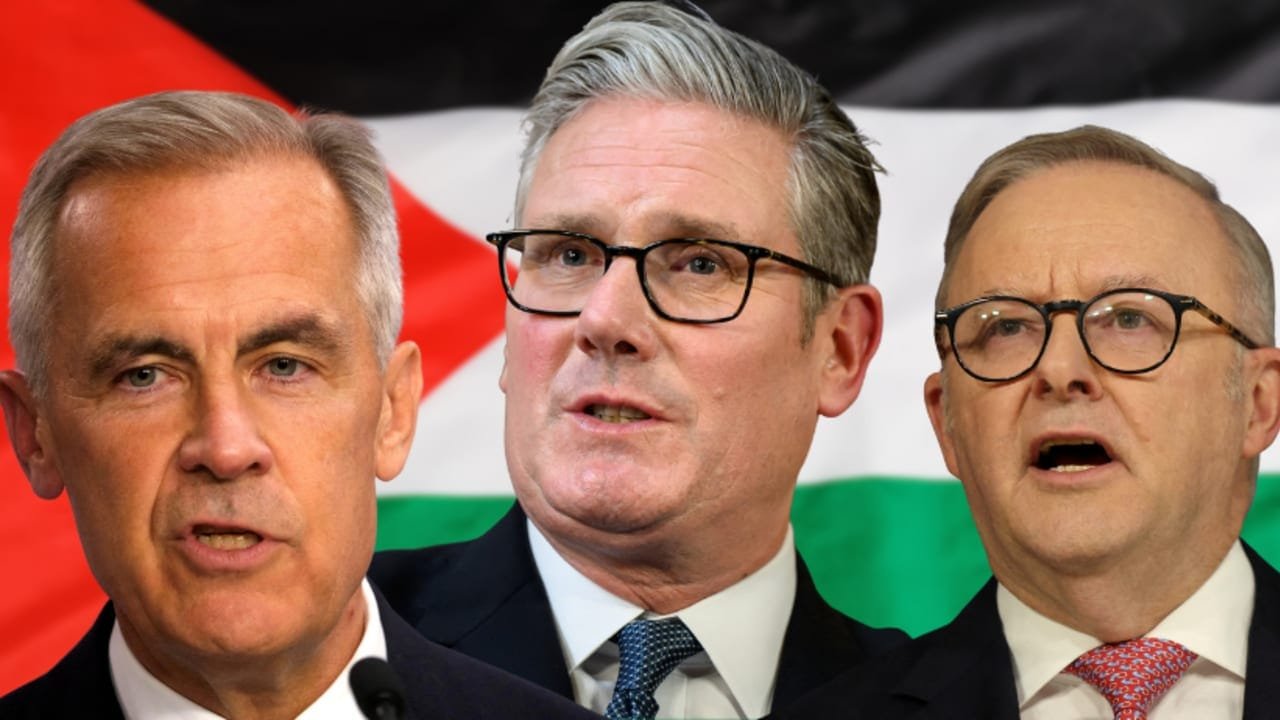

In a significant shift in foreign policy, Britain, Canada, and Australia have officially recognised Palestine as an independent state, marking a rare coordinated international step aimed at reviving stalled efforts for a two-state solution in the Middle East. The joint decision, announced through a collective statement, signals growing international frustration with the lack of progress in Israeli-Palestinian peace talks.
The statement underscored the recognition as a step towards “restoring momentum” in achieving a just and lasting peace, grounded in United Nations resolutions and international law. It reiterated support for a future in which Israel and Palestine coexist peacefully as two sovereign states, with secure and recognised borders.
Leaders Call for Renewed Push Towards Two-State Solution
British Prime Minister Keir Starmer, in a formal address, acknowledged the grim reality that hopes for a two-state solution are fading. However, he stressed the importance of not allowing that vision to die completely.
“The dream of peace must not be extinguished. Hamas has no place in any future Palestinian government,” Starmer affirmed, reiterating his support for a demilitarised and democratic Palestinian state.
Canadian Prime Minister Mark Carney made a similarly strong statement, confirming Canada’s official recognition of the State of Palestine. Carney condemned the current Israeli government’s policies, accusing it of actively obstructing progress toward peace and statehood.
“A two-state solution remains the only viable path to lasting peace. Our position is rooted in international law and the principle of equal human rights for both Israelis and Palestinians,” Carney stated.
Condemnation of Settlements and West Bank Violence
The joint statement and accompanying remarks from national leaders included sharp criticism of Israeli settlement expansion in the occupied West Bank, labelling it a direct violation of international law and a serious impediment to peace.
Carney condemned the escalating violence and illegal land grabs, calling them “direct threats to peace.” Like Starmer, he also emphasised that Hamas must be excluded from any future Palestinian leadership structure, aligning with the broader Western stance against the group.
While Australia’s Prime Minister has not yet issued a separate statement, the country’s inclusion in the joint declaration confirms its official shift towards recognising Palestinian statehood.
The coordinated recognition by these three influential Western democracies reflects a broader international push to reignite diplomatic engagement and increase pressure on all parties to return to the negotiating table.
