

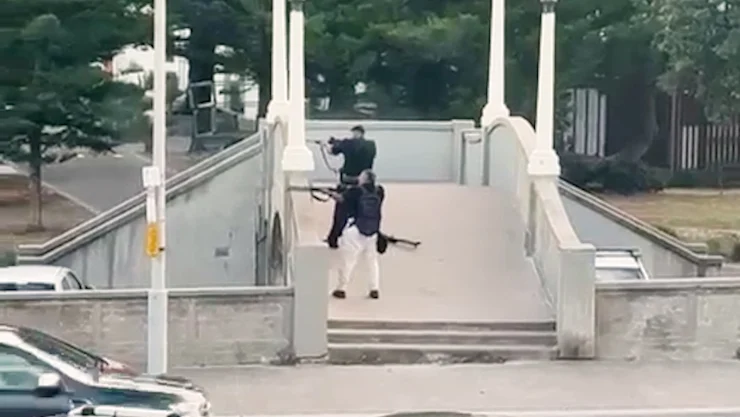

Sajid was shot dead by police at the scene, while his son remained in critical condition. Indian police noted that the family had limited contact with Sajid and claimed they were unaware of his radicalisation, stating that the factors leading to the attack appeared unrelated to India.
Australian authorities revealed that both father and son had traveled to the Philippines in November, with Sajid holding an Indian passport and Naveed an Australian one. The purpose of their trip remains under investigation.
Early indications point to an attack inspired by Islamic State ideology, according to Australian Prime Minister Anthony Albanese. Police also discovered improvised explosive devices and ISIS flags in a vehicle registered to Naveed.
The Bondi Beach massacre has prompted national discussions about gun laws, as Sajid held a valid license and owned six registered firearms.
Home Affairs Minister Tony Burke emphasized that existing regulations need review, while former Prime Minister John Howard stressed that combating anti-Semitism should remain a priority. The victims included Holocaust survivors, a rabbi, and a 10-year-old girl, highlighting the scale and gravity of the attack.
Acts of heroism emerged, including that of Ahmed al Ahmed, who confronted one of the gunmen and sustained gunshot wounds; a GoFundMe campaign for him has raised over A$1.9 million.
Memorials continue to be set up at Bondi Beach, where mourners honor the victims. Authorities are continuing investigations into the radicalisation of the father and son, assessing security measures to prevent similar incidents, while India has officially acknowledged Sajid Akram’s nationality, adding an international dimension to the tragedy.
