

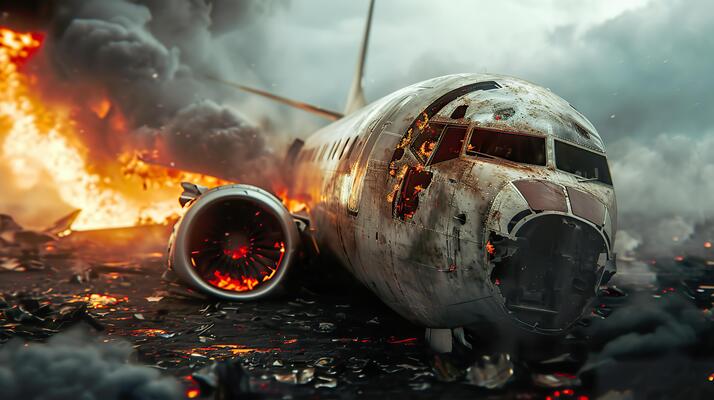

Boeing has defended the safety of its fuel control switch design after a preliminary investigation into last month’s Air India Boeing 787-8 crash raised serious concerns. The tragic accident claimed 260 lives shortly after takeoff, including 53 British nationals.
In coordination with the U.S. Federal Aviation Administration (FAA), Boeing has informed airlines that no immediate action is necessary regarding the fuel control switch locks installed on various models, including the Dreamliner 787.
The interim report, released by India’s Aircraft Accident Investigation Bureau (AAIB), revealed that the aircraft’s fuel control switches had been moved to the “cut-off” position shortly after takeoff—a critical factor in the crash of Flight AI171 en route to London Gatwick on June 12.
The revelation has sparked widespread concern, but also frustration, as the report has left many questions unanswered. India’s pilots’ association rejected any implication of pilot error, while bereaved families expressed disappointment with the investigation’s lack of clarity.
Indian Airline’s Boeing crash
Of the 242 passengers and crew onboard, 241 perished when the aircraft crashed into a hostel complex on the grounds of Byramjee Jeejeebhoy Medical College in Ahmedabad, killing several students and residents on the ground. Miraculously, only one passenger—an Indian-British man seated in 11A—survived.
In a statement, grieving families demanded full transparency and accountability:
“Moving forward, we require honesty, transparency, and an unwavering commitment to uncovering the full truth. We accept God’s fate, but knowing what happened will help ease our hearts and allow us to begin the long journey of healing.
Above all, we hope that by pursuing the truth, no other family will ever have to endure the shock, uncertainty, and profound sorrow that we have lived through this past month.”
Ishan Baxi, cousin of Dhir and Heer Baxi—two sisters returning to London after surprising their grandmother for her birthday—echoed this call for answers.
“We’re not satisfied with the report,” he told the PA news agency. “We’re still hoping for a more transparent and honest investigation—one that doesn’t shy away from exploring possible mechanical faults or lapses in protocol.”
He added:
“I just hope the final report brings full clarity on what exactly failed and who’s accountable. It shouldn’t hide behind vague language. More importantly, it should lead to meaningful changes to ensure this never happens again.”
As investigations continue, Boeing remains under scrutiny for potential design flaws, with global aviation authorities closely watching how the company and regulators respond in the coming months.
Air India plane crash report reveals shocking facts
A preliminary investigation into last month’s catastrophic crash of Air India Flight AI-117 has revealed startling cockpit confusion in the final moments before the aircraft lost power and plunged to the ground, killing all 260 people on board.
The findings, released Saturday by India’s Aircraft Accident Investigation Bureau (AAIB), indicate that both engines of the Boeing 787 Dreamliner were shut down shortly after takeoff—likely due to the unintended activation of critical fuel cutoff switches.
The tragic flight, en route from Ahmedabad to London on June 12, now stands as the deadliest aviation disaster globally in over a decade. According to the AAIB’s 30-day preliminary report, the aircraft’s fuel control switches, which regulate fuel flow to the engines, were inexplicably flipped from “RUN” to “CUT OFF” within seconds of departure. This sudden shutdown of both engines occurred just as the plane began to climb out of Ahmedabad, leading to an immediate loss of thrust.
Closed-circuit footage from the airport confirmed the deployment of the aircraft’s ram air turbine — a backup device that activates when the main engines fail — within seconds of takeoff.
Compounding the mystery is the chilling cockpit voice recorder (CVR) exchange, in which one pilot asked, “Why did you do the cut-off?” and the other responded, “I didn’t.” While the report does not identify which pilot made the statements, the recording paints a grim picture of confusion and disbelief in the cockpit.
Despite the gravity of the incident, the switches were found in the “RUN” position at the crash site, suggesting that the pilots may have tried to restart the engines moments before impact. Aviation experts note that flipping both fuel cutoff switches requires deliberate, coordinated action, as the controls are equipped with safety mechanisms to prevent accidental movement.
The aircraft was piloted by Captain Sumeet Sabharwal, 56, a senior instructor with over 15,600 flying hours, including 8,500 hours on the Dreamliner. His co-pilot, Clive Kunder, 32, had logged more than 3,400 hours, with over 1,100 on the same aircraft model.
Both pilots had arrived in Ahmedabad the previous day, passed mandatory alcohol tests, and were declared fit for duty. Kunder was flying the aircraft during takeoff, while Sabharwal was serving as the monitoring pilot.
Despite their experience, the cockpit actions during takeoff — particularly the activation of both cutoff switches within a one-second window — remain baffling.
Aviation analyst John Nance emphasized that such a move would be highly unusual during the climb phase and likely requires intentional input. “A pilot would never turn off both engines during takeoff or climb unless under extreme and unusual circumstances,” Nance stated.
The AAIB report found no mechanical or technical faults in the aircraft or its systems. Investigators have ruled out any immediate blame on Boeing or engine manufacturer GE Aerospace. The U.S. National Transportation Safety Board (NTSB), which is assisting the probe, supported the initial findings and stated that no changes to the Boeing 787 or its engines were recommended at this stage.
Meanwhile, Boeing confirmed its continued cooperation with Indian authorities, and the U.S. Federal Aviation Administration (FAA) said it would “follow the facts wherever they lead.” GE Aerospace had not issued a statement at the time of the report’s release.
The incident poses a significant challenge for Air India and its parent company, Tata Group, which took control of the national carrier in 2022 and has since been working to modernize its fleet and rebuild the airline’s global image.
The crash has sparked renewed scrutiny of Air India’s safety practices, particularly following separate allegations of regulatory lapses within its low-cost subsidiary, Air India Express. The European Union Aviation Safety Agency (EASA) has announced an investigation into Air India Express after reports emerged of falsified compliance records and delays in replacing engine parts.
India’s civil aviation authority has also issued warnings to Air India regarding overdue safety inspections and violations of pilot duty regulations.
