


ISLAMABAD: The body of retired Colonel Qazi Ishaq, who was swept away along with his daughter during heavy rainfall in Islamabad, was recovered on Thursday after an intensive search operation. His body was found in the Swan River, while the search for his 25-year-old daughter enters its third day.
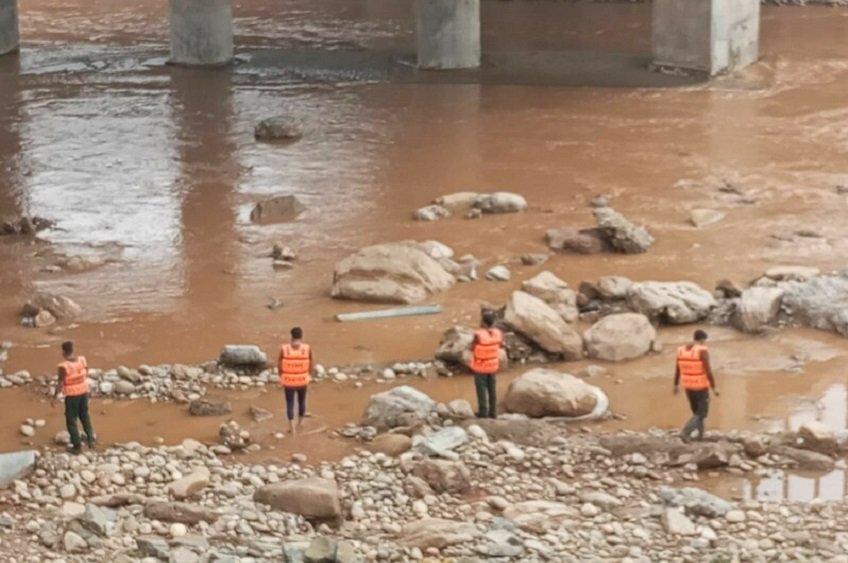
Rescue 1122 teams from Rawalpindi discovered parts of the missing vehicle — including its door and bonnet — lodged under the Sawan Bridge, which led to the eventual recovery of the colonel’s body.
According to rescue officials, the operation will continue round-the-clock until the daughter is found. “We will not rest until both victims are recovered,” one official said.
The tragic incident occurred in a private housing society in Islamabad, where Colonel Ishaq was driving his daughter during the torrential downpour. As rainwater flooded the roads, their car became trapped in deep water. While attempting to restart the vehicle and drive through, powerful currents dragged the car into a stormwater drain.
A joint operation involving Rescue 1122, Navy divers, and other emergency teams has employed advanced equipment, drone surveillance, and helicopters to aid the search. Excavation work is ongoing around the Sawan Bridge, and rescue personnel are also scouring tunnels and other areas where the daughter might be trapped.
The colonel’s family remains hopeful and is anxiously awaiting news. Authorities have assured them that relief efforts will persist until the operation concludes with the recovery of both victims.
Over 200 stranded tourists rescued
In a large-scale rescue operation, over 200 stranded tourists were safely evacuated from Gilgit-Baltistan’s Diamer district following severe flash floods triggered by torrential rainfall.
According to Faizullah Faraq, spokesperson for the GB government, the rescued individuals have been moved to Chilas and provided shelter in local hotels and guest houses. Many had been cut off for hours before finally establishing contact with their families.
The flash floods, which ravaged the Babusar area, have left a trail of destruction and loss. At least five lives have been claimed since Monday, with one more casualty confirmed by Diamer Deputy Commissioner Attaullah Kakar.
Search operations remain active, as authorities believe up to 30 tourists are still missing. Rescue efforts are being carried out with the support of the Pakistan Army, which is deploying helicopters to provide food, medical assistance, and evacuate those stranded.
The Diamer administration has declared a state of emergency on the Thack-Babusar Road and suspended all tourist movement from Zero Point to Babusar Top. A formal notification urged both tourists and locals to immediately move to designated safe zones, warning against travel on the severely damaged road.
The devastation includes the destruction of over 50 homes, a wheat depot, a girls’ school, police checkpoints, and key infrastructure such as bridges and mosques. Authorities have deployed heavy machinery to restore the road network and begin rebuilding critical links, including parts of the Karakoram Highway.
In Skardu, similar flash floods stranded hundreds of tourists. According to Rescue 1122 and the Baltistan Division Police, nearly 413 tourist vehicles were trapped on the Deosai–Sadpara road. The road was cleared overnight, and all stranded individuals were rescued by morning.
Meanwhile, the National Disaster Management Authority (NDMA) has issued a landslide alert for northern regions including Gilgit, Skardu, Hunza, Diamer, and Astore in GB; Neelum, Muzaffarabad, Bagh, and Poonch in Azad Jammu and Kashmir; and parts of Khyber Pakhtunkhwa, such as Chitral and Dir. Several key mountain roads—including Kohistan Road, Kolai Palas, and Hunza Road—are under threat.
In Rawalpindi, a retired army officer and his daughter went missing after their car was swept away by floodwaters. Rescue efforts are ongoing.
Since June 26, monsoon-related disasters have claimed 234 lives nationwide, with Punjab bearing the brunt. The NDMA reports over 826 homes damaged and 203 livestock killed. Alarmingly, over 60% of fatalities were due to house collapses.
