


Strait of Hormuz
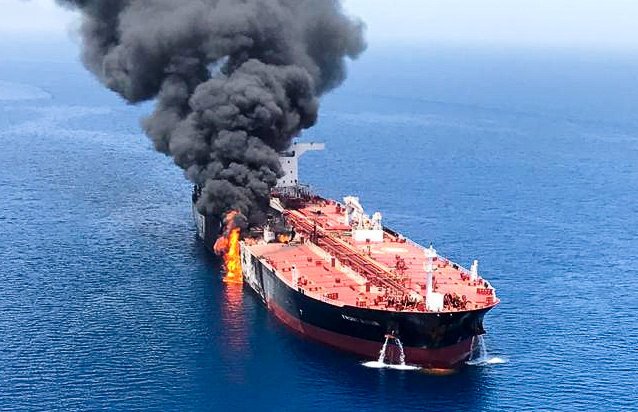
Three oil tankers have reportedly caught fire in the Gulf of Oman, sparking concerns over maritime security in one of the world’s most critical shipping lanes. The reports surfaced through various social media platforms and were cited by Hindustan Times, raising alarm in the context of escalating regional tensions.
Energy analyst Amena Bakr stated on platform X (formerly Twitter) that a British maritime security firm had confirmed awareness of a developing situation in the area, though specific details remained scarce at the time. The firm, identified as Ambrey, confirmed that an incident had occurred but withheld further elaboration.
According to a maritime tracking and intelligence account named OSINTDefender, the fires may have resulted from a collision between two oil tankers: the ADALYNN, flagged by Antigua and Barbuda, and the FRONT EAGLE, flagged by Liberia.
While ship tracking data suggested the collision took place over three hours prior to the initial reports, there had been no official communication or distress signals until images of the burning vessels began circulating on social media. This gap has raised questions about the delay in reporting and the extent of damage caused.
A shipping news outlet also released a video on YouTube claiming that two tankers had collided in the Gulf of Oman, further corroborating the theory. However, conflicting reports and the lack of official confirmation from maritime authorities continue to obscure the full picture.
This incident comes at a particularly volatile time. The Strait of Hormuz, which lies near the Gulf of Oman, is already under intense scrutiny due to the ongoing military conflict between Israel and Iran, now entering its sixth consecutive day.
The strategic waterway is responsible for the passage of over 20 million barrels of oil daily, along with large volumes of liquefied natural gas (LNG) from Qatar. Any disruption in this chokepoint could have severe global economic implications.
Iran, which has historically threatened to block the strait in response to external aggression, has not made any direct statement about the tanker fires. However, speculation is growing about whether the incident was purely accidental or linked to the broader regional conflict.
Meanwhile, international pressure is mounting on Iran to de-escalate. European foreign ministers have urged Tehran to resume nuclear negotiations with the United States. In response, Iran’s Deputy Foreign Minister Abbas Araqchi stated that the nation’s immediate priority is retaliating against Israeli strikes that began last Friday.
US President Donald Trump also weighed in, using his social media platform Truth Social to urge Iran to cease hostilities and “evacuate.” His administration has so far stopped short of direct intervention, although US military presence in the region has been bolstered in recent days.
As of now, no fatalities or environmental damage reports have been released in connection with the burning tankers. Maritime authorities are expected to issue a more detailed statement once the situation is brought under control and fully assessed.
