

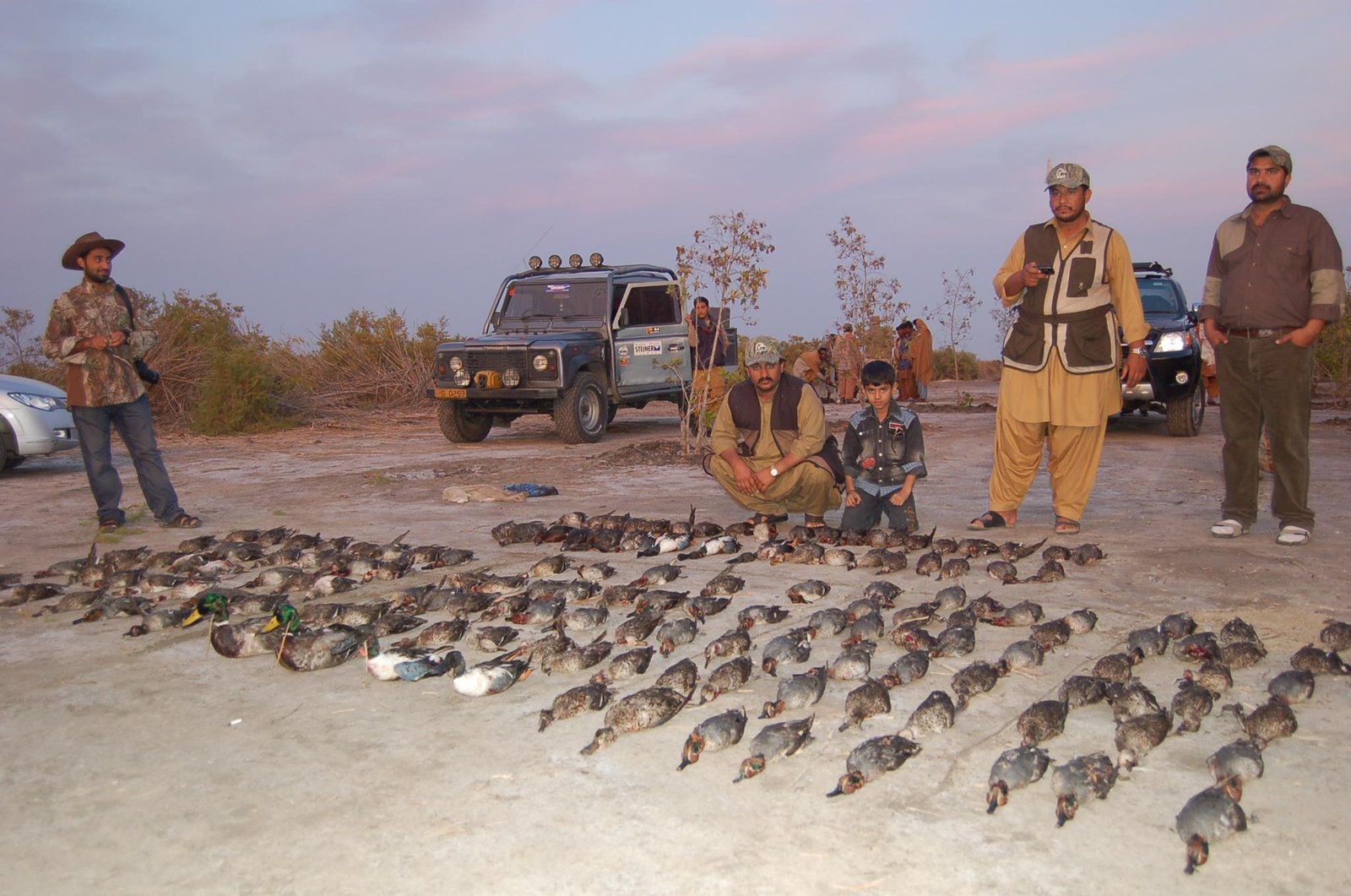

Bird hunting in Pakistan is a long-standing activity that operates under provincial wildlife laws, allowing regulated seasonal hunting of specific bird species. However, widespread illegal hunting continues to threaten biodiversity and has sparked national debate over conservation and enforcement.
Legal and Regulated Hunting
Provincial wildlife departments in Punjab, Sindh, and KP regulate legal bird hunting through permits and quotas. Hunters must obtain licenses, with separate fee structures for local and foreign hunters.
Legal hunting typically focuses on partridges, quails, and waterfowl such as ducks. Hunting seasons are strictly defined—for example, quail hunting generally runs from August to April, while partridge hunting is limited to specific months. In Punjab, hunting is often restricted to weekends only.
Daily and seasonal quotas apply, such as 10 partridges or up to 15 ducks per person per day, depending on the province. These measures are designed to protect wildlife populations while allowing controlled recreational hunting.
Illegal Hunting and Conservation Issues
Despite regulations, illegal hunting and poaching remain widespread, particularly in Balochistan. One of the most controversial issues involves the hunting of the endangered Houbara Bustard, often linked to visiting foreign dignitaries from Gulf states.
Illegal methods include trapping, netting, and creating artificial water sources to lure birds. Conservationists warn that unchecked hunting is causing rapid population declines, disrupting ecosystems and natural pest control.
Conclusion
While legal bird hunting in Pakistan exists under strict rules, weak enforcement and illegal practices continue to endanger bird species. Wildlife experts and environmental groups increasingly call for stronger laws, better monitoring, and, in some cases, complete bans to protect Pakistan’s fragile biodiversity.
