

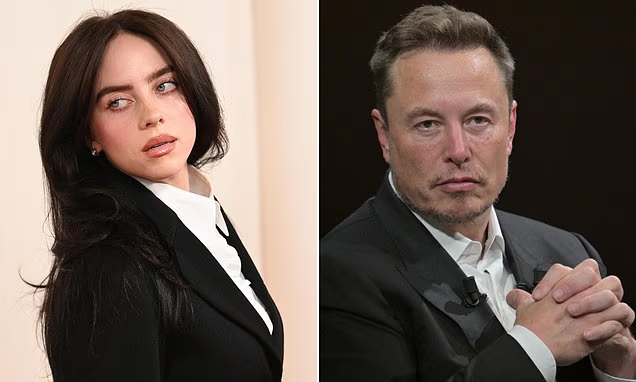

Billie Eilish has once again voiced her criticism of the mega-rich, this time targeting Elon Musk as he edges closer to becoming the world’s first trillionaire.
The pop star expressed disappointment over Musk’s lack of involvement in humanitarian efforts, emphasizing that immense wealth should come with social responsibility. Eilish shared a post from the activist group My Voice, My Group, highlighting various ways Musk could utilize his wealth to make a meaningful impact globally.
The post outlined several pressing issues, including the need for $40 billion annually to end world hunger by 2030. It also emphasized that $2 billion per year could help save endangered species, potentially mitigating the extinction risk for over 10,000 animals.
Eilish’s comments underscore her belief that individuals with vast fortunes, such as Musk, have a moral obligation to address critical global challenges.
This isn’t the first time Billie Eilish has criticized the wealthy for failing to contribute to society. During her acceptance speech at the Wall Street Journal Innovator Awards, she openly questioned the accumulation of billion-dollar fortunes in a world facing significant social and environmental crises.
She told the audience, “We’re in a time right now where the world is really, really bad and really dark, and people need empathy and help more than kind of ever, especially in our country.”
Eilish’s criticism reflects a consistent stance on wealth distribution and social responsibility. She challenged the ultra-wealthy, asking rhetorically why anyone should hold vast sums of money without using it for the greater good. “Love you all, but there’s a few people in here that have a lot more money than me. If you’re a billionaire, why are you a billionaire? No hate, but yeah, give your money away, shorties,” she said.
By drawing attention to Musk’s trillionaire milestone, Eilish seeks to spark discussion about wealth, accountability, and the need for action from those who hold extraordinary financial power. Her statements align with broader conversations about social equity and the ethical obligations of the ultra-rich in today’s global landscape.
