

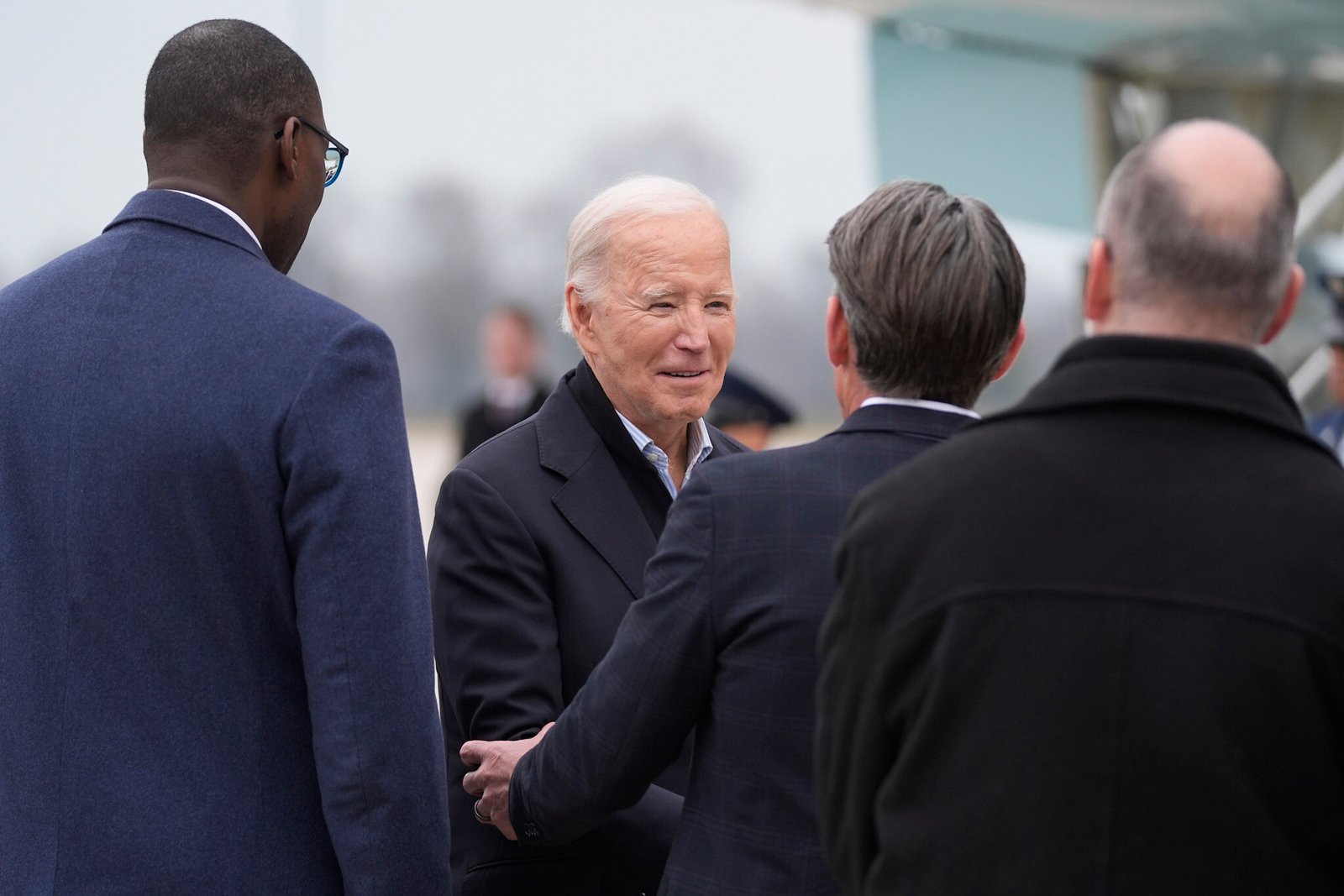

US President Joe Biden visited Michigan on Thursday, a pivotal swing state and a focal point of growing Arab-American dissatisfaction with his handling of the Israel-Hamas conflict. This visit followed the recent trip of Biden’s campaign manager to Dearborn, home to the largest concentration of Arab Americans in the US, where the mayor declined to meet them. Michigan, a swing state, holds significance for Biden’s potential reelection in November, particularly in a likely rematch with Donald Trump.
The White House emphasized that the visit was solely for campaign purposes, involving meetings with the influential United Auto Workers (UAW) union members, who endorsed Biden last week. While UAW support is crucial in Michigan, Biden faces the challenge of addressing Arab-American discontent over his stance on the prolonged Israel-Hamas conflict.
Despite not disclosing the specific town in advance, the White House revealed that Biden’s visit aimed to engage with the UAW, a powerful force in Michigan’s auto industry. Concurrently, pro-Palestinian demonstrators expressed their displeasure nearby, highlighting the divisive nature of Biden’s support for Israel during the ongoing conflict.
Following the October 7 Hamas assault on southern Israel, Biden pledged full backing to Israel, requesting billions in additional military aid and vetoing UN Security Council calls for a ceasefire. This stance has led to criticism from Muslims and individuals of Middle Eastern heritage in the US, who feel let down by the Democratic Party.
As Biden engaged with the UAW, pro-Palestinian protesters, including those from the Abandon Biden movement, awaited him outside, chanting slogans and expressing their dissatisfaction. The White House’s decision not to disclose details of Biden’s planned meetings added to tensions, especially as no interactions with Arab Americans were scheduled during this visit.
Dearborn Mayor Abdullah Hammoud refused to meet Biden’s campaign manager, citing objection to discussing elections amid what he referred to as a “live-streamed genocide” in Gaza. Despite increasing frustration within the Arab-American community, White House spokeswoman Karine Jean-Pierre mentioned that senior administration officials would visit Michigan later in February to hear from community leaders regarding the Israel-Hamas conflict.
The situation reflects a broader challenge for Biden in securing votes from Michigan’s significant Arab-American population, as their support played a role in his 2020 victory. However, concerns have been raised that many Muslim and Arab-Americans may choose to stay home or vote for third parties in the upcoming election.
Michigan, having shifted Democratic in recent years, is a critical battleground for Biden’s reelection, with the state’s February 27 primary on the horizon. While the president faces no serious primary challenge, efforts are underway to build momentum for the more challenging general election in the fall.
Despite the complexity of the political landscape in Michigan, Democratic leaders emphasize the importance of addressing various constituencies, including Arab Americans, young voters, union members, women, and independents, to secure the state in 2024.
