


Iran is once again boiling with unrest. On December 28, merchants in Tehran’s historic Grand Bazaar refused to open their shops, staging a protest against runaway inflation, the collapse of the national currency, and worsening economic conditions. The bazaar has long been one of Iran’s most influential power centers, and when its merchants strike, it signals more than economic distress—it reflects deep political discontent.
What followed was swift and widespread. Protests erupted across all provinces, from remote towns suffering chronic unemployment to Tehran and other major cities. Iranian authorities responded with force, shutting down internet access, arresting thousands, and killing hundreds of demonstrators. As unrest continues, U.S. President Donald Trump is reportedly weighing military strikes on Iran, further raising regional tensions.
At the heart of Iran’s crisis lies an economic catastrophe shaped by nearly eight years of U.S. policy. Comprehensive sanctions, combined with covert operations, cyberattacks, and military strikes, were designed to weaken the Iranian state. Instead, they devastated the livelihoods of ordinary Iranians. Meanwhile, well-connected elites—particularly those tied to the Islamic Revolutionary Guard Corps (IRGC)—thrived by exploiting sanctions-evasion networks.
Over the past year, the Iranian rial has lost roughly 90 percent of its value against the U.S. dollar. That decline accelerated after U.S. and Israeli military strikes last summer, which shattered hopes of economic stabilization. Inflation surged, making basic necessities unaffordable for millions. Oil revenues, a pillar of the Iranian economy, were severely constrained by renewed sanctions, while the government failed to implement credible economic reforms. The result has been a perfect storm of currency flight, rising prices, and widespread anxiety.
A Tale of Two Irans
Media coverage and social-media discourse increasingly portray Iran as being on the verge of collapse: a nation gripped by economic ruin, facing mass revolt despite brutal repression, and confronting an unpredictable American president seemingly open to military escalation. But a deeper question remains—are today’s conditions comparable to those that brought down the Shah in 1979?
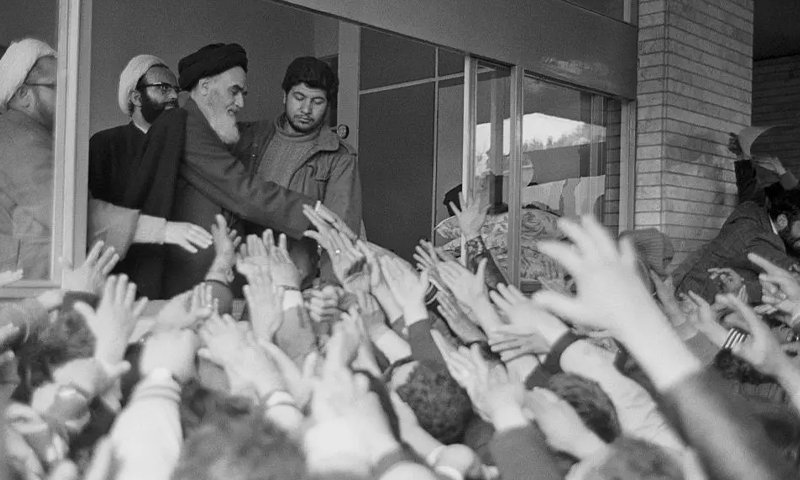
The 1979 revolution did not succeed simply because Iranians were angry. Public anger had existed for years. What made the revolution successful was the alignment of three decisive power centers: the people, the clergy, and the bazaar merchants. These groups organized through mosques, labor unions, and economic networks. When they moved in unison, the monarchy collapsed.
Iran’s political landscape today is fundamentally different. Years of research into Iran’s internal power structures show that its institutions—the clergy, military, bazaar, and civil society—are configured in ways that make a repeat of 1979 far more complex.
The monarchy, often promoted by supporters of exiled crown prince Reza Pahlavi, holds little genuine influence inside Iran. Reports, including investigations by Israeli media, suggest that online campaigns exaggerating monarchist support have been fueled by foreign misinformation efforts. Even so, President Trump has declined to meet with Pahlavi, signaling limited confidence in a monarchist alternative.
The Iranian government, meanwhile, engages in its own disinformation, labeling all dissent as foreign-instigated to justify intensified repression. These narratives obscure the central issue: the actual balance of power inside Iran and what would be required to produce meaningful political change.
The Changed Role of the Bazaar
Recent bazaar strikes have fueled speculation that Iran may be approaching a revolutionary moment. But the bazaar of today is not the autonomous force it once was. Decades of Islamic Republic rule—and especially years of sanctions—have transformed it.
Sanctions weakened Iran’s economy but simultaneously empowered the IRGC and state-linked elites. These groups built vast sanctions-busting empires, controlling imports, currency exchanges, and access to restricted goods. As military and security networks captured key sectors of the economy, traditional bazaar families lost their independence. Many were forced into partnerships with IRGC-linked businesses simply to survive.
Today’s bazaar strikes still matter, but they no longer represent the same independent institutional power that helped topple the Shah. The bazaar has become partially embedded within the very system it would need to oppose.
One prominent textile merchant from Tehran’s Grand Bazaar, who asked to be identified only as Ali, explained the dilemma. “We closed our shops and demanded changes,” he said. “Many of our factories can no longer operate. The government must fundamentally change how it manages sanctions and the economy.” Yet as protests intensified and threats of foreign military action grew, his concern deepened. “This is getting out of our control,” he admitted.
Iran is boiling—but boiling does not necessarily mean breaking.
