

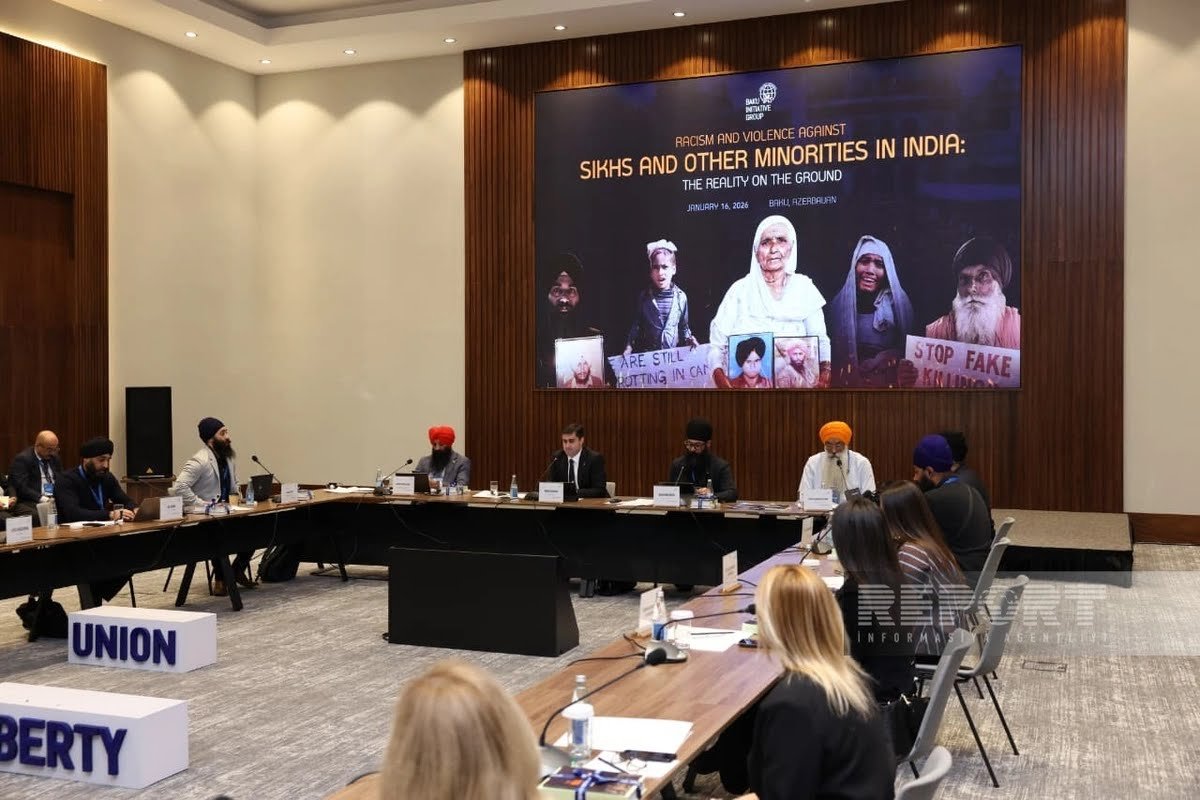

For the first time, Baku is hosting an international conference titled “Racism and Violence Against Sikhs and Other National Minorities in India: The Reality on the Ground.” Organized by the Baku Initiative Group (BIG), the event addresses the Indian government’s systematic repression of ethnic minorities.
The conference is attended by Ramesh Singh Arora, Minister for Human Rights and Minorities of Punjab, India, alongside officials, Sikh community representatives from Canada, the United Kingdom, and the United States, as well as academics, human rights experts, and victims of India’s policies.
The opening featured a photographic exhibition showing mass killings, enforced disappearances, and extrajudicial executions targeting the Sikh community in Punjab during 1980–1990. Thousands of Sikhs were reportedly killed, abducted, or executed on fabricated charges during that period.
Currently, Sikh activists demanding rights face arrests under accusations of separatism or espionage, while police raids in Punjab reportedly continue to rise. Terror attacks against Sikh activists abroad have also been linked to Indian intelligence services in Canada and the United States.
Conference Focus on Systemic Repression
Discussions at the conference highlight India’s racial discrimination, violence, and repression against Sikhs and other minorities. The event stresses violations of international obligations, including the UN International Covenant on Civil and Political Rights, the International Convention on the Elimination of All Forms of Racial Discrimination, and the Convention Against Torture.
Speakers emphasized the urgent need for international monitoring. Recommendations include:
-
Keeping minority rights violations on the agenda of global organizations
-
Investigating extrajudicial killings
-
Documenting human rights abuses via UN special rapporteurs
Role of NGOs and Academic Institutions
Participants also highlighted the role of international and local non-governmental organizations and academic institutions in documenting abuses. Reports, legal opinions, and recommendations can influence international decision-making and strengthen accountability mechanisms.
Sikh Community Demands
The Sikh community, numbering over 25 million in India and concentrated mainly in Punjab, demands official recognition of the 1984 anti-Sikh massacres as genocide. They also call for:
-
Formation of an independent investigative commission
-
Justice for the perpetrators
-
Clarification on the fate of forcibly disappeared individuals
-
Release of unlawfully detained activists and political prisoner status
Sikhism, founded in the 15th century, emphasizes equality across caste, gender, and language. Activists argue that Indian authorities have consistently violated these principles, targeting Sikhs politically and culturally.
Global Implications
This first international conference in Baku aims to raise global awareness and mobilize international organizations to address India’s human rights violations. Delegates emphasized that continued documentation, advocacy, and diplomatic pressure are essential to protect ethnic minorities and ensure justice.
