

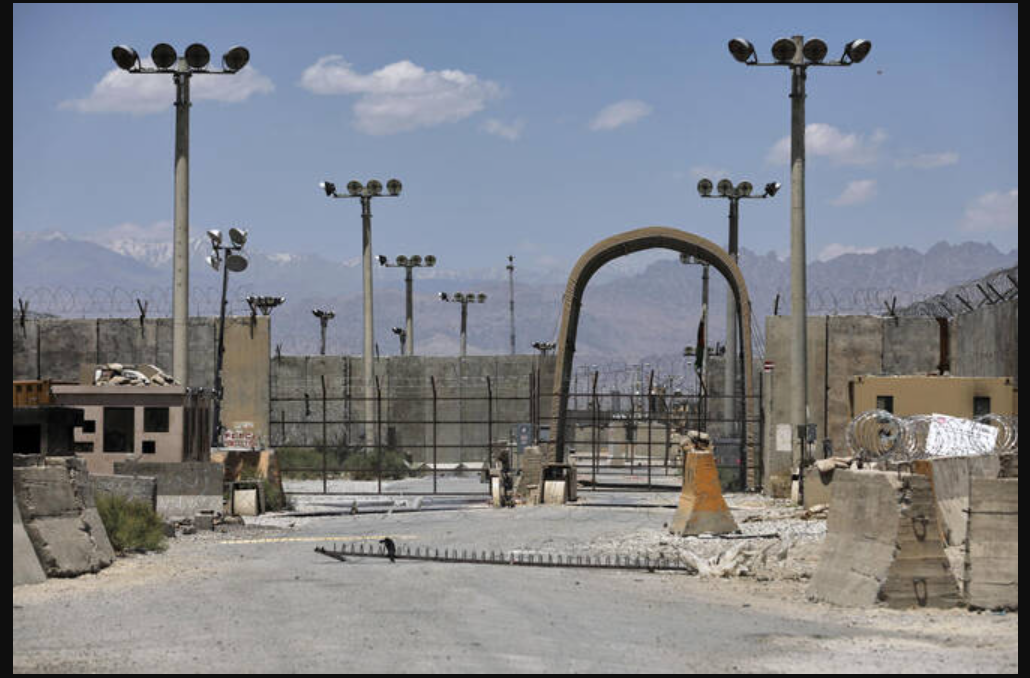

The Taliban government has firmly rejected any possibility of negotiating control over Afghanistan’s Bagram Air Base. The remarks came after U.S. President Donald Trump threatened consequences if the facility was not returned.
Taliban Denies Negotiations Over Bagram
Fasihuddin Fitrat, Chief of Staff at Afghanistan’s Ministry of Defence, made it clear that no deal over the base would ever be considered. He stressed that Afghanistan’s land was not up for negotiation. According to him, recent reports suggesting discussions with international powers were unfounded.
Fitrat stated that “even an inch of Afghanistan’s soil” could not be part of any agreement. He reiterated that Afghanistan had no need for foreign military bases and rejected the idea of external control.
Trump’s Threats Over Bagram Air Base
During his recent state visit to the United Kingdom, President Trump suggested the United States might seek to reclaim Bagram. Shortly after, he warned on his Truth Social account that “bad things” would happen if Afghanistan refused.
The statement added further tension to already strained U.S.-Taliban relations. Trump’s message implied that Washington might apply pressure to regain access to the strategically important base.
Strategic Importance of Bagram
Bagram Air Base was once the largest U.S. military facility in Afghanistan. For nearly two decades, it played a central role in the U.S.-led war effort against the Taliban following the September 11, 2001, attacks. The base allowed American and NATO forces to conduct air operations, intelligence missions, and supply distribution.
However, in July 2021, U.S. and NATO troops withdrew from Bagram as part of a deal negotiated with the Taliban. The hasty exit, widely criticized, left the Afghan military without vital air support. This collapse paved the way for the Taliban’s rapid return to power just weeks later.
Afghanistan’s Position Going Forward
The Taliban leadership remains resolute in its stance that Afghanistan’s sovereignty is not negotiable. Officials insist that foreign control of Afghan territory will never be tolerated again. By rejecting U.S. overtures regarding Bagram, the government signals a commitment to safeguarding independence from external influence.
Analysts believe the dispute could intensify tensions between Washington and Kabul. However, Afghanistan’s rulers appear confident that control over strategic assets like Bagram strengthens their position in regional politics.
The future of U.S.-Afghanistan relations remains uncertain, but the Taliban’s stance leaves little room for compromise on the Bagram issue.
