
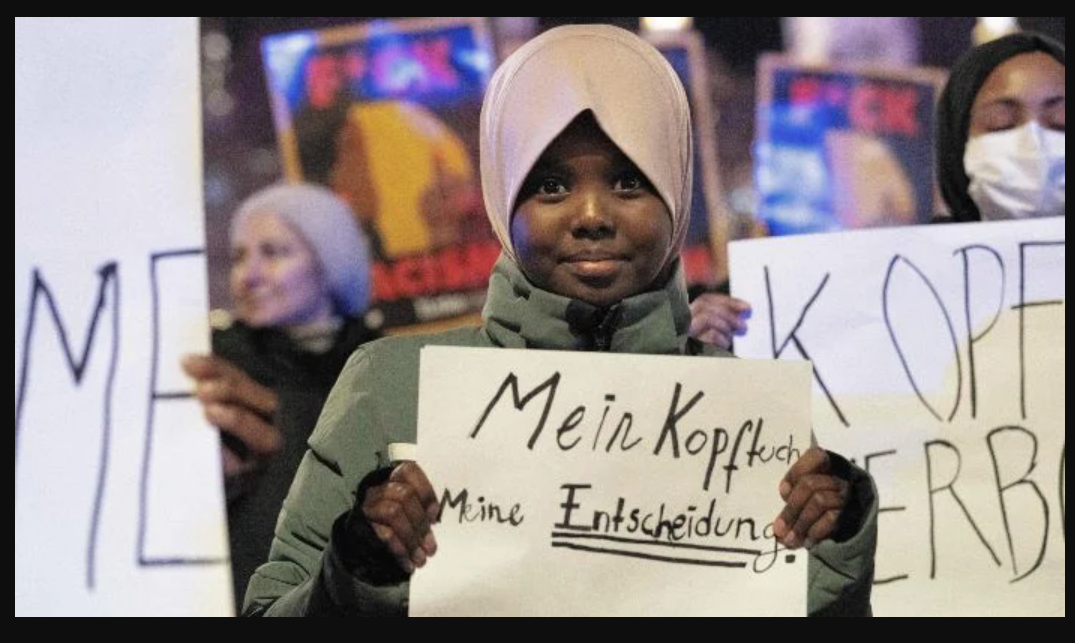

Austria’s decision to ban headscarves for girls under 14 in schools has sparked widespread anger and concern. The law, approved in December, will take effect with the new academic year in September.
Government officials argue the measure protects young girls from social pressure or oppression. However, critics say the policy unfairly targets Muslim communities and risks deepening divisions within society.
As debate intensifies, protests have emerged across Vienna, reflecting growing public unease over the legislation.
Students and Families Voice Strong Opposition
Many students affected by the ban have openly expressed frustration. One young protester said personal choice should remain central to religious expression.
She stated that no authority should force someone to wear or remove a headscarf. Her remarks echoed sentiments shared by many families attending demonstrations.
Parents also reported emotional stress among children who now fear disciplinary consequences. Some families said their daughters feel uncertain about continuing school under the new rules.
Consequently, the issue has shifted from policy discussion to a deeply personal matter for many households.
How the Law Will Be Enforced
Austria’s education ministry has already issued detailed enforcement guidelines to schools. Teachers must instruct students wearing headscarves to remove them immediately if observed.
If a student refuses, teachers must report the incident to school administration without delay. Administrators must then hold meetings with both students and guardians.
Repeated violations could result in fines ranging from 150 to 800 euros for parents. Additionally, teachers and school leaders may face legal consequences if they fail to report non-compliance.
Some educators, however, have expressed hesitation about enforcing the policy. One teacher described the law as a political measure that does not address broader child welfare concerns.
Civil Society Groups Raise Discrimination Concerns
Human rights advocates argue the ban singles out one religious symbol, making it discriminatory in practice. Activists claim the policy reflects years of rising anti-immigration sentiment within the country.
Austria has long attracted migrants and asylum seekers. Nevertheless, political debates around immigration have intensified in recent years.
Civil society organisations organised protests in central Vienna, drawing hundreds of participants. Demonstrators argued that guaranteed freedoms, including religious expression, must remain protected.
According to recent European rights assessments, Muslims in Austria report among the highest levels of discrimination within the European Union.
Therefore, critics warn the law could further marginalise already vulnerable communities.
Legal Challenges Expected as Past Ban Resurfaces
Austria previously introduced a similar headscarf ban in primary schools in 2019. The constitutional court later struck down that measure, ruling it unconstitutional.
Now, representatives of Muslim communities plan to challenge the new law through legal channels. Legal experts believe courts will again examine whether the policy disproportionately targets a specific religion.
The Ombud for Equal Treatment has also raised concerns, arguing the focus on one religious clothing item may violate constitutional protections.
As a result, the law’s future may ultimately depend on judicial review rather than political debate alone.
A Society Divided Over Identity and Integration
The controversy highlights broader questions about integration, identity, and secular values in modern Europe. Supporters believe the ban promotes equality and protects minors.
Opponents, however, argue genuine freedom includes the right to religious expression. Many families say the policy has already created anxiety months before implementation.
For young students like Hadiya, the issue remains deeply personal. She described feeling angry and confused, saying the rule lacks clear justification.
Ultimately, Austria now faces a complex balancing act between state policy and individual rights. The coming months will likely determine whether the law reshapes education policy or fuels deeper societal division.

