

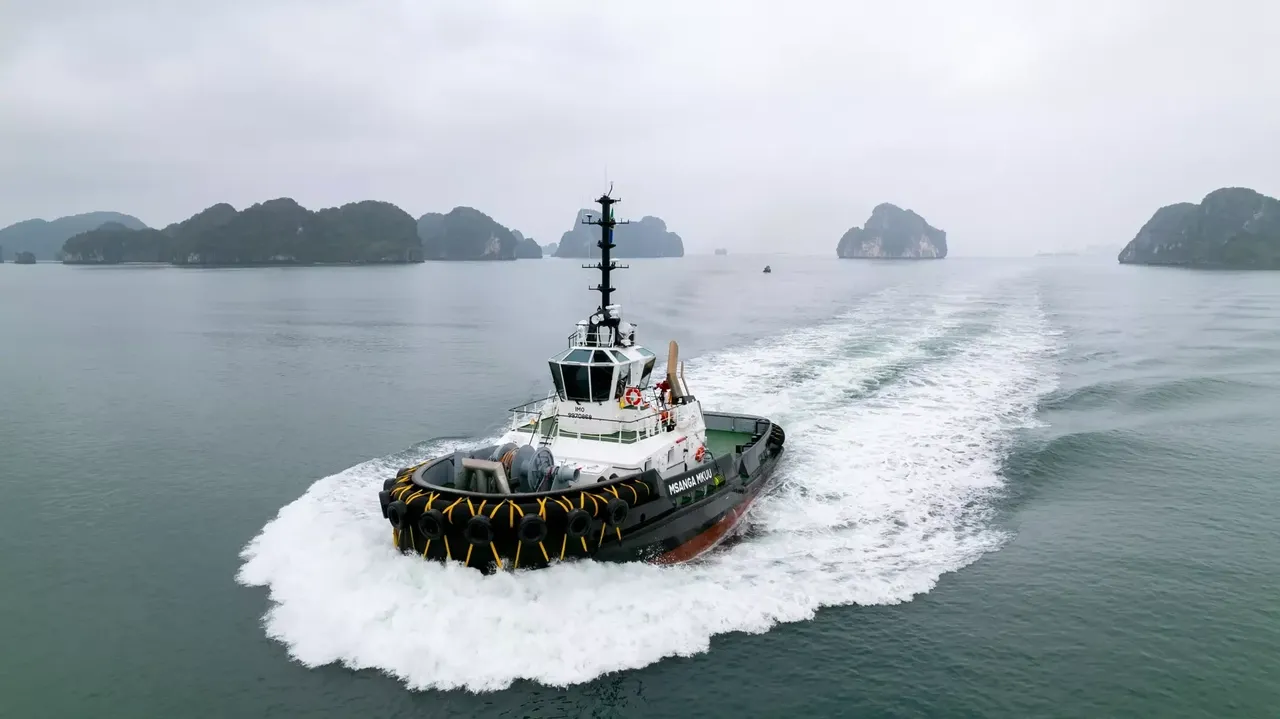

A fresh twist in Australia’s naval procurement process has ignited a wave of political and security debate after it emerged that a fleet of tugboats commissioned for the Royal Australian Navy was secretly built in China—despite the $28 million contract being awarded to Dutch shipbuilder Damen.
According to a report by the Australian Broadcasting Corporation (ABC), the first of three “harbour tugs” was completed in late December at Damen’s advanced Changde shipyard in China’s Hunan province and quietly delivered to Darwin earlier this year.
The second vessel, an Azimuth Stern Drive (ASD) 2111 tugboat, is expected to arrive by May, while the third is slated for delivery before the end of 2025.
The revelation comes at a particularly sensitive geopolitical moment, as tensions between Canberra and Beijing remain high and the United States continues tightening maritime trade restrictions against China. The use of a Chinese shipyard for military-related infrastructure has raised eyebrows in Australia’s security and political circles, with the Opposition demanding answers over transparency and contract oversight.
However, experts urge a more measured perspective. Digby James Wren, a geopolitical analyst and external relations adviser to the Royal Academy of Cambodia, argued that the controversy is more political than practical.
“This isn’t surprising,” Wren told TRT World. “Most of the global commercial and civilian fleet is built in China, South Korea, or Japan. China dominates the shipbuilding industry because of its scale and cost efficiency. Unless specifically prohibited in a contract, subcontracting this work to Chinese yards is common practice.”
He added that the issue lies more in procurement oversight than in national security. “What we’re seeing is a misunderstanding—or misrepresentation—of how global supply chains work. The timing of the story makes it politically sensitive, but it doesn’t point to any actual breach of security.”
While the revelation has undoubtedly stirred concern, industry insiders suggest it’s a reminder of the complex and often opaque nature of international defense procurement in a globally interconnected economy.
