

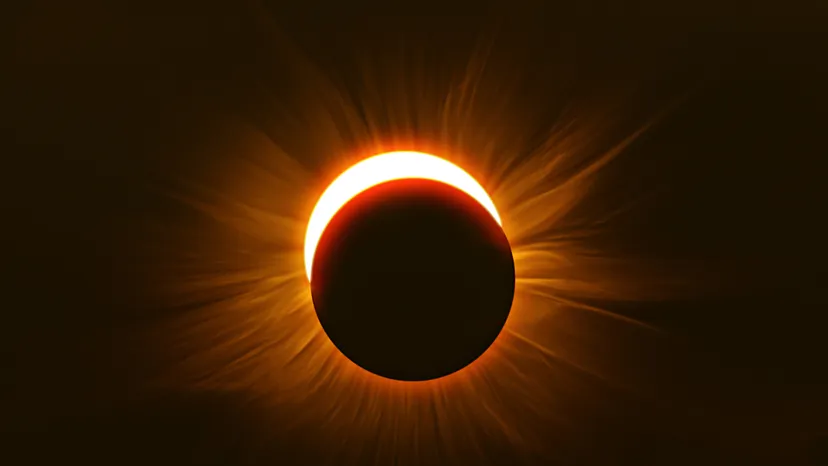

Astronomy lovers around the world are preparing for a rare celestial event. A total solar eclipse will occur on August 2, 2027. Scientists say it will be one of the longest total solar eclipses of the 21st century. The Moon will move directly between the Earth and the Sun. This alignment will block sunlight completely along a wide path.
The event is already being called the “eclipse of the century.” Its long duration and wide visibility over land make it especially significant.
Path of Totality Spans Three Continents
The August 2027 solar eclipse will follow an extensive path of totality. It will begin in southern Europe. It will then move across North Africa and the Middle East. Several countries will experience complete darkness during the eclipse.
The path includes Spain and Gibraltar in Europe. In Africa, Morocco, Algeria, Tunisia, Libya, and Egypt will fall under totality. In the Middle East, Saudi Arabia, Yemen, and Somalia will also witness the full eclipse. The eclipse will also be visible over parts of the Atlantic Ocean and Indian Ocean.
Major cities lie directly in the path. These include Cadiz, Tangiers, Gibraltar, Benghazi, Luxor, and Jeddah. People in these cities will see the Sun fully covered by the Moon.
Exceptional Duration Makes It Historic
The eclipse will reach its maximum duration near Luxor, Egypt. Totality there will last about 6 minutes and 22 seconds. This makes it the second-longest total solar eclipse of this century. Only the 2009 eclipse lasted longer.
Most total solar eclipses last two to three minutes. This extended duration gives scientists more time for research. It also allows skywatchers to enjoy the rare sight longer than usual.
A total solar eclipse occurs when the Moon fully covers the Sun’s disk. Daylight briefly turns into darkness. The sky looks like early dawn or late dusk.
Rare Sights During Totality
During totality, stars and planets may appear in the sky. The Sun’s corona will glow around the Moon. Animals may show unusual behavior. Temperatures can drop slightly in some areas.
While totality will be visible across parts of Europe, Africa, and the Middle East, other regions will still see a partial eclipse. Countries like India will witness partial coverage of the Sun.
The August 2, 2027 solar eclipse will be a landmark event. It will attract scientists, photographers, and millions of skywatchers worldwide.
