
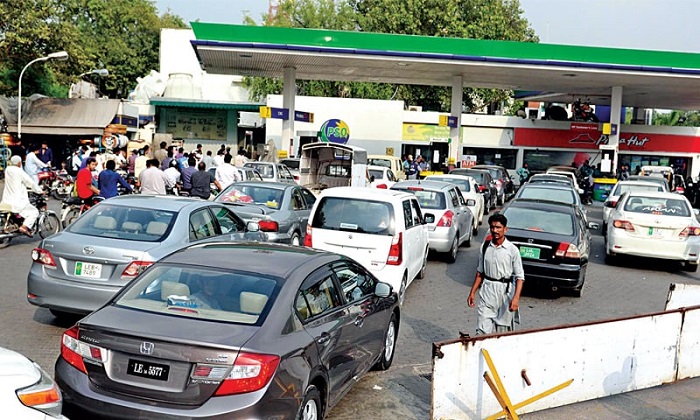

Consumers Bear the Heaviest Burden
Pakistanis are paying a significant portion of petrol prices in taxes and profit margins. According to an official document from the Ministry of Energy, levies and margins account for around 46% of the total cost.
This revelation comes just a day after the government announced a sharp increase in fuel prices. Global supply chain disruptions due to the ongoing Middle East conflict have pressured Pakistan’s energy sector, forcing authorities to revise rates.
Petroleum Minister Ali Pervaiz Malik, speaking at a press conference with Finance Minister Muhammad Aurangzeb, confirmed the new prices. Petrol now costs Rs458.41 per litre after a Rs137.23 increase. High-speed diesel also jumped by Rs184.49, reaching Rs520.35 per litre.
Breakdown of Petrol Pricing
The official document provides a detailed breakdown of petrol pricing. The ex-refinery price stands at Rs247.15 per litre.
Consumers pay Rs160.61 in petroleum levy per litre, Rs24.12 in customs duties, and Rs2.5 under the climate support levy. Inland freight margin adds Rs7.52 per litre.
Oil marketing companies (OMCs) earn Rs7.87 per litre in profit, while petrol pump dealers receive Rs8.64 as commission. Together, these taxes and margins push nearly half of the petrol price onto consumers.
In total, consumers are effectively paying Rs211.26 per litre in levies and profit margins alone. This highlights how government taxes and corporate margins heavily influence fuel prices in Pakistan.
Diesel Costs Less in Taxes but Prices Are High
Diesel pricing shows a slightly different pattern. The ex-refinery price for diesel is Rs461.23 per litre. Unlike petrol, the petroleum levy on diesel is currently zero.
However, diesel consumers still pay Rs35.74 in customs duty per litre, Rs4.37 for inland freight, Rs7.87 for OMC profit, Rs8.64 for dealers’ commission, and Rs2.5 under the climate support levy. This adds up to Rs59.12 per litre, accounting for 11.36% of diesel’s total price.
The comparison shows that petrol buyers face a much heavier burden from taxes and margins than diesel consumers, despite both fuels seeing record-high price increases.
Impact on Consumers
These rising costs have put pressure on households and transporters alike. Many citizens are struggling with daily expenses as energy costs take up a larger share of household income.
Experts warn that if global oil prices remain volatile, domestic fuel costs will continue to climb. Consumers may see further increases, especially for petrol, given its higher taxation and margin structure.

